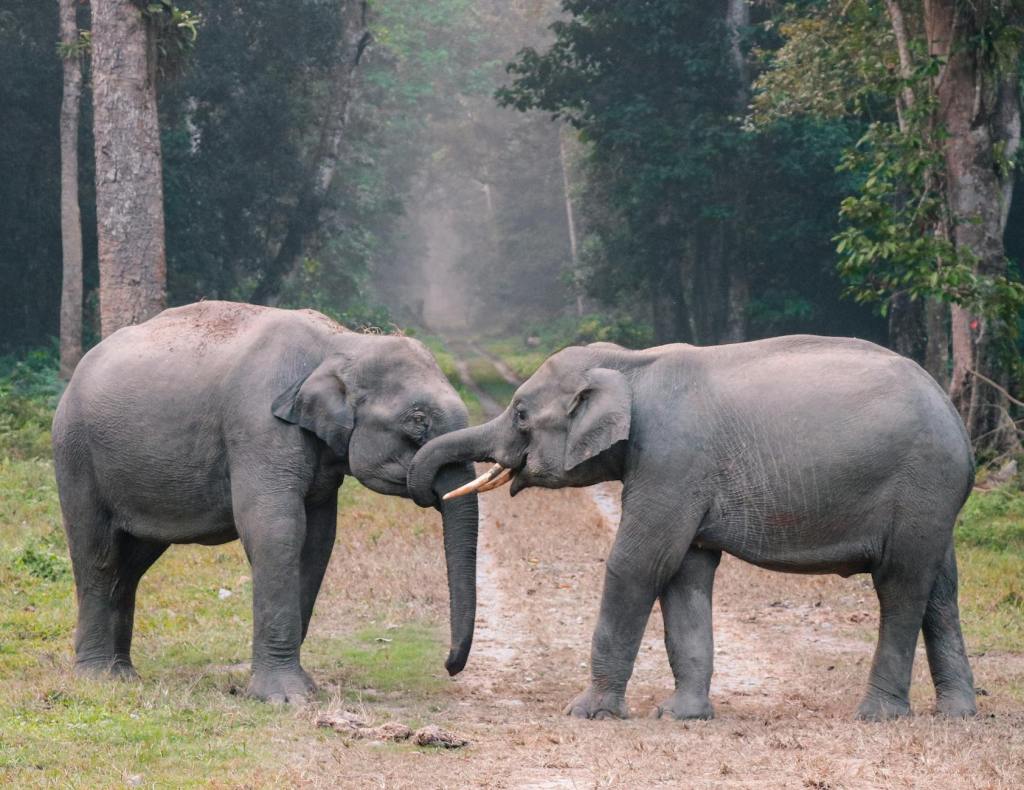
The expert committee convened by the Kerala forest department to address the issue of human-wildlife conflict in the state held its inaugural online meeting recently. The meeting was inaugurated by Forest Minister A K Saseendran, who emphasized the government’s commitment to developing strategies for peaceful co-existence between animals and humans while ensuring the safety of people and wildlife conservation.
During the meeting, presentations were made by experts highlighting successful models adopted by foreign countries and other Indian states to mitigate human-wildlife conflicts. The committee agreed on the need to develop landscape- and species-specific strategies tailored to each of the 10 zones identified as high conflict areas.
The convener of the panel, P Pugazhendi, who is also the additional principal chief conservator of forest (APCCF), emphasized the limitations of traditional approaches like culling, particularly in dealing with large mammals such as elephants and tigers. He stressed the importance of evolving innovative strategies, especially in countering the menace posed by monkeys.
To address these challenges, the committee proposed organizing field-level workshops aimed at understanding landscape-specific issues and developing effective mitigation strategies. These workshops will form the basis for devising both short-term and long-term strategies to tackle human-wildlife conflicts comprehensively.
The department has enlisted the expertise of international organizations, including the International Union for Conservation of Nature (IUCN) Human Wildlife Conflict Task Force chaired by Dr. Alexandra Zinnermann, and UNESCO nature science specialist Benno Boer. Dr. Zinnermann and Mr. Boer will share their experiences in evolving mitigation strategies, with a particular interest expressed by Mr. Boer in studying the conflict within the Nilgiri biosphere.
One of the proposed strategies discussed during the meeting involved the use of modern technology, such as radio collaring animals that frequently enter human habitations, to gather valuable data for conflict reduction efforts. The committee also highlighted the effectiveness of app-based early warning systems, citing the example of a system developed by conservation researcher Tarsh Thekaekara in Karnataka.
In addition to measures aimed at reducing conflict, the forest department plans to implement initiatives to improve wildlife habitats. This includes ensuring healthy habitats for wild animals and addressing issues related to water availability in forested areas. Furthermore, efforts will be made to remove invasive species that deteriorate habitat quality and disrupt local ecosystems.
The committee also emphasized the importance of collaboration with the State Disaster Management Authority to carry out preventive and remedial actions in areas severely affected by human-wildlife conflicts. Preventive measures will be prioritized in these regions to minimize risks and enhance safety for both humans and wildlife.
Moving forward, the expert committee will continue to develop and refine landscape- and species-specific standard operating procedures (SOPs) for the identified conflict zones. The insights gained from international experts, combined with local knowledge and innovative technologies, are expected to inform the development of effective strategies that promote peaceful co-existence between humans and wildlife while safeguarding biodiversity and ecosystem health in the state.




 PARYAWARAN
Leave a comment