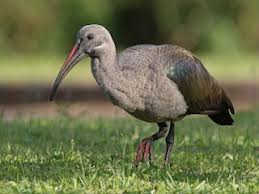
The Hadeda Ibis (Bostrychia hagedash) stands out as one of the most recognizable bird species across sub-Saharan Africa. These large, long-legged birds are often characterized by their distinct long, thin beaks used for probing invertebrates from soil. Despite their initial appearance of dull brown feathers, they possess stunning iridescent wings. However, what truly distinguishes them is their loud, laughing calls, earning them the affectionate nickname of “African alarm clocks.”
Historically confined to northeastern regions of South Africa, the Hadeda Ibis has experienced a significant range expansion over the past century. Today, they can be found in diverse habitats, including golf courses and gardens, stretching from Johannesburg to Cape Town. This expansion has been linked to increased areas of artificial irrigation around farms and suburban areas, indicating a preference for moist soils crucial for their foraging behavior.
Recent research conducted by the FitzPatrick Institute of African Ornithology has shed light on the unique foraging adaptations of the Hadeda Ibis. Similar to other ibises and shorebirds, Hadeda Ibises possess a remarkable “sixth sense” known as remote-touch. This ability allows them to detect vibrations in soil and water, crucial for locating buried prey such as earthworms.
The key to this sensory prowess lies in their specialized bill-tip organ, an evolutionary adaptation that dates back to the time of dinosaurs. This organ enables them to sense vibrations produced by moving prey beneath the surface, providing them with a distinct advantage in foraging efficiency.
A significant finding from the research highlights the dependence of Hadeda Ibises on soil moisture levels for effective foraging. The study demonstrated that these birds exhibit enhanced prey detection in moist soils due to the efficient transmission of mechanical waves (vibrations). In contrast, dry soils impair their remote-touch capabilities, forcing them to resort to less efficient foraging methods like random probing.
The research underscores the vulnerability of Hadeda Ibises to climate change, particularly in the context of predicted increases in drought frequency and duration across sub-Saharan Africa. With a reliance on moist soils for successful foraging, prolonged droughts can significantly impact their ability to find prey, potentially leading to reduced feeding success and population declines.
The predicted trends in climate change suggest that sub-Saharan Africa will experience more frequent and prolonged droughts and heatwaves. This poses a serious threat to bird species like the Hadeda Ibis, which heavily rely on specific environmental conditions for survival.
Furthermore, the study’s findings have broader implications for understanding the ecological dynamics of wading birds globally. Species that rely on remote-touch foraging may face heightened vulnerability to habitat changes associated with climate variability.
Conservation efforts must prioritize the preservation of suitable habitats with adequate soil moisture levels to support the foraging needs of Hadeda Ibises and other remote-touch probing birds. The loss of these species could disrupt ecosystem functioning and biodiversity, highlighting the interconnectedness between climate, habitat, and wildlife survival.
The raucous calls of Hadeda Ibises serve as a poignant reminder of the natural rhythms of sub-Saharan Africa. Preserving these iconic alarm clocks requires concerted conservation efforts that address the specific ecological needs of these birds in a changing climate. By understanding and acting upon these insights, we can ensure the continued presence of Hadeda Ibises and other wildlife in our natural landscapes.



 PARYAWARAN
Leave a comment