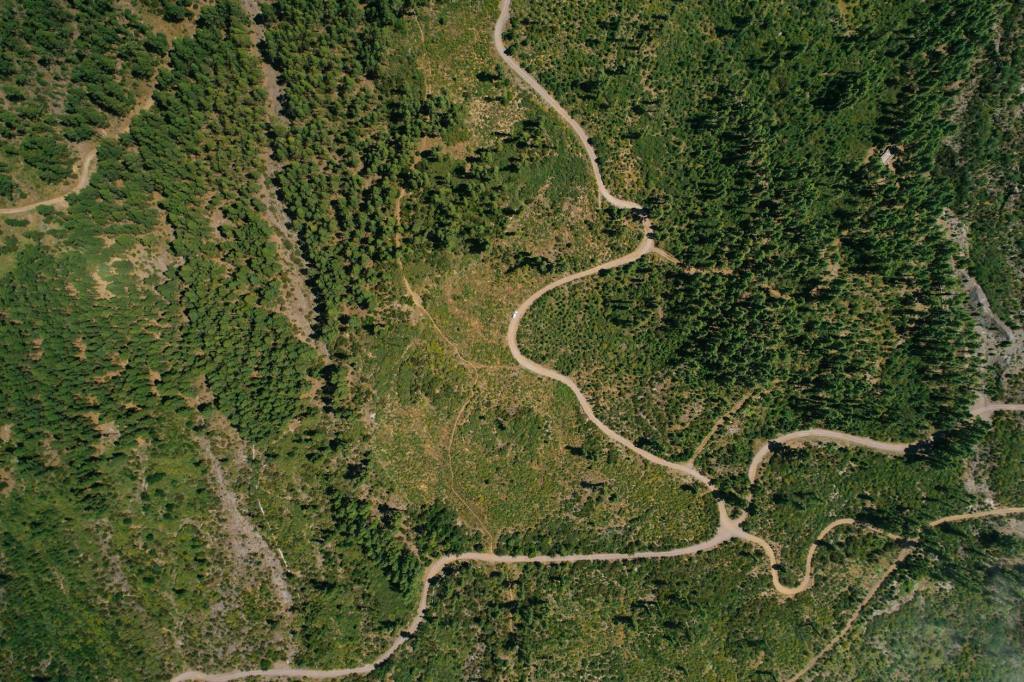
In the verdant expanses of Southeast Asia lies a hidden network of roads, invisible to official records but etched deep into the heart of the region’s lush rainforests. A monumental effort led by researchers from Australia and Indonesia has unveiled the staggering extent of these clandestine thoroughfares, shedding light on a pressing threat to biodiversity and the environment.
Utilizing state-of-the-art satellite imagery, a team of dedicated scientists meticulously mapped previously undocumented roads across Indonesia, Malaysia, and New Guinea. Their findings, published in a groundbreaking study, revealed a network spanning 1.37 million kilometers—several times longer than the roads officially recorded in international databases for the same land area.
These “ghost roads,” as the researchers aptly named them, traverse remote corners of the Asia-Pacific region, penetrating pristine rainforests and palm oil plantations alike. Yet, despite their significant impact on the environment, these roads have largely eluded detection until now.
The study underscores the urgent need to address the proliferation of clandestine roads and their devastating consequences for tropical forests. The team, comprising 210 trained volunteers, devoted over 7,000 hours to manually map these hidden thoroughfares, uncovering a network that defies conventional understanding.
In interviews, researchers revealed that existing databases had mapped less than 5 percent of the roads identified by their meticulous observation—an alarming discrepancy that underscores the inadequacy of current monitoring efforts.
The implications of these findings extend far beyond Southeast Asia. Similar discrepancies between official records and reality have been observed in other regions, including the Brazilian Amazon, Cameroon, and the Solomon Islands. This global phenomenon highlights the pervasive nature of the issue and the need for concerted action to address it.
Speaking with Nature, a conservation biologist emphasized the multifaceted nature of the problem. “Truth is, there’s a lot of illegal activity,” the biologist stated. “It’s a real mixed bag, but it adds up to a lot when we put it all together.”
Indeed, the roads identified by the researchers serve as conduits for various forms of exploitation, including timber extraction, mineral mining, and wildlife poaching. Their clandestine nature makes them difficult to regulate, allowing illicit activities to flourish unchecked.
Furthermore, the study revealed a troubling correlation between road construction and subsequent deforestation. Satellite imagery spanning from 1985 to 2020 indicated that road building often preceded forest loss, with logging activities occurring concurrently or shortly after the roads’ establishment.
Even protected areas, which are intended to safeguard biodiversity, proved vulnerable to the encroachment of these ghost roads. While these areas contained fewer roads compared to unprotected regions, they experienced significant forest degradation once roads were present—a stark reminder of the urgent need to limit road expansion in conservation areas.
The researchers’ analysis underscores the critical role of technology in addressing the proliferation of ghost roads and mitigating their impact on tropical forests. While human observation remains essential, the sheer scale of the problem necessitates the use of automated systems to survey vast areas quickly and efficiently.
Despite advancements in artificial intelligence, the researchers found that human observers still outperformed existing models in identifying clandestine roads—a testament to the dedication and expertise of the research team. However, they stressed the urgent need for automated systems to keep pace with the contemporary avalanche of road construction.
In the quest to protect tropical forests, time is of the essence. As the world grapples with the escalating threat of climate change and biodiversity loss, addressing the proliferation of ghost roads represents a crucial step towards safeguarding some of the planet’s most vital ecosystems.
The findings of this study serve as a wake-up call to policymakers, conservationists, and the global community at large. By confronting the menace of ghost roads head-on, we can forge a path towards a more sustainable future—one where the lush rainforests of Southeast Asia and beyond thrive for generations to come.




 PARYAWARAN
Leave a comment