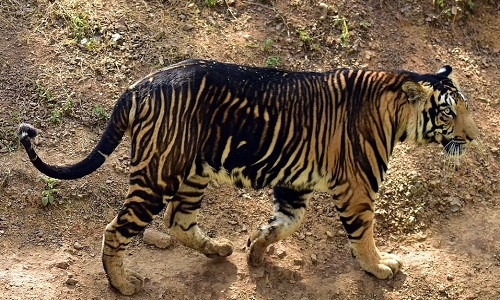
In a heartening development at the Simlipal Tiger Reserve in Odisha, after decades of conservation efforts, the elusive big cats have shown signs of breeding success. Recent reports confirm that T24, one of the prominent tigress in the reserve, has been rearing two melanistic cubs, much to the delight of conservationists and wildlife enthusiasts alike. This significant event marks a milestone in the ongoing efforts to restore and protect the endangered tiger population in Northern Simlipal.
Simlipal Tiger Reserve in Odisha boasts a significant population of ‘black’ or pseudo-melanistic tigers, a genetic anomaly found exclusively in this habitat. Government data indicates that over 60% of Simlipal’s tiger population exhibit this distinctive phenotype. Conservationists highlight this as a crucial stronghold for these rare tigers, underscoring the reserve’s role in biodiversity preservation. Efforts continue to protect this unique gene pool amidst ongoing conservation challenges. The presence of these ‘black’ tigers further solidifies Simlipal’s status as a pivotal sanctuary for India’s endangered big cats.
Over the past few decades, the reserve faced challenges such as habitat loss, poaching, and human-wildlife conflict, leading to a decline in the tiger population. At its lowest, the number of tigers dwindled, raising concerns about the survival of these majestic creatures in their natural habitat.
In response to these challenges, concerted efforts by wildlife authorities, conservation organizations, and local communities were intensified. Strict monitoring, anti-poaching measures, habitat restoration initiatives, and community engagement programs were implemented to create a conducive environment for tiger conservation.
The resurgence of the tiger population in Simlipal is a testament to the effectiveness of various conservation strategies implemented over the years. Strengthened patrolling, use of advanced monitoring technologies, and involvement of local communities in conservation activities have played pivotal roles in protecting the habitat and ensuring a safe environment for tigers to thrive.



 PARYAWARAN
Leave a comment