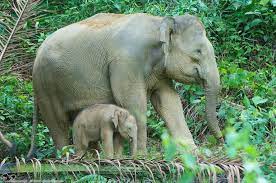
The world’s smallest elephant, found exclusively on the island of Borneo, is perilously close to extinction with only around 1,000 individuals remaining in the wild, according to the latest assessment by the International Union for Conservation of Nature (IUCN).
Habitat loss due to rampant deforestation stands as the primary threat to these diminutive elephants, distinct from their larger Asian cousins. The Bornean elephants have evolved separately over millennia, developing unique traits such as their smaller size and gentle demeanor. They now face increasing encroachment into their habitats by human activities, particularly in Sabah, Malaysian Borneo, where the majority of the population resides.
The expansion of palm oil plantations has been a significant driver of deforestation across Malaysia and Indonesia, exacerbating the elephants’ plight by diminishing their natural habitats and forcing them into conflict with human communities. Incursions into agricultural areas often result in retaliatory killings, adding to the pressures faced by this already vulnerable species.
Bornean elephants, the smallest subspecies among Asian elephants, exhibit unique physical traits that distinguish them from their mainland relatives. Standing between 8.2 to 9.8 feet tall, they hold the title of the largest mammals on Borneo, despite being smaller than African elephants.
These elephants are characterized by their notably large ears, long tails that occasionally brush the ground, and straighter tusks, adaptations that reflect their evolutionary history in Borneo’s diverse landscapes. Unlike African elephants, they have adapted to the dense rainforests and varied terrain of the island.
DNA analysis has revealed that Bornean elephants diverged genetically from their mainland Asian and Sumatran counterparts around 300,000 years ago. This genetic isolation has contributed to their distinct genetic makeup and physical characteristics observed today.
Recognizing these genetic differences underscores the importance of tailored conservation efforts for Bornean elephants. As they face escalating threats from habitat loss and conflicts with human activities, understanding their unique genetic heritage and ecological requirements becomes crucial for their survival in Borneo and the broader conservation of Asian elephants.
Conservationists and wildlife experts are advocating for the Bornean elephants to be included in the IUCN Red List, a move that could increase global awareness and mobilize support for conservation initiatives.
Efforts are underway by various organizations in Sabah, including governmental bodies, to mitigate the threats facing these elephants. Conservationists emphasize the importance of preserving the elephants’ remaining habitats and reducing human-wildlife conflicts through sustainable land use practices and community engagement.
Despite the challenges, there remains optimism among conservationists that concerted efforts can turn the tide for the Bornean elephants.
The IUCN’s latest Red List update also underscores broader global biodiversity declines, highlighting the urgent need for coordinated conservation actions to protect endangered species worldwide.



 PARYAWARAN
Leave a comment