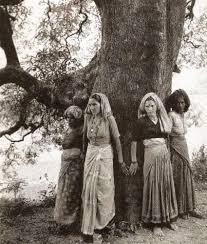
In the serene hills of Uttarakhand, India, a movement born out of necessity blossomed into a global symbol of grassroots environmental activism. The Chipko Movement, celebrating its 50th anniversary this year, stands as a testament to the power of community-led conservation efforts and the enduring legacy of those who fought to protect their forests and livelihoods.
The Chipko Movement emerged in the early 1970s amidst the lush Himalayan forests of Uttarakhand (formerly part of Uttar Pradesh). It was a response to the alarming rate of deforestation and unsustainable logging practices that threatened the ecosystem and livelihoods of local communities. The term “Chipko,” meaning “to stick” or “to hug,” encapsulates the iconic image of villagers, predominantly women, embracing trees to prevent them from being felled by loggers. This non-violent resistance was not just about saving trees but also about safeguarding the delicate balance that sustained their lives.
Led by visionary leaders like Sunderlal Bahuguna, Chandi Prasad Bhatt, and Gaura Devi, the movement gained momentum through acts of courage and determination. In 1974, Gaura Devi and women from Reni village became emblematic figures when they successfully halted a government-backed logging operation, marking a turning point in the movement’s visibility and impact.
Sunderlal Bahuguna, renowned for his impassioned speeches and environmental activism, emerged as a prominent voice advocating for sustainable forestry practices. His 5,000-kilometer-long march from Kashmir to Kohima in 1981 drew widespread attention to the cause, highlighting the urgent need for conservation and policy reform.
The movement’s efforts were not confined to tree-hugging alone; it actively engaged in policy advocacy and community mobilization. The Chipko activists campaigned for the rights of local communities over their forest resources, challenging existing policies and demanding inclusive and sustainable practices.
Over the decades, the Chipko Movement achieved significant milestones that reverberated beyond India’s borders. It played a pivotal role in shaping environmental policies and raising global awareness about community-led conservation efforts. The movement influenced the formulation of the 1980 Forest Conservation Act, which imposed a ten-year ban on green felling above 1,000 meters in Uttarakhand, aimed at curbing deforestation and preserving biodiversity.
Furthermore, the movement’s advocacy led to amendments in the outdated 1927 Forest Act, enhancing community participation in forest management and empowering local communities to protect their natural heritage. The principles and strategies of the Chipko Movement inspired similar grassroots movements worldwide, illustrating its enduring impact on environmental activism.
Despite its successes, the Chipko Movement’s journey has not been without challenges. Modern threats to the environment necessitate renewed efforts to safeguard forests and promote sustainable practices. Issues such as land encroachment, illegal logging, and climate change demand collective action and policy innovation, echoing the spirit of the Chipko Movement in advocating for environmental justice and stewardship.
In today’s context of escalating climate change and environmental degradation, the Chipko Movement’s principles remain as relevant as ever. Communities worldwide continue to face challenges posed by industrialization, urbanization, and unsustainable resource extraction. The movement’s emphasis on local empowerment, biodiversity conservation, and sustainable development serves as a guiding light for contemporary environmental activists and policymakers.
As we commemorate 50 years of the Chipko Movement, we celebrate its profound impact on environmental consciousness and policy transformation. The movement’s legacy is not just a historical milestone but a living testament to the power of grassroots activism and community resilience. It reminds us that the fight for a sustainable future begins with local action and collective responsibility towards our planet.




 PARYAWARAN
Leave a comment