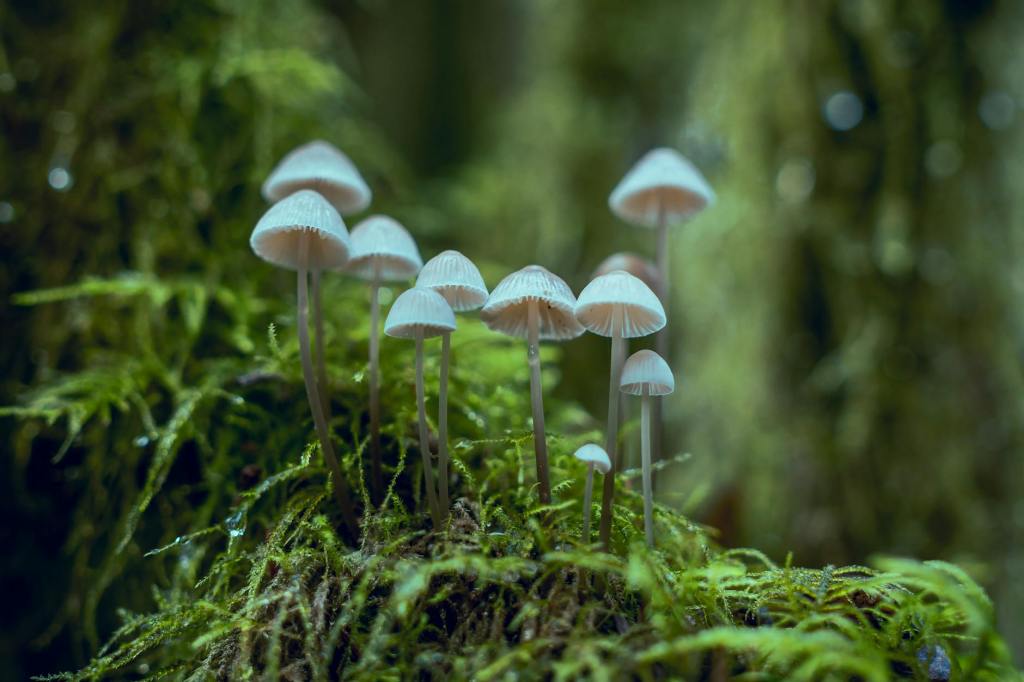
Underneath our forests and grasslands lies a vital secret to fighting climate change: fungi. Recent studies have shown that these tiny organisms play a huge role in storing carbon in the soil. This discovery challenges what we thought we knew about how ecosystems work.
One place where this discovery is evident is in a special garden that houses the world’s largest collection of fungi. Here, scientists are studying how fungi interact with plant roots. They’ve found that certain types of fungi, called mycorrhizal fungi, team up with plants to help them absorb nutrients and water from the soil. But these fungi do more than that—they also store a lot of carbon underground.
It turns out that nitrogen pollution can harm these fungi. By reducing pollution levels, we can help these important networks recover and continue to store carbon effectively.
Fungi are not just decomposers that break down dead plants—they also have the incredible ability to clean up polluted soil. This dual role makes them essential players in environmental restoration efforts.
Protecting these fungi is crucial not only for storing carbon but also for preserving biodiversity. If we disrupt these underground ecosystems, we risk losing their ability to support plant life and capture carbon effectively.
Understanding the role of fungi in capturing carbon is prompting a new way of thinking about conservation. It’s becoming clear that protecting fungal diversity is essential for managing our land in a sustainable way. By doing this, we can strengthen our planet’s ability to combat climate change.
Fungi are proving to be unexpected heroes in the fight against climate change. By studying and protecting these hidden networks beneath our feet, we can build a more sustainable future for generations to come.




 PARYAWARAN
Leave a comment