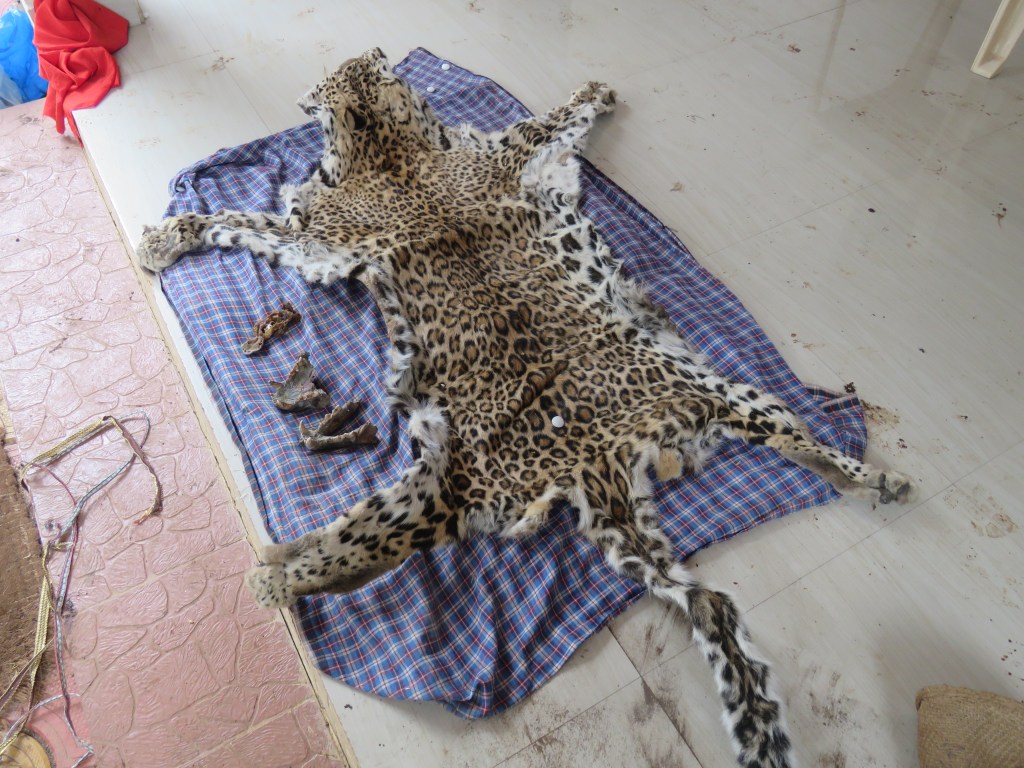
In a significant crackdown on illegal wildlife trade, authorities in Phulbani, Odisha, apprehended six individuals and seized a cache of illicit wildlife products. The operation, led by the Forest Department, resulted in the confiscation of two leopard skins, six barking deer skins, two monitor lizard skins, a leopard skull, a barking deer skull, a loaded country-made gun, snares, and other related paraphernalia. The arrests and seizures mark a critical step in combating wildlife crime in the region.
The enforcement action unfolded following diligent surveillance and intelligence gathering by forest officials in Phulbani. The team, acting on credible information, conducted coordinated raids at multiple locations within the jurisdiction. Their efforts culminated in the apprehension of six suspects allegedly involved in the illegal trade of wildlife products.
Among the confiscated items were two intact leopard skins, which are particularly prized in illegal wildlife markets for their rarity and value. The seizure of six barking deer skins and two monitor lizard skins underscored the broad scope of the illegal wildlife trade network targeted by the authorities. Additionally, the recovery of a leopard skull and a barking deer skull highlighted the extent to which poachers and traffickers exploit vulnerable species for profit.
In addition to the wildlife products, officials also seized a loaded country-made gun and snares, equipment commonly used by poachers to capture and kill animals indiscriminately. Such tools not only endanger targeted wildlife species but also pose significant risks to local ecosystems and biodiversity.
The Forest Department’s swift and decisive action in Phulbani reflects a commitment to combating wildlife crime and safeguarding endangered species. Wildlife trafficking not only threatens the survival of vulnerable species but also undermines conservation efforts and disrupts ecological balance.
The arrested individuals are currently under investigation, facing charges related to wildlife crime under relevant sections of the Wildlife (Protection) Act 1972 and Arms Act. The authorities have emphasized the seriousness of these offenses and are pursuing legal action to ensure accountability and deterrence.
Wildlife conservationists and environmental activists have welcomed the Forest Department’s proactive stance against wildlife crime in Phulbani. They have stressed the importance of stringent enforcement measures and public awareness campaigns to curb the demand for illegal wildlife products and disrupt trafficking networks.
The incident in Phulbani serves as a stark reminder of the ongoing challenges in combating wildlife crime across India. Despite concerted efforts by law enforcement agencies and conservationists, the illegal trade in wildlife continues to pose a significant threat to the country’s biodiversity.
Efforts to address these challenges include strengthening law enforcement capacities, enhancing international cooperation, and raising awareness about the ecological and ethical implications of wildlife trafficking. These efforts are crucial in safeguarding India’s rich natural heritage and ensuring a sustainable future for its wildlife.
The recent arrests and seizures in Phulbani underscore the critical need for continued vigilance and concerted action to combat wildlife crime. By addressing the root causes of illegal wildlife trade and enforcing stringent legal measures, authorities aim to protect vulnerable species and preserve India’s natural biodiversity for future generations.
Illegal Wildlife Trade Bust in Phulbani, Odisha
In Phulbani, Odisha, six arrests were made and significant wildlife contraband seized, including leopard skins, a loaded gun, and various animal skulls and skins, in a Forest Department crackdown on illegal wildlife trade.
2–3 minutes




 PARYAWARAN
Leave a comment