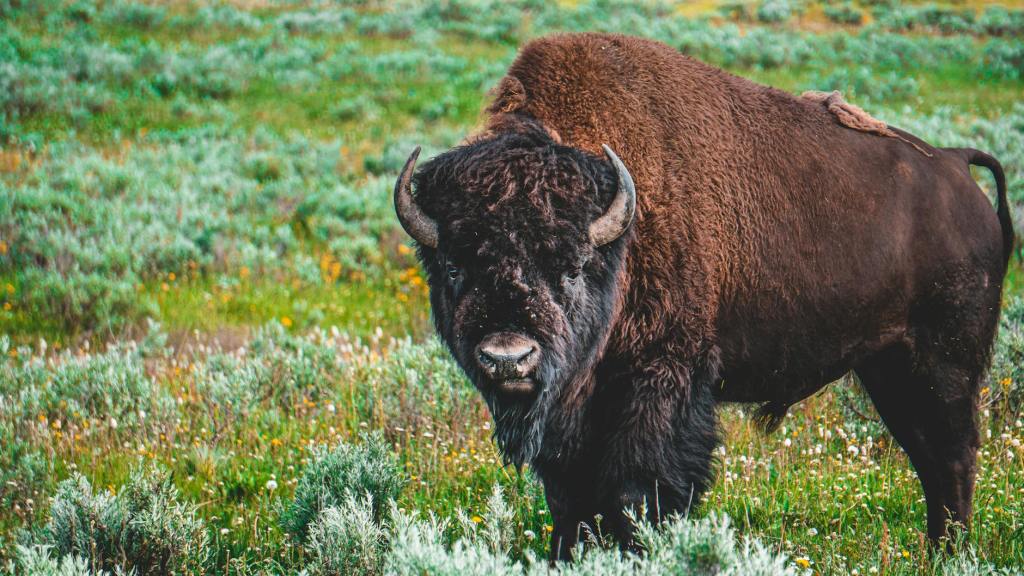
In a pioneering conservation effort, European bison have been successfully introduced into the woodlands of West Blean and Thornden Woods, located on the outskirts of Canterbury. This initiative, led by Kent Wildlife Trust and the Wildwood Trust, aims to restore the local ecosystem and enhance biodiversity by allowing these heavy grazers to thrive in their new environment.
Since their release in July 2022, the bison herd has flourished, rapidly increasing in size. Initially comprised of three female bison, one of which was pregnant upon release, the herd now boasts six members after the birth of two calves. The introduction of a male bison from Germany further bolstered the herd’s growth potential. The bison have been roaming freely across 50 hectares (123 acres) of ancient woodland, significantly impacting the ecosystem.
However, the bison’s success has necessitated the construction of Britain’s first-ever bison bridges to ensure the animals can move safely across a network of public footpaths without direct interaction with people. Four bridges, funded by a £1 million initiative supported by the National Lottery Heritage Fund and various private donors, will allow the bison to traverse an expanded area of 200 hectares. This innovative solution aims to keep the public and bison separate while offering visitors an opportunity to observe the animals from a safe vantage point.
Bison are recognized as ecosystem engineers, playing a critical role in shaping their habitat. By stripping bark from trees, they create standing deadwood that supports various wildlife, including insects, birds, and bats. Their dust-bathing habits foster environments for burrowing insects, and their trampling of vegetation opens up space for wildflowers to flourish. This ecological activity not only promotes biodiversity but also aids in carbon sequestration. Research from Romania’s Southern Carpathian mountains suggests that bison contribute to the capture of approximately 54,000 tonnes of carbon annually, demonstrating their potential to mitigate climate change effects.
The Wilder Blean project, as it is known, stands as a model for future conservation efforts across Britain. The initiative emphasizes the importance of rewilding and restoring ecosystems through the reintroduction of native species. The European bison, a relative of the extinct steppe bison that once roamed the UK, serves as a symbol of this restoration. Once native to Britain, the European bison faced extinction, with the last wild individual shot in the Caucasus in 1927. Today, thanks to extensive breeding programs, free-ranging herds have been established in various European nations, including Germany, Switzerland, and Poland.
Despite the positive outcomes of the bison reintroduction, challenges remain. The classification of bison as dangerous wild animals under UK law necessitates extensive fencing—27 miles within the Blean Woods complex—to keep them separated from the public. This classification poses significant barriers for future rewilding and restoration initiatives, making such projects costly and complex. In contrast, bison in other countries, including the Netherlands, are allowed to coexist more closely with the public in rewilding schemes.
The ambitious Wilder Blean initiative aims to transform conservation practices in the UK, calling for innovative strategies that can facilitate the introduction of other species in similar projects. The success of the bison could inspire conservationists to adopt more inclusive approaches to wildlife management, recognizing the ecological benefits that come from allowing large herbivores to roam freely in restored habitats.
In the broader context of environmental conservation, the reintroduction of the European bison offers hope for reversing biodiversity loss. As ecosystems face unprecedented pressures from urbanization, climate change, and habitat degradation, such initiatives may provide valuable blueprints for future restoration efforts. The collaboration between organizations and the community will be crucial in ensuring that these projects not only succeed but also pave the way for new ones across the country.
As the bison continue to thrive in the woodlands of Kent, they serve as a reminder of the potential for nature to recover when given the chance. The ongoing efforts to manage and monitor their population reflect a commitment to restoring the natural balance of the ecosystem, promoting biodiversity, and combating climate change. The success of the bison in the Wilder Blean project may ultimately encourage a shift in how wildlife conservation is approached in the UK, potentially transforming the landscape for future generations of both wildlife and people.



 PARYAWARAN
Leave a comment