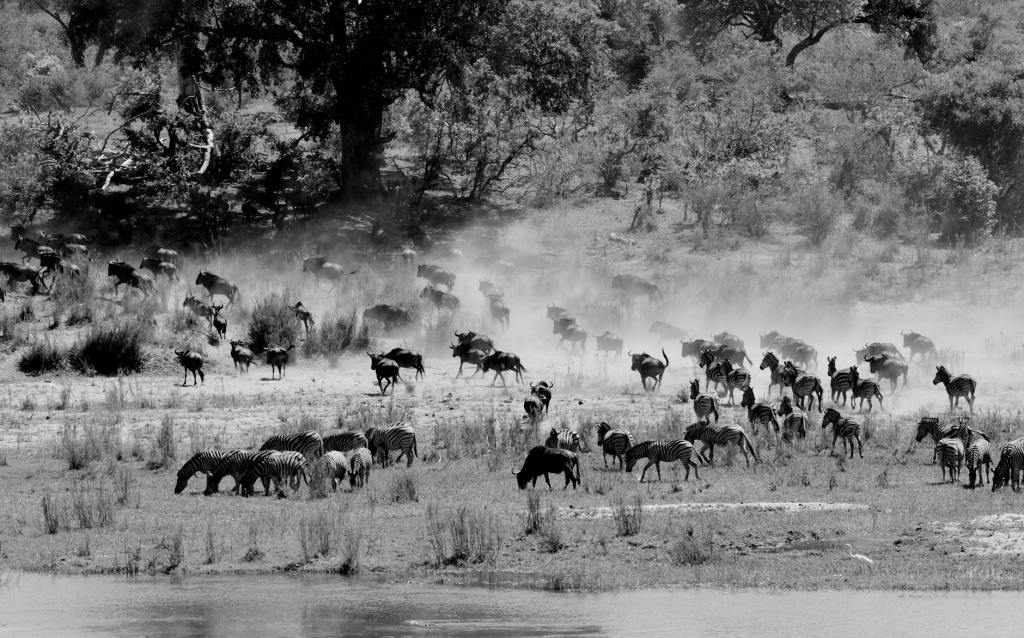
A recent study conducted by a collaboration of researchers from several prestigious institutions, including the universities of Hohenheim and Groningen, the Free University of Berlin, and the Kenya Meteorological Department, has revealed alarming changes in the weather patterns of the Mara-Serengeti ecosystem. This region, which encompasses Kenya’s Maasai Mara and Tanzania’s Serengeti National Park, is renowned for its wildlife richness and the annual spectacle known as the Great Migration, where millions of animals traverse the landscape in search of food and water. However, the well-being of this intricate ecosystem is now under serious threat due to extreme climate phenomena.
The research, which has tracked weather patterns in the Mara-Serengeti since 1913, indicates a significant warming trend. The average monthly minimum temperatures in Narok Town, which borders the Maasai Mara, have risen by an unprecedented 5.3°C from 1960 to 2024. This change is especially pronounced in May, where temperatures have surged from 7.9°C in 1960 to 13.2°C in 2024. Alongside rising temperatures, the region has experienced increased rainfall over the years; however, this has been accompanied by more frequent and intense droughts and flooding events.
The implications of these climatic shifts for local wildlife and biodiversity are profound. The drying out of vegetation and water sources is creating fierce competition among wildlife, livestock, and human populations for limited resources. As a result, wildlife numbers are declining, and there are observable changes in migration and breeding patterns. The delicate balance that sustains the Great Migration and supports the region’s predators and scavengers is increasingly jeopardized.
One of the study’s key findings highlights the link between global climate phenomena and local weather extremes. Analysis of the Southern Oscillation Index revealed that since around 1970, the oscillations associated with El Niño and La Niña events have intensified, leading to more frequent and severe droughts and floods. Additionally, the Indian Ocean Dipole has been steadily increasing due to ongoing ocean warming. Researchers identified two repeating cycles occurring every 4.1 and 5.4 years, which continue to impact the region’s weather patterns.
As these cycles strengthen, they contribute to the heightened occurrence of extreme weather events. With warmer sea surface temperatures in the western Indian Ocean correlated to more severe flooding and droughts, the Mara-Serengeti ecosystem is at risk of profound disruption. Such changes not only threaten wildlife but also have significant economic implications for local communities that rely heavily on tourism and conservation efforts.
The study serves as a stark reminder of the interconnectedness of climate systems and ecosystems. As weather patterns become increasingly erratic, the consequences for biodiversity and local livelihoods could be catastrophic. Conservationists and policymakers must act urgently to mitigate the impacts of climate change, ensuring the survival of one of Africa’s most iconic ecosystems and the species that inhabit it.
In light of these findings, it is crucial to raise awareness about the ongoing climate crisis and to foster collaboration among governments, local communities, and conservation organizations to secure a sustainable future for the Mara-Serengeti ecosystem.




 PARYAWARAN
Leave a comment