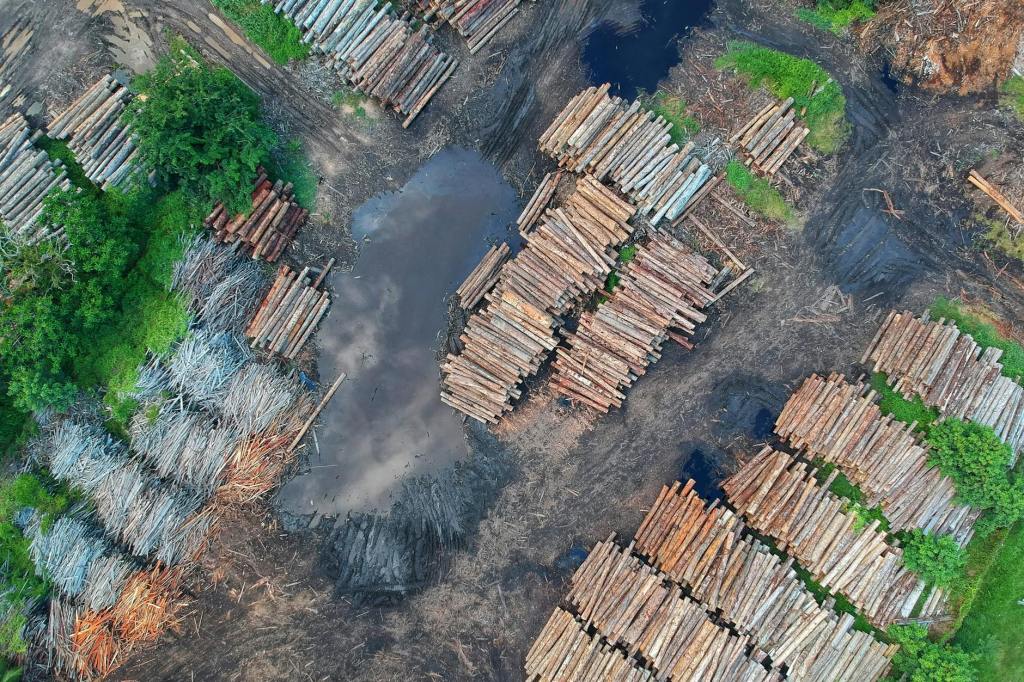
The alarming rise in global deforestation during 2023 has sparked widespread concerns about the effectiveness of international efforts to combat climate change and preserve biodiversity. Despite commitments from nearly 140 nations three years ago to halt deforestation by the end of the decade, recent analyses indicate that deforestation rates have escalated significantly. In 2023, approximately 6.4 million hectares (16 million acres) of forest were lost, alongside an additional 62.6 million hectares degraded through logging, road construction, and forest fires.
This troubling trend is especially evident in countries like Indonesia and Bolivia, where political shifts and sustained demand for commodities such as beef, soy, palm oil, paper, and nickel have driven deforestation to unprecedented levels. The situation is exacerbated by weak regulatory frameworks and inadequate funding for forest conservation initiatives, which have struggled to effectively mitigate the ongoing destruction.
Conversely, the Brazilian Amazon has witnessed a noteworthy development, with recent government initiatives resulting in a remarkable 62% reduction in deforestation within a single year. Despite this positive trend, the broader global landscape reveals a troubling increase in forest loss, surpassing pre-commitment levels. This stark reality illustrates that as of 2023, global deforestation has deteriorated rather than improved since the beginning of the decade, posing significant threats to critical climate objectives and wildlife conservation efforts.
Analyses highlight that without robust regulations and substantial financial backing for forest protection, the international community is unlikely to achieve its ambitious targets. Historical patterns indicate that deforestation rates are highly sensitive to economic and political fluctuations. Countries that once made progress in reducing deforestation, such as Indonesia, are now facing considerable setbacks primarily due to the surging global demand for commodities and weakened governmental enforcement.
Indonesia serves as a prime example, having experienced a 57% surge in deforestation in 2023. As a leading producer of nickel, a metal increasingly vital for green technologies, the country exemplifies the complex interplay between resource extraction and environmental sustainability. This reversal raises critical questions about the long-term viability of current conservation strategies in the face of external pressures.
While some nations, including Australia, Colombia, Paraguay, Venezuela, and Vietnam, have demonstrated progress toward the 2030 deforestation target, the analysis underscores the urgent need for increased funding for conservation initiatives, the empowerment of Indigenous land rights, and a reduction in consumer demand for products linked to deforestation.
The European Union has proposed regulations aimed at banning products associated with deforestation, including coffee, chocolate, leather, and furniture. These regulations represent a significant step toward addressing the challenges posed by global deforestation. However, the recent announcement of a one-year delay in their implementation—prompted by protests from various countries—reflects the political complexities that continue to obstruct decisive action.
Experts caution that relying on voluntary measures to curb deforestation has yielded minimal results over the past decade. The evidence suggests that without firm commitments and enforceable regulations, efforts to protect forests may be insufficient. To prevent a deeper environmental crisis, it is imperative for all nations to prioritize forest conservation and align their policies with global climate objectives. This requires ensuring that initiatives aimed at safeguarding these vital ecosystems remain insulated from the volatility of political and economic changes.
The implications of continued deforestation extend far beyond environmental degradation; they pose a direct threat to global biodiversity and climate stability. As deforestation rates continue to climb, the urgency for comprehensive, coordinated action has never been more critical. Failure to act decisively could jeopardize the planet’s ecological balance, underscoring the need for a renewed commitment to sustainable practices and conservation efforts worldwide.




 PARYAWARAN
Leave a comment