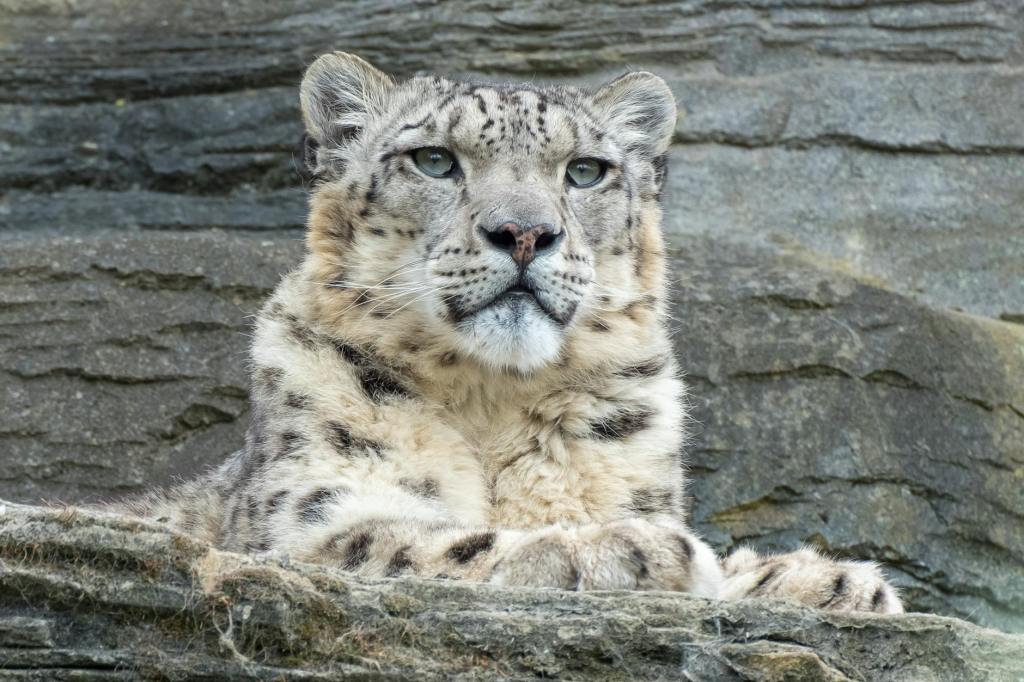
Artificial intelligence (AI) technology has played a crucial role in mitigating human-wildlife conflict in northern Pakistan, successfully addressing issues related to the endangered snow leopard (Panthera uncia) [53]. An initiative converting conflict into a co-existence model in Gilgit-Baltistan, a key habitat of this endangered species has seen WWF-Pakistan set up AI-based trail cameras in the field.
Those AI-enabled camera traps, which were installed in 2022, are positioned in locations where livestock depredations have been recorded. These cameras identify snow leopards and transmit live data to a common-system that warns local communities about threats. This proactive approach has thus reduced livestock attacks that trigger retaliatory snow leopard killings by farmers trying to protect their herds.
These camera traps were installed co-developed with Lahore University of Management Sciences, in areas recommended by local community representatives of frequent snow leopard depredations. This, in turn, has led to more amicable interactions between local communities and snow leopards by decreasing livestock predation. Both protecting the endangered felines and relieving the economic costs of livestock herding, the technology improves livelihoods at our project sites and helps the snow leopard population recover.
Unfortunately, ongoing threats such as poaching, illegal hunting and loss of habitat due to climate change, continue to threaten the snow leopards, according to research carried outby WWF. It is estimated that there are fewer than 7,000 snow leopards in the world and only 200 to 420 in the northern mountain ranges of Pakistan.
A WWF study, also released in April 2024, highlighted the importance of ensuring that infrastructure initiatives don’t negatively impact wildlife. According to the report, linear infrastructure projects, such as roads and railways, cause fragmentation of snow leopard habitats which limits their range leading to even greater threats to survival. Although these developments promise to stimulate national economies, proper planning must take place to safeguard endangered wildlife.
If successful, the use of AI technology here could be a model for protecting many other species threatened by human destruction. Combining advanced technology and time-tested conservation approaches is an optimistic direction for sustainable coexistence between wildlife and communities in one of the planet’s most fragile ecosystems.




 PARYAWARAN
Leave a comment