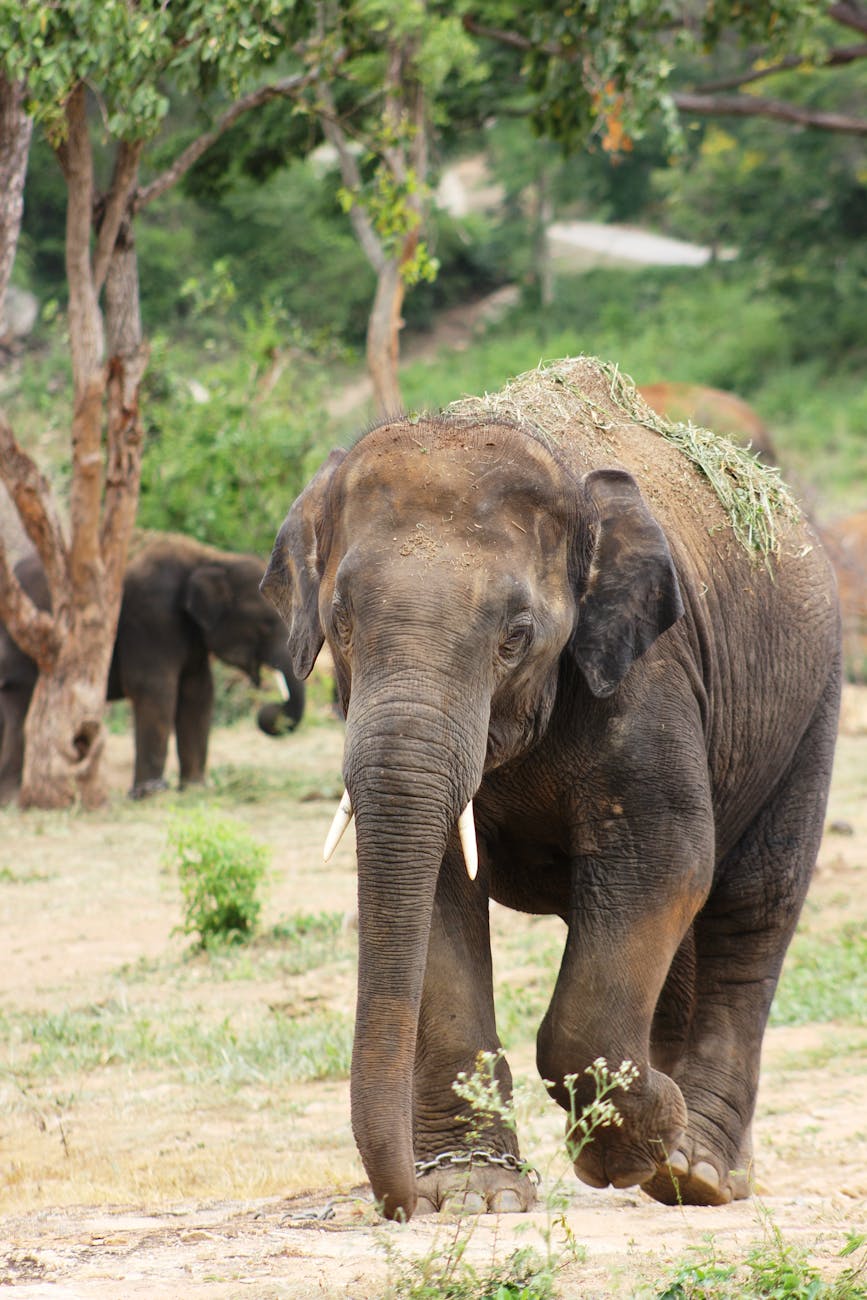
Climate change has emerged as a significant challenge to wildlife management in India, noted ecologist and Asian elephant expert Dr. Raman Sukumar stated on Sunday. Dr. Sukumar highlighted the link between extreme climatic events and the recent deaths of 10 elephants in Madhya Pradesh’s Bandhavgarh Tiger Reserve, which are suspected to have been caused by toxicity from consuming kodo millet.
Dr. Sukumar explained that the cyclonic storm Dana, which struck Odisha last month, brought excessive moisture and heavy rains to both Odisha and Madhya Pradesh, coinciding with the harvest season for millets. “The untimely rains and moisture likely caused fungal poisoning and toxicity in the kodo millet, which the elephants ingested,” he said.
The renowned ecologist further emphasized that climate change and extreme weather events are forcing wild animals, particularly elephants, to migrate from their natural habitats, with Odisha and Jharkhand witnessing significant changes in migration patterns. These shifts, coupled with increasing human interventions, are exacerbating human-wildlife conflicts, complicating conservation efforts.
As a professor at the Indian Institute of Science (IISc), Dr. Sukumar stressed the need for a stronger focus on climate change mitigation rather than adaptation strategies. He also called for developed countries to take a more active role in addressing global climate issues.
Dr. Sukumar also pointed out that the current legal and social frameworks in India are not adequately incentivizing people to engage in forest conservation. “We need to create legal provisions that empower individuals to plant and protect forests, thereby improving their livelihoods, instead of punishing them for their efforts in forest restoration and growth,” he said.
His comments serve as a call to action, urging the country to rethink its approach to both climate change and wildlife conservation, with an emphasis on more sustainable and community-driven solutions.



 PARYAWARAN
Leave a comment