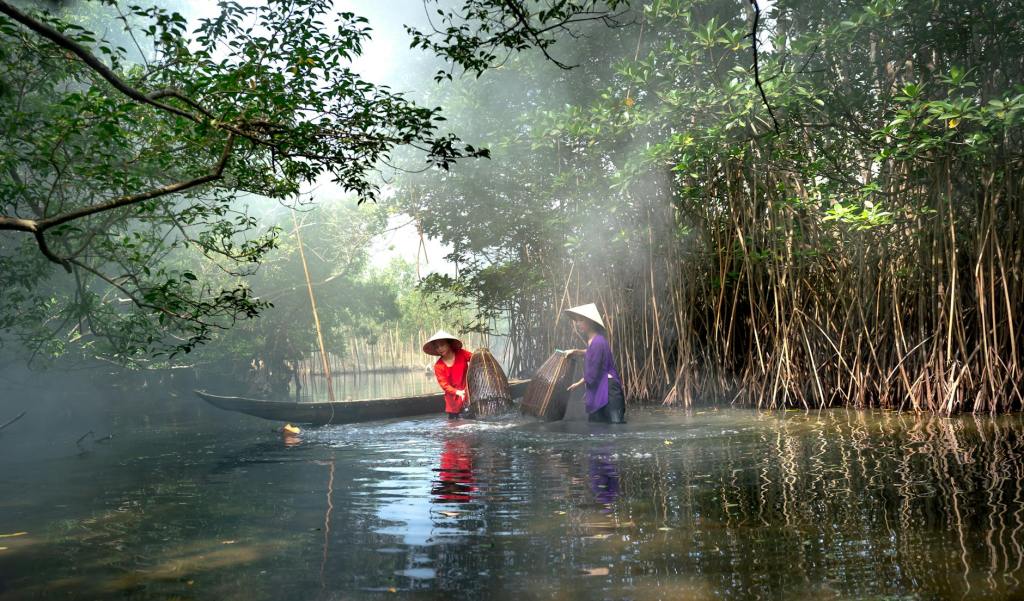
On the outskirts of Jayapura, Papua, women from the village of Enggros have long depended on the local mangrove forests for food, livelihoods, and cultural practices. These unique ecosystems, rich in biodiversity, have sustained generations of villagers, who rely on the forest for essential resources like clams and firewood. However, the mangroves are now facing unprecedented threats due to urban development and pollution, putting both the environment and the traditional way of life at risk.
The mangrove forests along Papua’s coastline are critical to the region’s ecological balance. They act as natural barriers against coastal erosion, help protect inland communities from storms and floods, and serve as breeding grounds for numerous species of fish and marine life. For the women of Enggros, these mangroves have provided not only food but also a vital connection to their heritage. For generations, they have harvested clams from the muddy shores and gathered firewood for cooking and warmth. The forests also play an important role in maintaining the community’s way of life, reinforcing cultural bonds through the shared responsibility of caring for the land.
However, rapid urban expansion and rising pollution levels have led to the degradation of these vital mangrove ecosystems. As the coastline is encroached upon by development projects, mangrove forests are shrinking, reducing both their biodiversity and the resources they provide. The once thriving ecosystem is now under threat, endangering the local women’s ability to sustain their families and preserve cultural practices tied to the land.
In response to this growing crisis, local women, along with environmental experts, are taking action to restore the mangrove forests. Initiatives to replant mangroves and promote sustainable practices are underway, with the goal of halting further deforestation and contamination. These efforts are crucial not only for the environment but also for safeguarding the livelihoods and traditions of the Enggros community.
The situation in Papua highlights a broader issue facing many coastal regions: the critical role of mangroves in supporting both biodiversity and human communities. As the climate crisis accelerates, the loss of these ecosystems exacerbates vulnerability to environmental hazards, including flooding and pollution. The people of Enggros, working together with experts and conservationists, are striving to ensure that their mangrove forests are preserved for future generations, protecting both their way of life and the invaluable resources the mangroves provide.



 PARYAWARAN
Leave a comment