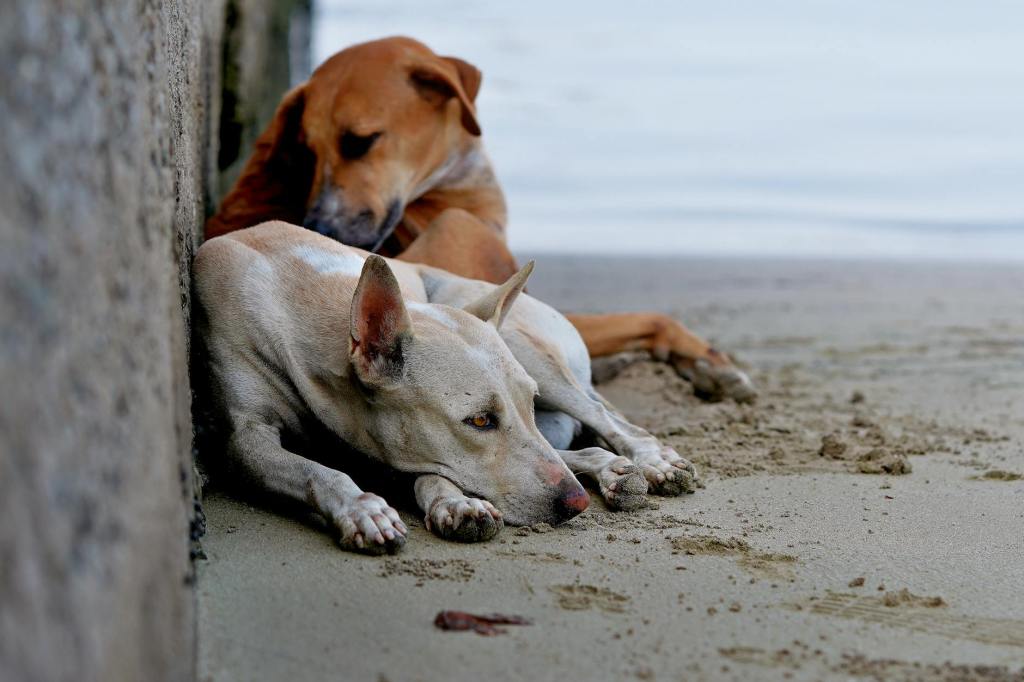
In India, free-ranging dogs are a significant threat to native wildlife. These dogs outcompete smaller canids like Indian foxes and prey on the eggs of critically endangered species, such as the great Indian bustard. With an estimated 60 million dogs in the country, their presence has detrimental effects on over 80 native species, including 31 species that are threatened and four considered critically endangered by the International Union for Conservation of Nature (IUCN).
While the impact of free-ranging domestic dogs on wildlife is well-documented, not all free-ranging dogs behave in the same way. A recent study has focused on understanding the different movement patterns of farm dogs and village dogs and how these behaviors may influence their impact on the surrounding ecosystem.
Farm dogs and village dogs differ significantly in how they interact with humans and the land around them. Village dogs are typically unowned, living in human settlements, and subsisting on resources like garbage. They are often not closely monitored or cared for by humans. On the other hand, farm dogs, though loosely domesticated by farmers, are kept primarily to protect livestock and deter crop-raiding wildlife. These dogs are more likely to roam freely, moving between farmlands and other areas, such as grasslands.
Research conducted in Maharashtra’s Shirsuphal village, an area surrounded by both farmlands and wild grasslands, revealed key differences in the movement patterns of farm and village dogs. The study involved tracking 31 dogs with GPS collars. Of these, 20 were farm dogs, and 11 were village dogs. The results showed that farm dogs ranged much farther than village dogs, often venturing into grasslands far from human settlements. In contrast, village dogs mostly stayed within the confines of the village, limiting their movement to urban areas.
This difference in behavior suggests that farm dogs pose a greater threat to wildlife than village dogs. Farm dogs frequently move between farmlands and grasslands, areas that are home to species like the Indian fox, which depends on these grasslands for survival. Additionally, farm dogs are known to prey on Indian gazelles, further threatening the local ecosystem.
The findings of this research are crucial for wildlife managers who are seeking effective ways to mitigate the negative impact of free-ranging dogs on native wildlife. Since farm dogs are more likely to stray from their homes and have a broader range, wildlife managers could focus on educating farmers about how to prevent their dogs from wandering too far, particularly in areas near national parks or other protected regions.
One potential solution is to encourage more regular feeding of farm dogs, which may help reduce their need to roam. However, this approach is challenging in India, where dogs often do not have a clear, consistent owner, unlike in countries like the U.S. or Canada, where farm dogs are more tightly controlled by specific owners.
The research underscores the importance of understanding the behavioral differences between village and farm dogs. By focusing on these distinctions, wildlife managers can develop more targeted strategies to minimize the impact of free-ranging dogs, particularly in regions where their movements pose a risk to endangered species.
As the number of free-ranging dogs continues to grow, efforts to manage their behavior will be critical to preserving the fragile wildlife that depends on India’s grasslands and other ecosystems. With better management and education, there is hope that the negative effects of free-ranging dogs on native species can be reduced, giving wildlife a better chance at survival.




 PARYAWARAN
Leave a comment