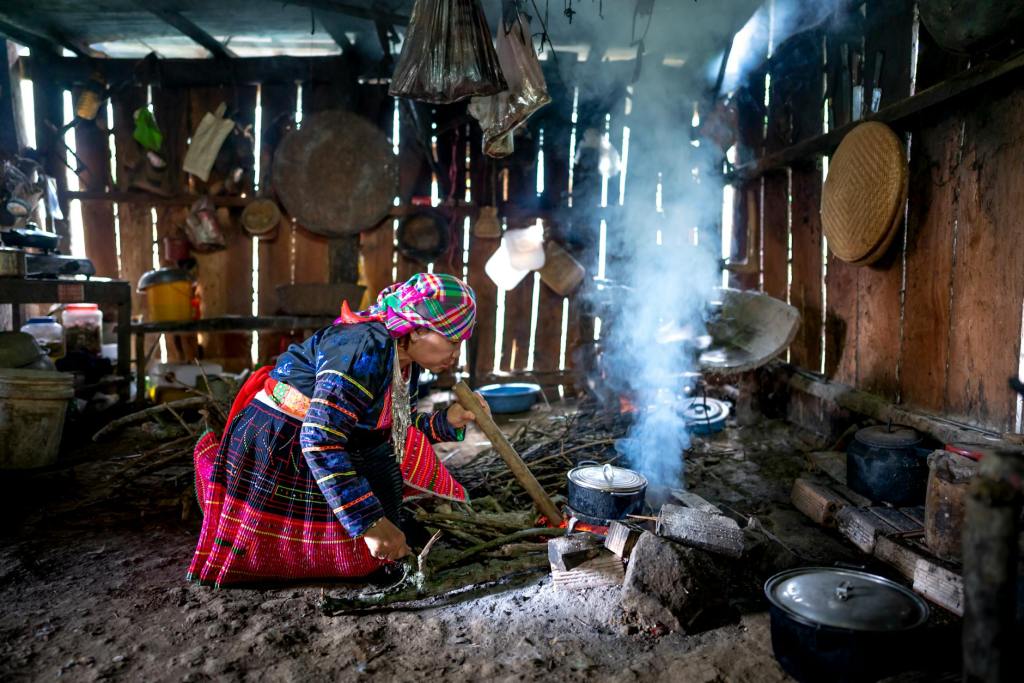
Despite global efforts to reduce the harmful effects of household air pollution, it remains one of the world’s most persistent public health threats, with approximately one-third of the global population still exposed to dangerous levels of pollution caused by cooking fuels. A recent report reveals that in 2021, household air pollution was responsible for 3.1 million deaths worldwide, including over 500,000 children under the age of five, primarily in low-income countries.
The study, conducted by the Institute for Health Metrics and Evaluation, highlights the fact that while the global exposure to household air pollution has decreased over the past few decades—from 56.7% of the population in 1990 to 33.8% in 2021—population growth has meant that 2.67 billion people remain at risk. The findings underline the continued challenges in reducing this pervasive issue, especially in regions with high reliance on solid fuels for cooking.
The report also reveals troubling statistics regarding the rise in pollution-related deaths in Sub-Saharan Africa. Between 1990 and 2021, the number of deaths due to household air pollution in the region increased from 685,000 to 741,000, largely due to the continued use of solid fuels such as wood, charcoal, and dung for cooking. This persistent reliance on harmful cooking methods has been exacerbated by economic instability and limited access to cleaner, safer alternatives.
One of the key concerns raised by the study is the high pediatric burden associated with indoor air pollution. Children, especially those under five years old, are particularly vulnerable to the health effects of cooking over solid fuels. Exposure to the fine particulate matter released from burning these materials can have severe consequences for young children, leading to respiratory infections such as pneumonia, stunted growth, cognitive delays, and even death.
Despite efforts by governments and aid agencies to promote cleaner cooking technologies and fuels, progress has been slow. In many households across Sub-Saharan Africa, South Asia, and parts of Latin America, people continue to rely on solid fuels not out of choice, but due to the lack of affordable or accessible alternatives. Clean cooking options such as electricity or gas are often too expensive or simply unavailable, leaving millions of families trapped in a cycle of exposure to harmful indoor air pollution.
The smoke produced by burning solid fuels in small, enclosed spaces is invisible, making it easy for the global public to overlook the severity of the problem. However, the health consequences are significant and long-lasting, affecting not just individuals but entire communities and generations. The fine particulate matter, which is small enough to penetrate deep into the lungs and bloodstream, increases the risk of respiratory diseases, heart disease, lung cancer, and stroke.
The issue of household air pollution is also intertwined with broader systemic challenges related to energy equity and infrastructure. Many families who continue to use solid fuels do so because they lack access to affordable and reliable energy sources. In some cases, cultural practices and traditional cooking methods further complicate efforts to switch to cleaner alternatives. The lack of investment in clean cooking initiatives, combined with economic and social barriers, has made it difficult to address this problem at scale.
As governments and international organizations push for solutions, progress remains uneven, and the problem persists in many parts of the world. While the global community has made strides in reducing exposure to household air pollution, the health and environmental impacts continue to demand urgent attention. With millions of people, especially children, still living in households where cooking with solid fuels is the norm, the challenge remains vast.
The study’s authors emphasized the importance of continued efforts to address indoor air pollution, particularly in regions where it is most prevalent. “The high level of pediatric burden estimated in this study is a major cause for concern,” the researchers noted. The findings underscore the need for increased investment in clean cooking technologies and greater international collaboration to provide safer, more affordable alternatives to the millions of families still exposed to harmful indoor air pollution.
Although progress has been made in lowering global exposure to harmful cooking fuels, significant challenges remain. Household air pollution still causes millions of deaths annually, with children suffering the most severe health effects. Tackling this issue requires a united global effort to enhance energy access, support cleaner cooking alternatives, and raise awareness of the long-term health risks of indoor air pollution. Without action, the smoke will persist, leaving enduring consequences for future generations.




 PARYAWARAN
Leave a comment