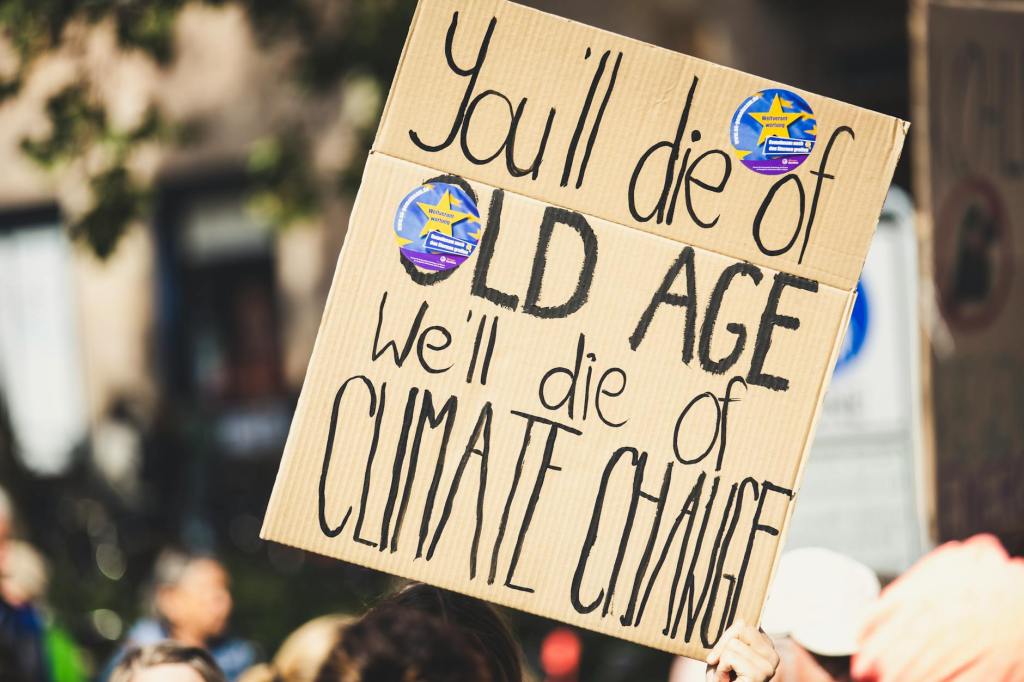
Two UK residents have taken their fight against the government’s climate policies to the European Court of Human Rights (ECHR), arguing that the UK’s failure to adequately prepare for and respond to the impacts of climate change constitutes a violation of their fundamental human rights.
Doug Paulley, a disabled rights activist from Yorkshire, and Kevin Jordan, a retired engineer whose coastal home was destroyed by extreme weather, are challenging the UK government’s 2023 National Adaptation Programme (Nap3). Their case, backed by environmental organization Friends of the Earth, accuses the British government of neglecting its duty to protect its citizens—especially its most vulnerable populations—from the escalating risks posed by climate change.
Paulley, who lives with multiple disabilities that are exacerbated by increasingly frequent heatwaves, says the government’s lack of effective adaptation measures has had a direct impact on his health and well-being. Jordan, meanwhile, lost his home to a severe coastal storm and argues that poor planning and inadequate protections left his community exposed to foreseeable dangers.
At the heart of their case is the claim that Nap3, the UK’s primary climate adaptation strategy, fails to meet basic legal and human rights standards. The two men assert that the plan lacks enforceable objectives, does not adequately assess or address climate-related risks, and excludes meaningful consideration of the needs of marginalized and at-risk groups, including people with disabilities, the elderly, and low-income households.
Their claims were previously dismissed by UK courts, which found the government’s policies to be within legal bounds. However, Paulley and Jordan are now appealing to the ECHR, arguing that the UK’s climate inaction violates rights protected under the European Convention on Human Rights, particularly Article 2 (right to life) and Article 8 (right to respect for private and family life).
“Climate change is not just an environmental issue—it is a human rights issue,” said Paulley in a statement released by Friends of the Earth. “The government has a responsibility to protect all of us, especially those of us who are most exposed to climate-related harm.”
Jordan added, “I lost my home to the sea, and yet the government’s plan doesn’t even properly acknowledge the risks coastal communities face. We’re not just statistics. We’re people who deserve to be safe.”
The case comes at a time when legal challenges related to climate change are on the rise around the world. Courts in various countries, from the Netherlands to Colombia, have increasingly been called upon to hold governments accountable for failing to meet climate commitments or for inadequately protecting citizens from environmental harm. These lawsuits underscore the growing recognition that climate change is not merely a scientific or policy problem but a profound human rights issue.
Experts note that vulnerable populations are disproportionately affected by climate change. The elderly, those with pre-existing health conditions, people with disabilities, and low-income individuals often lack the resources and infrastructure to cope with extreme weather events such as heatwaves, flooding, and storms.
“The UK, like many developed nations, has been slow to align its adaptation strategies with the realities of a warming world,” said Dr. Elise Markham, a climate policy analyst at the University of Exeter. “This case illustrates the urgent need for inclusive planning that doesn’t leave vulnerable groups behind.”
The UK government has defended its climate strategy, stating that Nap3 builds on previous adaptation efforts and includes a range of policies to address climate resilience. However, critics argue that the plan is vague, lacks measurable targets, and does not provide adequate funding or legal guarantees to ensure implementation.
Friends of the Earth, which is supporting the legal effort, believes the case has broader implications for climate justice in Europe. “What we are seeing here is a pivotal test of how seriously human rights institutions will treat the threat of climate breakdown,” said Katie de Kauwe, a lawyer with the organization. “If successful, this case could set an important precedent for future climate litigation in Europe and beyond.”
A ruling from the European Court of Human Rights is expected within the next year. If the court sides with the claimants, it could force the UK to revise its adaptation strategy and potentially influence climate policy across the continent.
As climate-related disasters grow more frequent and severe, the pressure on governments to act decisively and inclusively is only intensifying. For Paulley and Jordan, their legal battle is not only about personal loss—it is about pushing for a future where no one is left behind in the face of climate crisis.




 PARYAWARAN
Leave a comment