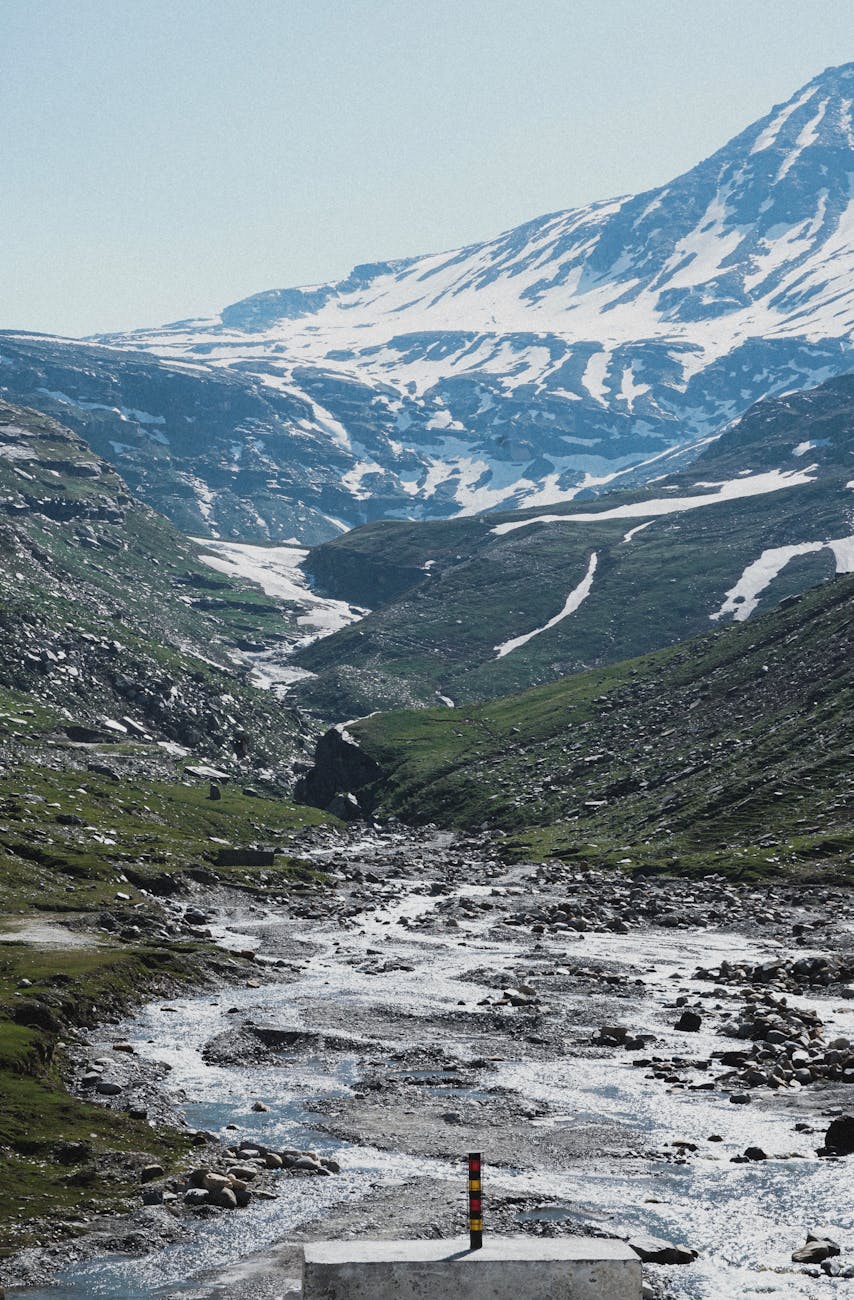
A new international study has revealed that only 24 per cent of global glacier ice will survive if current global warming trajectories continue unchecked. Published in the journal Science, the research underscores the stark impact of rising temperatures on the planet’s glaciers and emphasizes the importance of limiting global warming to 1.5°C, as outlined in the Paris Agreement.
The study, led by a team of 21 scientists from ten countries, used eight advanced glacier models to simulate the future of over 200,000 glaciers worldwide. Even if temperatures remain at current levels, glaciers are still expected to lose around 39 per cent of their 2020 ice mass over the coming centuries. However, the scale of loss increases dramatically as global temperatures rise.
Under existing climate pledges, the Earth is on course to warm by 2.7°C above pre-industrial levels. If this trajectory is maintained, researchers estimate that just 24 per cent of global glacier ice will remain. In contrast, limiting warming to 1.5°C could help preserve approximately 54 per cent of glacier ice—more than double what would survive under the current path.
“This research shows that the decisions we make now will determine the fate of glaciers across the globe,” said Dr. Lilian Schuster, co-lead author and glaciologist at the University of Innsbruck. “Glaciers are retreating quickly, and many of the changes we’re seeing are irreversible in human timescales.”
The study’s release coincides with the first United Nations conference on glaciers, held this week in Tajikistan. The findings are expected to fuel urgent discussions among world leaders about how to strengthen climate commitments and avert the worst consequences of glacier loss.
The impacts vary dramatically by region. In areas such as the European Alps, the Western Rockies in North America, and Iceland, up to 90 per cent of glacier volume could vanish if temperatures rise by 2°C. Scandinavia could face the complete loss of its glacier ice. Meanwhile, in Central Asia—home to crucial glacier-fed water systems supporting millions in countries like Pakistan, Kyrgyzstan, and China—only 30 per cent of glacier ice is projected to survive at 2°C warming, compared to 60 per cent at 1.5°C.
Tropical regions are already facing devastating losses. Venezuela has lost its last glacier, and Indonesia’s “Infinity Glacier” is expected to disappear within two years. Germany and Slovenia have also seen their glaciers vanish entirely in recent years.
The study emphasizes that even after global temperatures stabilize, glaciers will continue to melt for centuries. This slow response is due to the inertia in glacier systems, which take time to adapt to changes in climate.
“Glaciers are visible markers of climate change,” said Dr. Schuster. “But what we see today is just the beginning—the true extent of the loss will unfold over the coming decades and centuries.”
The researchers warn that while time is running short, meaningful action to reduce emissions and limit warming could still prevent catastrophic glacier loss and safeguard critical water sources for future generations.


 PARYAWARAN
Leave a comment