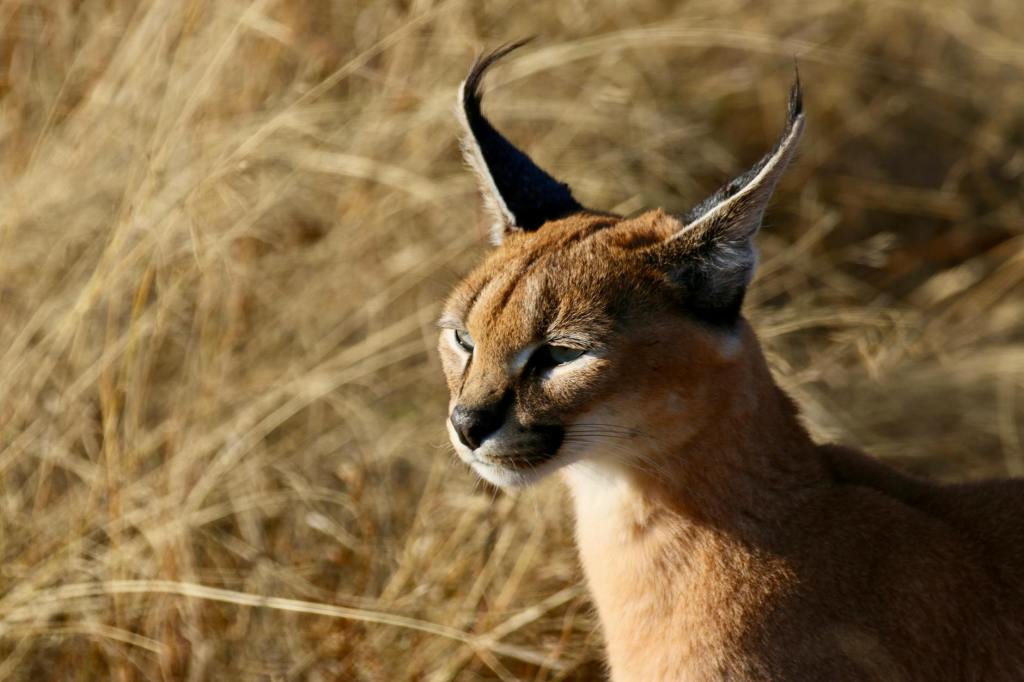
In a significant development for wildlife conservation in India, a caracal, one of the country’s most elusive and endangered wild cats, has been captured on camera traps inside the Gandhi Sagar Wildlife Sanctuary in Madhya Pradesh’s Mandsaur district. This sighting marks the first confirmed presence of the species in the state in nearly 20 years, offering hope for biodiversity recovery under the ongoing Project Cheetah.
The caracal was photographed multiple times within the fenced Cheetah Closed Natural Area, a protected zone established as part of the cheetah reintroduction program. The images, captured on July 1, 2025, show the animal at the same location during late-night hours, confirming its activity in the sanctuary’s Golabavdi beat. The discovery underscores the ecological health of Gandhi Sagar’s dry and semi-arid landscape, which appears capable of supporting rare and threatened species like the caracal, locally known as syahghosh.
A Sign of Ecosystem Revival
The sighting is being hailed as a positive outcome of habitat restoration efforts under Project Cheetah, which aims to reintroduce cheetahs to India while simultaneously reviving their ecosystems. The presence of the caracal suggests that conservation measures, including habitat consolidation and prey base enhancement, are benefiting not just cheetahs but other endangered species as well.
Caracals are medium-sized wild cats distinguished by their striking black ear tufts and remarkable agility. They thrive in dry scrublands, semi-arid regions, and moist woodlands, but their populations have dwindled due to habitat destruction and human encroachment. In India, they are classified as critically endangered, with only fragmented populations reported in a few states like Rajasthan and Gujarat. The Madhya Pradesh sighting is thus a rare and encouraging event for conservationists.
A Long-Awaited Rediscovery
For years, wildlife authorities in Madhya Pradesh had suspected the caracal’s local extinction, with no verified sightings since the early 2000s. In 2019, a statewide search was launched, including public awareness campaigns in rural areas, but the efforts only led to misidentifications, with jungle cats often mistaken for caracals. By 2023, plans were even drawn up to reintroduce the species in the Gwalior region, given its prolonged absence from the wild.
The recent camera trap images have now overturned those assumptions, proving that the caracal still survives in the state’s wilderness. The repeated sightings at Gandhi Sagar indicate that the sanctuary’s ecosystem remains robust enough to sustain such a rare predator.
Legal Protection and Conservation Challenges
Listed under Schedule I of the Wildlife (Protection) Act, 1972, the caracal enjoys the highest level of legal protection in India. Internationally, it is classified as a threatened species by the International Union for Conservation of Nature (IUCN). Despite these safeguards, the animal faces severe threats from habitat fragmentation, poaching, and declining prey populations.
The Gandhi Sagar Sanctuary, with its vast grasslands and rocky terrain, provides an ideal habitat for the caracal, as well as other predators like leopards and the newly reintroduced cheetahs. Conservationists hope that continued monitoring and habitat management will further bolster the caracal’s presence in the region.
Implications for Project Cheetah
The caracal’s reappearance aligns with the broader goals of Project Cheetah, which seeks to restore India’s grassland ecosystems by reintroducing apex predators. A thriving caracal population indicates a balanced food chain and a healthy prey base, both critical for the survival of cheetahs and other carnivores.
As monitoring efforts intensify, wildlife experts anticipate more such discoveries, reinforcing the importance of large-scale habitat conservation. The caracal’s unexpected return to Madhya Pradesh serves as a reminder of nature’s resilience when given protection and space to recover.
Looking Ahead
The sighting has reignited discussions about expanding conservation initiatives for lesser-known species alongside flagship projects like cheetah reintroduction. With proper safeguards, Gandhi Sagar could emerge as a stronghold for the caracal, offering a blueprint for recovering other threatened wildlife across India.
For now, the rare glimpse of this enigmatic wild cat has brought renewed optimism to India’s conservation community, proving that even species on the brink of disappearance can reclaim their place in the wild when ecosystems are preserved and restored.



 PARYAWARAN
Leave a comment