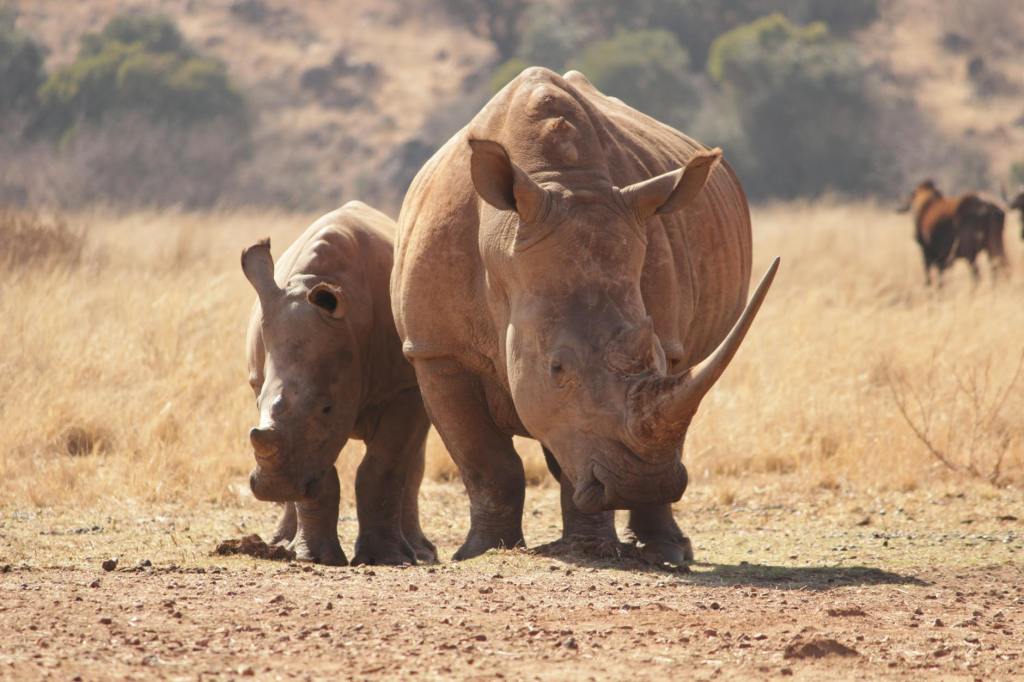
A new report by TRAFFIC, the International Union for Conservation of Nature (IUCN), and the IUCN SSC African and Asian Rhino Specialist Groups reveals mixed news for rhino conservation. While rhino poaching in Africa has dropped to its lowest level since 2011, overall rhino populations continue to decline, with white rhinos hitting a near two-decade low. The report, commissioned by CITES for the 20th Conference of the Parties (CoP20), provides the most comprehensive assessment of rhino populations, poaching trends, and illegal trade across Africa and Asia.
African Rhinos: Poaching Down, but Populations Still Falling
In Africa, rhino poaching has decreased, with 2024 recording the lowest numbers in over a decade. However, the total rhino population has declined by 6.7%, with white rhinos—the most numerous subspecies—now at their lowest level in nearly 20 years. South Africa, home to the world’s largest rhino populations, saw a worrying spike in poaching in early 2025, with at least 91 rhinos killed in the first quarter alone, many in privately managed reserves. Chad also reported losing two of its four reintroduced black rhinos.
Despite these challenges, black rhinos have shown signs of recovery, thanks to intensive conservation efforts. However, experts warn that progress remains fragile. “While encouraging gains have been made in black rhino recovery, the recent decline in white rhino numbers is a stark reminder that conservation success is not guaranteed,” said Dave Balfour, Chair of the IUCN SSC African Rhino Specialist Group. He emphasized the need for integrated management approaches that include local communities in conservation efforts.
Asian Rhinos: Stability in South Asia, Crisis in Indonesia
In Asia, greater one-horned rhinos in India and Nepal continue to recover, with populations now estimated at 4,075 individuals. However, the situation remains dire for Indonesia’s critically endangered rhinos. Only around 50 Javan rhinos remain, and Sumatran rhinos number just 34–47, putting them at high risk of extinction.
“Rhino conservation is proving that change is possible,” said Dr. Grethel Aguilar, IUCN Director General. “Successes in South Asia and parts of Africa show that intelligence-led enforcement, community engagement, and habitat protection can reverse declines. But lasting impact requires sustained investment, political will, and global collaboration.”
Illegal Horn Trade: Declining but Still a Major Threat
Although illegal rhino horn trade has decreased since its peak in 2019, it remains a significant threat. Between 2021 and 2023, authorities seized approximately 1.8 tonnes of rhino horn—equivalent to 716 whole horns—in over 750 recorded incidents. South Africa accounted for 66% of global seizures, with Malaysia and Viet Nam emerging as key transit and destination countries.
Despite these enforcement efforts, gaps in data transparency, inconsistent reporting, and limited DNA sample sharing continue to hinder anti-trafficking efforts. “Closing these gaps is essential for targeted law enforcement,” said Sharon Baruch-Mordo, Senior Specialist at TRAFFIC. “Better reporting and cross-border collaboration can turn data into real impact.”
The Road Ahead: Strengthening Conservation Efforts
The report calls for continued anti-poaching measures, improved population management, and stronger international cooperation to combat wildlife crime. “To support rhino population growth, active management and anti-poaching efforts must continue across all range states,” said Sam Ferreira, Scientific Officer with the IUCN SSC African Rhino Specialist Group.
With rhino populations still under pressure and traffickers adapting quickly, the report underscores the need for long-term investment in conservation, intelligence-sharing, and community-led initiatives. As the global fight to save rhinos continues, the findings highlight both progress and the urgent work still needed to secure their future.



 PARYAWARAN
Leave a comment