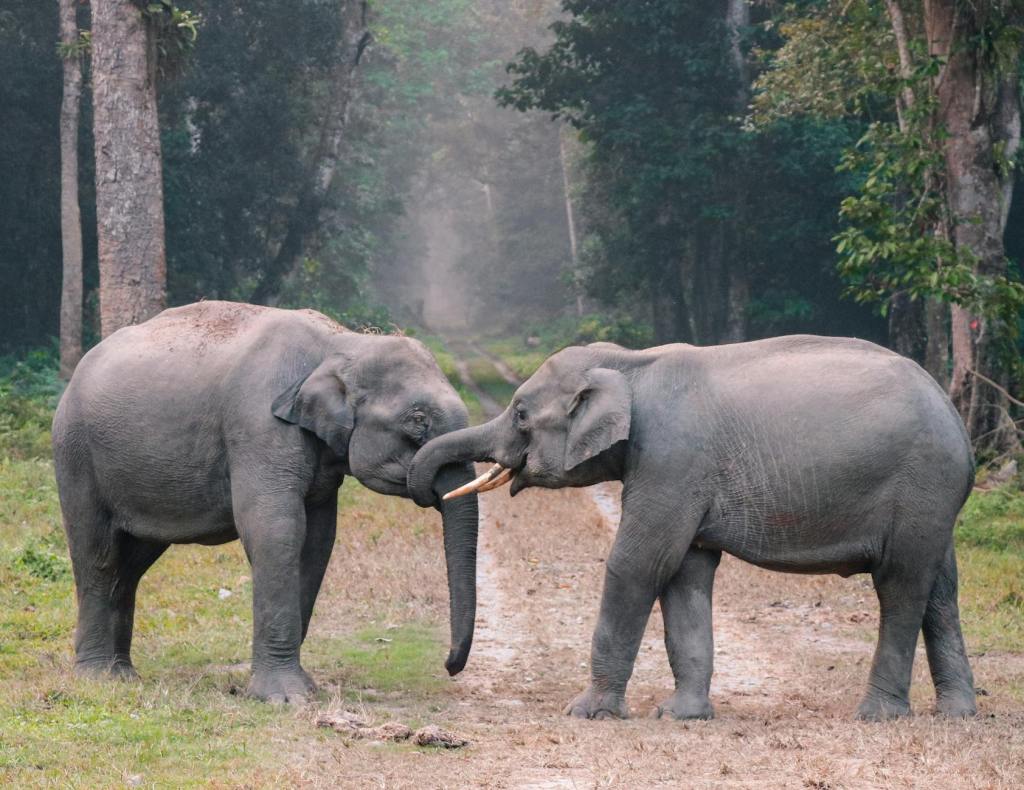
Hassan district in Karnataka is set to witness a significant step towards addressing the growing human-elephant conflict, with the forest department planning to establish an elephant corridor at an estimated cost of Rs 53 crore. This ambitious project, aimed at mitigating frequent elephant intrusions into human habitats, awaits approval from the Union government before work officially begins.
Human-wildlife conflict, particularly involving elephants, has escalated in recent years across parts of Hassan, Belur, and Sakleshpura. Rapid urbanisation, shrinking forest cover, and expanding agricultural zones have resulted in increased encounters between humans and wild elephants. Currently, around 100 wild elephants are reported to be frequently roaming near human settlements and the periphery of forest zones in Hassan district. These elephants are known to not only damage crops and property but have also been responsible for fatal attacks. Over the past two years, a total of eleven lives have been lost due to elephant encounters in the region.
In response to these challenges, the proposed elephant corridor is designed to facilitate safe and guided movement for elephants between forest patches, thereby reducing the likelihood of them straying into human habitations. Elephant corridors are proven conservation tools that help preserve migratory routes and natural habitats for elephants while ensuring the safety of both wildlife and local communities.
In addition to the proposed corridor, the forest department has rolled out a technology-driven initiative to monitor elephant activity. A thermal drone squad, integrated into the district’s elephant task force, has been deployed to enhance real-time monitoring of elephant movements, especially during early mornings and at night. The mobile unit is equipped with thermal drones and a computer system capable of detecting and tracking elephants, enabling timely dissemination of information to forest staff and local residents. This allows for preventive measures to be taken before elephants can reach farmlands or populated areas.
Recognising the growing threat posed by frequent elephant movements, the department is also considering the establishment of an elephant control zone in high-conflict areas. Alongside this, traditional preventive measures such as trench digging and the installation of solar-powered electric fences are also being planned as part of a broader strategy to deter elephants from entering agricultural and residential zones.
Karnataka holds the highest elephant population in India, with approximately 6,500 elephants, making the state a key region in India’s wildlife conservation efforts. It also ranks second in the country in terms of tiger population, with 565 tigers. These figures highlight the state’s rich biodiversity, while also underscoring the need for a balanced approach to conservation and development.
The forest department’s strategy goes beyond infrastructure and surveillance, placing a strong emphasis on community awareness. Public education campaigns, particularly through digital platforms and social media, are being developed to foster a better understanding of coexistence and safety practices in regions prone to wildlife activity.
As the state continues to face increasing pressure from habitat fragmentation and rising wildlife populations, projects like the proposed elephant corridor in Hassan serve as critical interventions. The integration of traditional conservation methods with modern technology and community engagement marks a comprehensive and forward-thinking approach to managing human-wildlife interactions in Karnataka.



 PARYAWARAN
Leave a comment