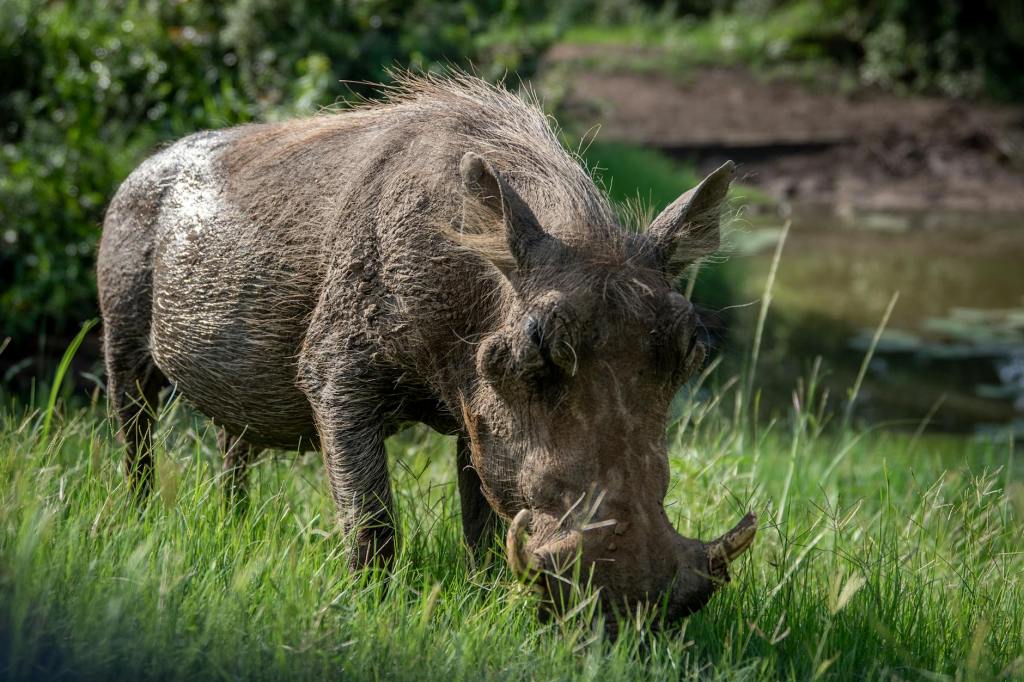
Wild pigs in California are turning a shocking shade of electric blue — and it’s not a hoax. The strange coloration is the result of poisoning from diphacinone, a common rodenticide used in agriculture to control rats, mice, and ground squirrels.
The discovery was made earlier this year in Monterey County, where several wild pigs were found with muscle and fat tissues stained a vivid blue. Wildlife authorities later confirmed the presence of diphacinone in the animals’ organs. This chemical is dyed blue on purpose to signal its toxicity — a warning that’s clearly visible in the affected pigs.
The pigs had broken into bait stations designed to target ground squirrels. These stations are legal and used across agricultural lands, but they’re not pig-proof. Once inside, the pigs consumed large amounts of the poisoned bait. The diphacinone accumulated in their systems, coloring internal tissues and making the contamination visually obvious in some cases.
The blue meat has since sparked concern among hunters and wildlife officials. Cooking the meat doesn’t neutralize the poison, and eating contaminated animals can lead to serious health problems in humans. Symptoms can include bleeding gums, blood in the stool or urine, dizziness, low blood pressure, and even organ failure or death in severe cases.
Officials are urging hunters to stay alert when processing game. While blue coloration is an obvious red flag, its absence doesn’t guarantee that the meat is safe. In fact, studies have shown that many animals exposed to rodenticides don’t display visible signs. A 2018 investigation found diphacinone residues in several wild pigs that looked completely normal on the outside.
The issue extends far beyond pigs. Wildlife experts warn that secondary poisoning is a growing concern. Predators and scavengers — such as owls, hawks, mountain lions, and even endangered condors — can suffer or die after eating contaminated animals. Bees and other insects are also at risk due to disrupted food chains.
To address the problem, California has limited the use of diphacinone to specific purposes, like mosquito control and certain endangered species protection programs. Still, exposure continues in areas where agricultural practices overlap with wildlife habitats.
The Department of Fish and Wildlife is asking hunters and landowners to report any animals showing unusual tissue coloration or behavior. Photos and details can be sent to the agency’s Wildlife Health Lab for further investigation.
Ultimately, the blue pigs are a warning. While rodenticides are effective tools in pest management, they come with unintended consequences that ripple through entire ecosystems. Without stricter controls and better safeguards, more animals — and possibly humans — could be affected by this invisible threat.




 PARYAWARAN
Leave a comment