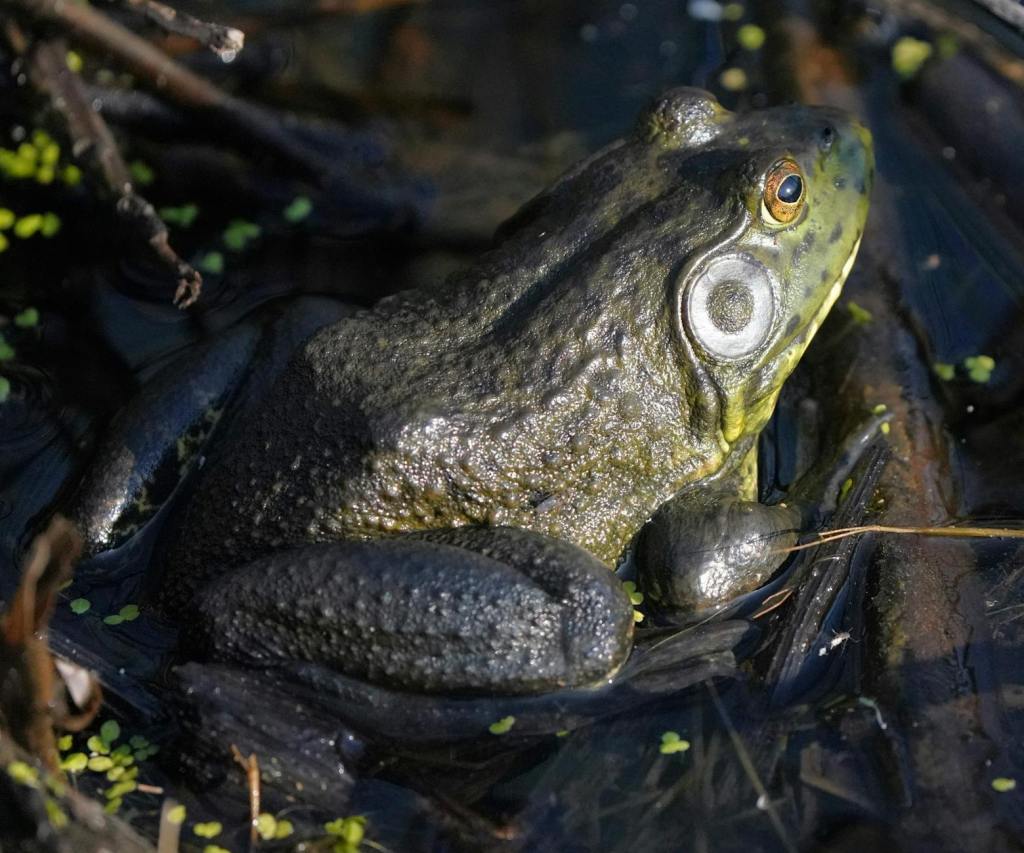
In one of the largest and most significant wildlife releases of its kind, over 350 endangered mountain yellow-legged frogs have been reintroduced into the wild in Southern California’s San Bernardino Mountains. The release represents a critical milestone in the ongoing efforts to recover this species, which has faced dramatic population declines over the past century due to habitat loss, disease, and the introduction of non-native predators.
The effort marks the first-ever species reintroduction by Birch Aquarium at Scripps Institution of Oceanography at UC San Diego, representing a historic step in the aquarium’s expanding role in species conservation. In collaboration with San Diego Zoo Wildlife Alliance, UCLA, Big Bear Alpine Zoo, and other partners, the frogs were released into a wildlife preserve managed by The Wildlands Conservancy.
This conservation initiative is part of a long-term recovery program coordinated with multiple federal and state agencies, including the U.S. Fish and Wildlife Service, U.S. Geological Survey, California Department of Fish and Wildlife, and U.S. Forest Service. The program aims to reestablish stable populations of mountain yellow-legged frogs across their native habitats in Southern California.
Of the 350 frogs released, 220 were raised at Birch Aquarium, with the remainder cared for by San Diego Zoo Wildlife Alliance and UCLA. The frogs were transported in climate-controlled containers to a remote section of the San Bernardino Mountains, where teams hiked them to three separate sites along a protected lake.
The release was carried out in two phases using two different strategies: hard release and soft release. In the hard release, frogs were placed directly into the lake environment. In the soft release, a subset of the frogs was placed in a temporary acclimation enclosure within the habitat. These frogs were observed daily for several days, receiving health checks and feedings before being released into the lake.
This two-pronged approach will allow researchers to evaluate which method better supports long-term survival and adaptation in the wild. Each frog was microchipped with a Passive Integrated Transponder (PIT) tag, enabling individual tracking during follow-up monitoring efforts. This technology will be critical in collecting long-term data on survivability, behavior, and reproduction, informing future reintroduction strategies.
This release also builds on a previous effort at the same location. In 2023, more than 70 mountain yellow-legged frogs were introduced into the same lake at the wildlife preserve. According to The Wildlands Conservancy, this is the first time since 1951 that the frogs have been observed in the area, underscoring the ecological and symbolic significance of their return.
The coordinated release brought together a large coalition of conservationists, scientists, and wildlife specialists, marking it as one of the largest collaborative efforts for this species. The scale of the release and the diversity of participating organizations demonstrate the growing emphasis on multi-agency partnerships to recover critically endangered species.
Ongoing monitoring at the site will continue throughout the year, with researchers conducting multiple surveys annually. The long-term objective is not only to stabilize the mountain yellow-legged frog population but also to eventually remove the species from the federal endangered species list. This will depend on successful breeding in the wild, genetic diversity within both captive and released populations, and the sustainability of suitable habitats.
The project reflects a growing commitment among conservation organizations to reestablish native species in their historical ranges. By combining scientific innovation, inter-agency collaboration, and community education, organizations hope to secure a future for one of California’s most endangered amphibians.



 PARYAWARAN
Leave a comment