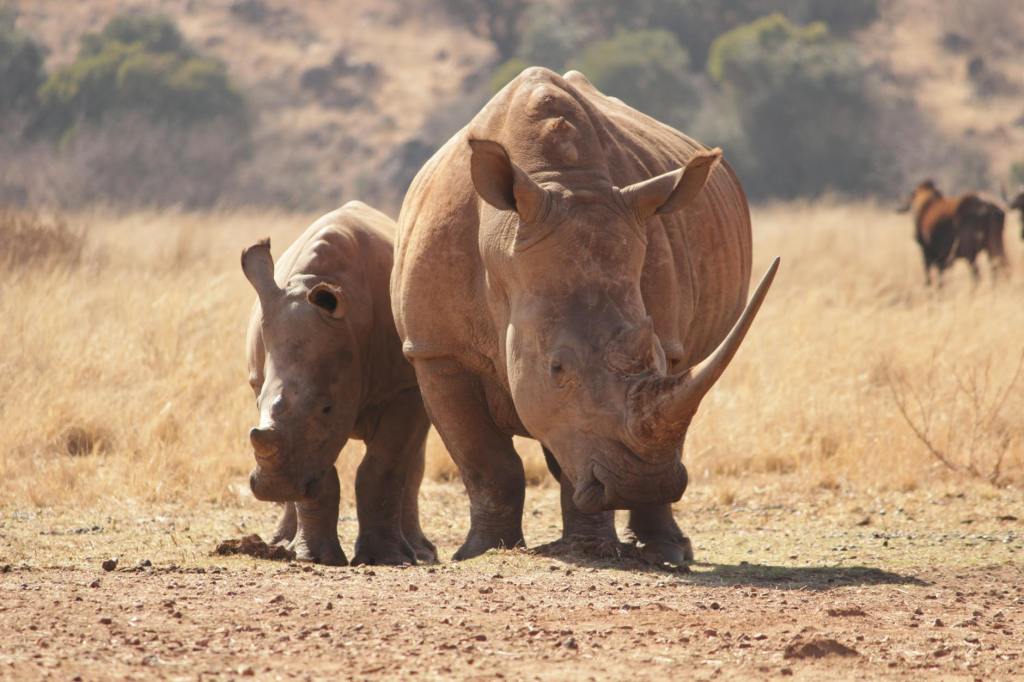
A century ago, more than half a million rhinos roamed freely across Africa and Asia. Today, that number has plummeted to just 27,000. Despite this dramatic decline, recent conservation reports suggest a troubling complacency — a shift in mindset that risks normalising near-extinction.
The latest State of the Rhino report, released this week by the International Rhino Foundation (IRF), presents a sobering picture. While no significant declines were reported over the past year, conservationists warn that this apparent stability could be dangerously misleading. The fear is that the public and policymakers are falling prey to “shifting baseline syndrome” — a phenomenon in which declining conditions are accepted as the new normal.
“Accepting 27,000 rhinos as a success story, without acknowledging the species’ historical numbers and continued vulnerability, is a dangerous mindset,” said a spokesperson for the IRF. “It reduces the urgency for action and risks making extinction acceptable by degrees.”
Small Gains Mask Larger Losses
The IRF report tracks all five surviving rhino species — two in Africa and three in Asia — highlighting both progress and alarming setbacks.
In Africa, black rhinos have shown a modest increase, rising from 6,195 to 6,788 individuals. This is a substantial recovery from the 1990s, when their numbers dropped to just 2,300. However, the bigger picture remains grim. As recently as the 1960s, over 100,000 black rhinos roamed the continent.
White rhinos, the most numerous species, have continued their long-term decline. Numbers have fallen from 17,464 to 15,752. Once considered a conservation success, white rhinos bounced back from the brink in the late 20th century, climbing from fewer than 200 individuals to over 20,000 — only to face a resurgence of poaching and habitat loss in recent decades.
In Asia, the greater one-horned rhino population in India and Nepal has inched up slightly to 4,075. But the situation is critical for the Javan and Sumatran rhinos, both listed as critically endangered. Javan rhinos have declined from 76 to just 50, mostly due to poaching and habitat encroachment. Sumatran rhinos are down to as few as 34 individuals, with some estimates placing the upper limit at 47.
Three of the five rhino species are now critically endangered, and all face a complex web of threats — from poaching and habitat loss to trafficking and genetic bottlenecks.
Inbreeding and Isolation: A Genetic Time Bomb
The report also flags serious long-term concerns, particularly in South Africa, which is home to the majority of the world’s rhinos. Although anti-poaching efforts have intensified, most rhinos in South Africa now live in fenced reserves, cut off from their historical ranges and from each other.
This geographic isolation has led to small, fragmented populations at risk of inbreeding and genetic drift, which could compromise their ability to adapt to climate change and emerging diseases. Without larger, interconnected populations, rhino conservation may be creating an illusion of stability while laying the groundwork for long-term vulnerability.
Fighting Poaching with Technology — and Radioactivity
Despite sustained investment in anti-poaching technology and military-style enforcement, the illegal rhino horn trade remains highly lucrative. Rhino horn fetches between US$11,000 and $22,000 per kilogram on the black market, making it one of the most valuable wildlife commodities.
Conservationists in South Africa have tried everything from helicopter translocations and horn trimming, to GPS trackers and armed patrols. In some cases, rhino horn has been laced with poison or dyed to render it unusable.
The latest innovation involves injecting harmless radioactive isotopes into rhino horns. The idea is to make horns easily detectable at border crossings, helping customs officials intercept illegal shipments. While this may disrupt trafficking networks, it is not expected to reduce poaching itself — criminals are often willing to kill rhinos first and sort out the smuggling later.
The Hume Controversy: When Conservation and Crime Collide
The report also comes amid a major scandal in South Africa, underscoring the blurred lines between conservation and commercial interests.
John Hume, once the world’s largest private rhino owner, is now facing charges of fraud and theft related to the alleged illegal trafficking of nearly 1,000 rhino horns. Hume, who formerly owned over 2,000 rhinos, had long lobbied for the legalisation of rhino horn trade, arguing it could finance conservation.
After selling his herd to conservation NGO African Parks in 2023 due to financial difficulties, Hume is now at the centre of an investigation that highlights the alleged role of organised crime syndicates in the global wildlife trade.
“This case reveals just how complex and entrenched the illegal trade has become — spanning legal grey areas, political interests, and criminal networks,” said a South African environmental investigator.
The Real Solution: Reducing Demand
While enforcement and technology are critical, experts say that the most impactful intervention — reducing consumer demand — remains underfunded and underprioritised.
Demand for rhino horn is concentrated in parts of Asia, particularly in China and Vietnam, where it is used in traditional medicine and as a luxury status symbol. Long-term, culturally sensitive demand reduction campaigns are needed to shift attitudes and end the market for rhino horn.
Such campaigns are not only safer but more sustainable. Unlike high-risk anti-poaching operations, demand reduction avoids deadly confrontations, which have already cost the lives of rangers, poachers, and local communities caught in the crossfire.
A Future Worth Fighting For
Despite the grim statistics, conservationists stress that recovery is possible. The past resurgence of white rhinos offers a blueprint: given adequate resources, political will, and coordinated global action, rhino populations can bounce back.
But doing so will require more than holding the line at 27,000 individuals. It means reversing habitat loss, rewilding isolated populations, dismantling trafficking syndicates, and re-establishing historical population baselines.
“We can’t allow today’s depleted numbers to become our benchmark for success,” warns the IRF. “To do so is to accept the permanent near-extinction of one of the world’s most iconic species.”
If humanity cannot protect an animal as large, visible, and culturally significant as the rhino, conservationists ask, what hope is there for lesser-known species slipping quietly into extinction?



 PARYAWARAN
Leave a comment