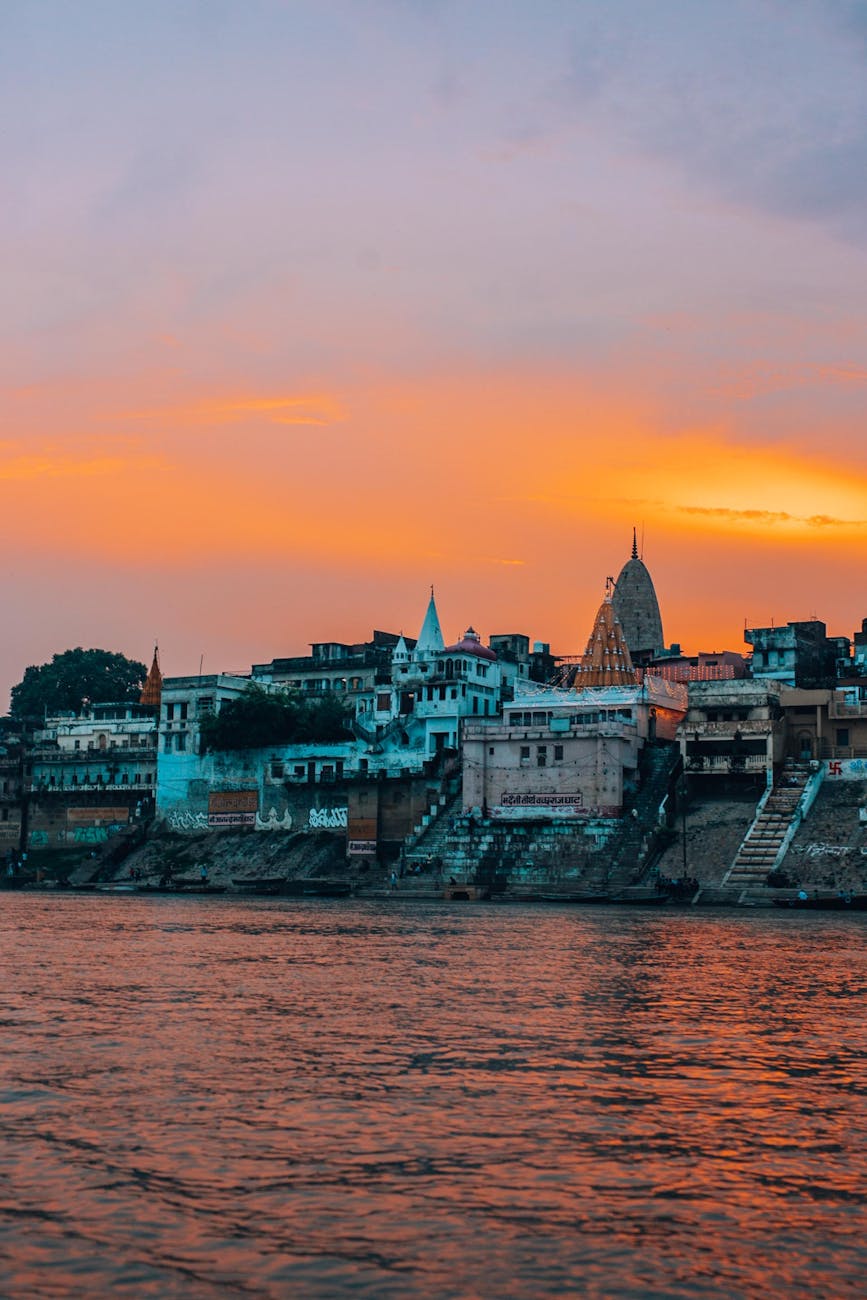
The Ganges River, a vital lifeline for more than 650 million people across India, is experiencing unprecedented drying, posing a severe threat to the region’s water security, agriculture, and ecosystems. Scientists warn that the current rate of decline in the river’s flow is unmatched in recorded history, driven by a complex mix of climate change, erratic monsoons, glacial melt, over-extraction of water, and extensive river engineering.
Stretching from the Himalayas to the Bay of Bengal, the Ganges basin has long supported a dense population, providing freshwater for drinking, farming, and industry. It contributes a significant portion of India’s water resources and plays a central role in the economic and cultural fabric of the region. However, the river’s future is now in serious jeopardy.
Recent scientific studies have revealed that the worst droughts in the Ganges basin over the past 1,300 years have occurred within just the last few decades. These extreme dry periods are not part of natural climate cycles but are instead driven by human and environmental pressures acting in tandem. The rapid drying has made once-navigable river stretches impassable during summer months. Large vessels that used to travel through key river ports are now frequently grounded. Canals and wells that once supplied water throughout the growing season now dry up early, threatening agricultural productivity and livelihoods.
At the river’s Himalayan source, glaciers are retreating at an alarming pace. The Gangotri glacier alone has receded by nearly a kilometer in just two decades. Similar patterns are unfolding throughout the Himalayas, shrinking the so-called “water towers of Asia.” While glacial melt initially increases runoff, the long-term impact is a significant reduction in water flow during the dry season, further destabilizing the river’s natural rhythm.
Human activity has accelerated the crisis. Groundwater extraction in the Ganges-Brahmaputra basin is among the most intense in the world. Water tables are dropping by up to 20 millimeters each year, with widespread contamination from arsenic and fluoride making much of the remaining supply unsafe for consumption. Meanwhile, the construction of dams, barrages, and irrigation canals has fragmented the river system. These structures divert water away from the natural course, reducing flows during critical periods and altering the ecology of the basin.
The downstream effects are already being felt. In northern Bangladesh and eastern India, smaller rivers are drying up during the summer, leaving entire communities without access to water for farming or livestock. The Sundarbans, the world’s largest mangrove forest and a UNESCO World Heritage Site, faces increasing salinization due to reduced freshwater inflow, threatening both biodiversity and local livelihoods.
Despite the urgency, responses to the crisis remain fragmented and inadequate. Experts agree that only a comprehensive, basin-wide strategy can address the scale of the problem. This would require drastically reducing groundwater extraction, restoring environmental flows, and modernizing water management systems to respond to both human use and climate variability.
Improved climate models are also critical, particularly those that factor in not only natural patterns like monsoon variability but also the full scope of human interventions such as irrigation, industrial use, and dam operations. Effective transboundary cooperation among India, Nepal, and Bangladesh is essential to manage shared water resources, exchange data, and coordinate climate adaptation plans.
Global recognition of the Ganges as an ecological and cultural treasure must translate into action. International funding, climate agreements, and governance reforms must prioritize the river’s long-term health. Inclusive management, with the active participation of local communities, will be key to ensuring the success of restoration efforts.
The Ganges is more than a river—it is the foundation of life and culture for millions. But its rapid decline signals a crisis that extends far beyond its banks. Without immediate, unified action, the drying of the Ganges could trigger widespread food insecurity, economic disruption, and ecological collapse across the region.



 PARYAWARAN
Leave a comment