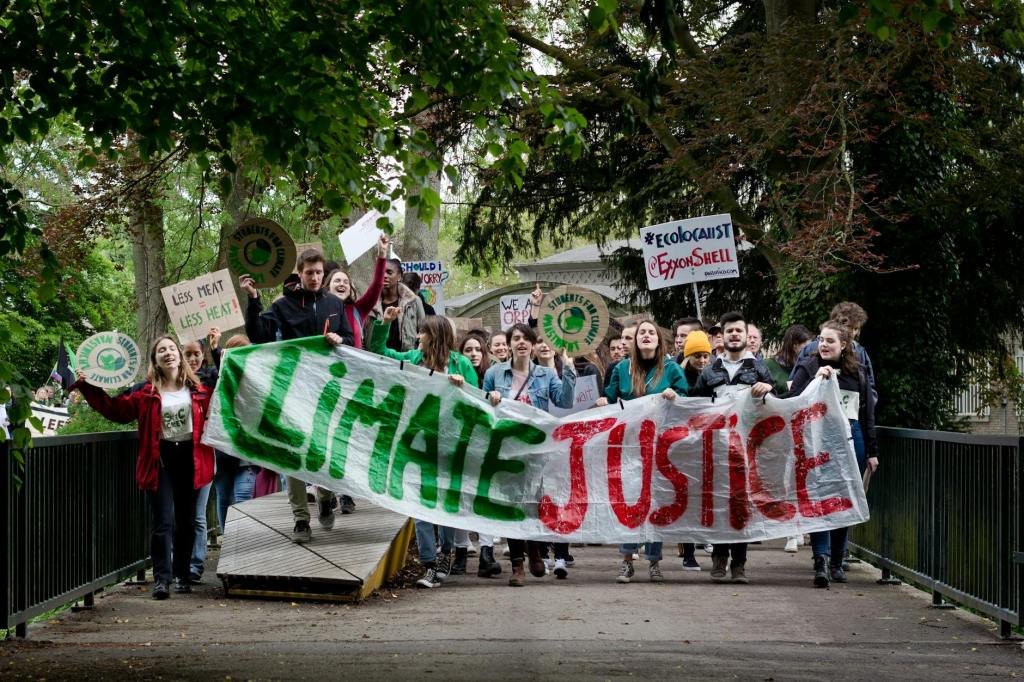
A decade after filing a landmark constitutional lawsuit against the United States government over its role in climate change, a group of young climate activists is turning to the international stage. In a significant escalation of their legal efforts, the group has petitioned the Inter-American Commission on Human Rights (IACHR) to investigate the U.S. government for alleged violations of international law due to its long-standing promotion of fossil fuel policies.
The petition, filed on September 23, marks a bold attempt to hold the U.S. government accountable beyond its domestic legal system, which has repeatedly thwarted efforts by climate litigants to secure recognition of the government’s responsibility for accelerating the climate crisis. The filing is being described as the first international legal action of its kind following a series of influential climate-related advisory opinions issued by major global judicial bodies earlier this year.
At the core of the petition is the assertion that the federal government has, for over 50 years, knowingly contributed to the climate crisis by advancing a fossil fuel-based energy system. The petition argues that this conduct constitutes a systematic violation of multiple international human rights obligations, including the rights to life, health, personal integrity, and a healthy environment.
This international legal move comes in the aftermath of several groundbreaking advisory opinions from the Inter-American Court on Human Rights, the International Court of Justice, and the International Tribunal for the Law of the Sea, all of which affirm that states have clear legal responsibilities under international law to take effective action on climate change. These opinions, though not binding in the same way as rulings, carry significant legal and moral authority and reflect a global shift toward recognizing environmental protection as an integral part of human rights.
The Inter-American Court opinion, in particular, was notable for affirming, for the first time at the international level, the existence of a legally protected right to a healthy climate. The International Court of Justice went further in establishing that states may be committing internationally wrongful acts by failing to regulate emissions from private actors and by continuing to promote fossil fuels, even in the face of overwhelming climate science.
While none of the opinions named specific countries, legal experts supporting the youth petition argue that the implications for the United States are clear. As the world’s largest historical emitter of greenhouse gases and the current top producer of oil and gas, the U.S. is seen as having played a disproportionate role in causing the climate crisis. The petition underscores this culpability by citing the country’s contribution to more than a quarter of cumulative global carbon dioxide emissions between 1850 and 2012.
The new petition builds upon a long-running legal campaign by the same youth activists who brought a federal lawsuit against the U.S. government in 2015. That case, though initially allowed to proceed by lower courts, faced a series of procedural hurdles and was ultimately dismissed without a trial. Despite these setbacks, the youth maintained their claim that government policies favoring fossil fuels violated their constitutional rights by endangering their health and future.
Now, by shifting their strategy to an international forum, the activists aim to leverage the growing body of legal opinion recognizing the urgency of climate action as a matter of human rights. The petition filed with the IACHR details the extensive historical record of federal support for fossil fuel extraction and consumption, including subsidies, permits, and infrastructure investment — all of which, it argues, have contributed directly to climate instability.
The filing also draws attention to the disproportionate impact of climate change on children and youth, who are both less responsible for emissions and more vulnerable to the long-term consequences of environmental degradation. It argues that their rights are being systematically undermined as they grow up in a world shaped by increasingly severe weather events, rising temperatures, and ecological disruption.
The timing of the petition adds urgency to the case. On the same day it was filed, the sitting U.S. president addressed the United Nations General Assembly, reiterating a stance of climate denial and criticizing renewable energy sources. Observers have noted that this rhetorical opposition to climate science — paired with ongoing federal support for fossil fuel development — further strengthens the argument that the U.S. is in breach of its international obligations.
The petition to the Inter-American Commission seeks not only a formal investigation into the U.S. government’s conduct but also calls for concrete remedies, including recommendations for phasing out fossil fuel subsidies, transitioning to clean energy, and establishing legal protections for children’s environmental rights.
This legal move represents a significant test of how international human rights institutions will respond to the growing wave of climate litigation aimed at governments, especially those in industrialized nations. It signals a new frontier in the global climate justice movement, as activists seek to hold powerful states accountable in ways domestic courts have been reluctant or unable to achieve.
The Commission is expected to review the petition and determine whether to open a formal case. If accepted, it could lead to hearings, country visits, and ultimately a set of findings and recommendations that would further enshrine the right to a stable climate as a fundamental human right.




 PARYAWARAN
Leave a comment