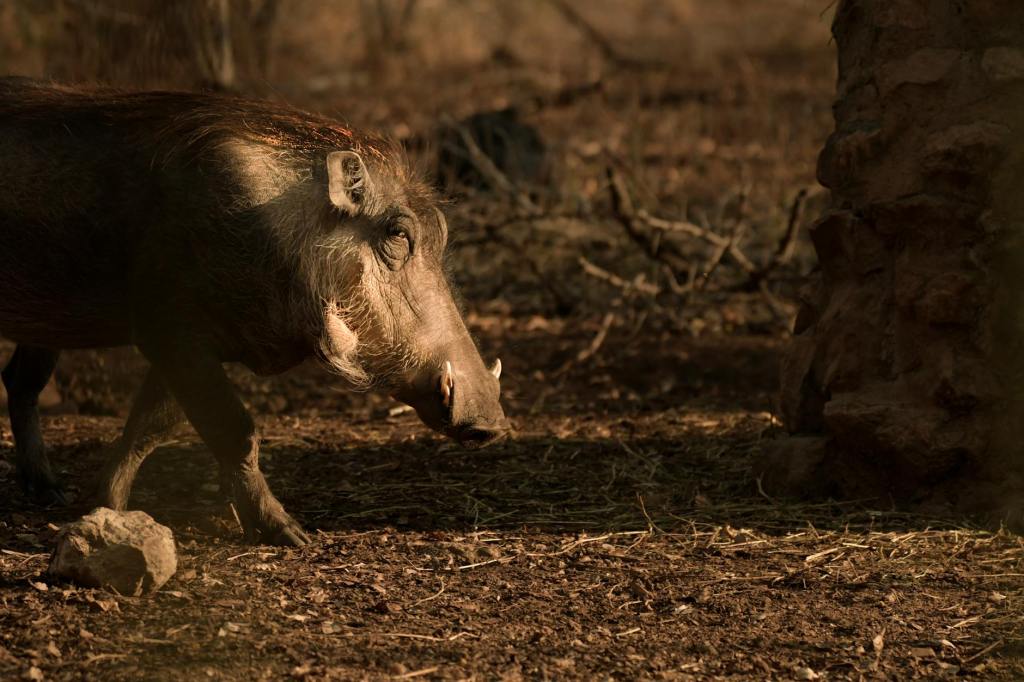
Kerala’s Agriculture Minister P. Prasad has stirred fresh debate by suggesting that allowing people to consume wild boar meat could help control the rising incidents of crop destruction and human-wildlife conflict in the state. His remarks, made at a public programme in Alappuzha district, have drawn attention to the growing tension between conservation laws and the livelihoods of farmers struggling to protect their fields.
The minister’s comments came amid increasing reports of wild boars invading farmlands, destroying crops, and even venturing into residential areas. The animals, which are known to damage large swathes of paddy, tuber, and vegetable crops, have become a major concern in many rural and forest-edge communities. Farmers have long demanded stronger measures to control the population of wild boars, which they say threaten both food security and rural incomes.
Prasad said the issue could be managed more effectively if people were permitted to consume the meat of wild boars that are killed in agricultural areas. The idea, he suggested, could offer a practical incentive for controlling their numbers. However, such a proposal conflicts with existing federal legislation. Under the Wildlife Protection Act, 1972, wild boars are classified as protected species, and their hunting or consumption is prohibited without explicit permissions granted under specific circumstances.
The suggestion comes just days after the Kerala Assembly passed a bill seeking to amend the Wildlife Protection Act in order to give the state government more flexibility in addressing human-wildlife conflict. The proposed amendments are aimed at streamlining permissions for culling certain species—such as wild boars—that are not endangered but cause significant agricultural and property damage.
Human-wildlife conflicts have escalated sharply in Kerala over the past few years. Data from various districts show a surge in complaints of crop raids and animal attacks, particularly involving wild boars, elephants, and monkeys. Experts attribute the trend to shrinking forest habitats, erratic rainfall patterns, and increased human activity near protected areas. Farmers in hilly and semi-forest regions like Wayanad, Idukki, and Palakkad have been particularly affected.
In recent years, the state government has implemented several measures to mitigate such conflicts, including compensation schemes for crop losses and limited permissions to hunt wild boars in specific areas under special orders. However, these interventions have had limited impact, as the process of obtaining clearance for culling remains bureaucratic and time-consuming.
Prasad’s proposal to legalize consumption of wild boar meat represents a more radical approach—one that he argues could both curb the animal’s population and provide an economic or cultural solution rooted in local practices. Yet, the idea faces significant legal and ethical hurdles. Wildlife conservationists have warned that such a move could encourage illegal hunting and trade in wild meat, undermining decades of conservation policy.
The issue also raises questions about how India’s wildlife protection framework balances conservation with rural livelihood needs. The Wildlife Protection Act was enacted to safeguard species from overhunting and habitat loss, but several states, including Kerala, have recently sought amendments to manage growing conflicts that threaten farmers’ survival.
As the debate unfolds, the central government’s stance will determine whether states can exercise greater autonomy in addressing species that have become locally overabundant. For Kerala, the wild boar dilemma encapsulates the larger challenge of coexisting with wildlife while sustaining agriculture—a challenge that continues to test the balance between ecology, law, and livelihood.



 PARYAWARAN
Leave a comment