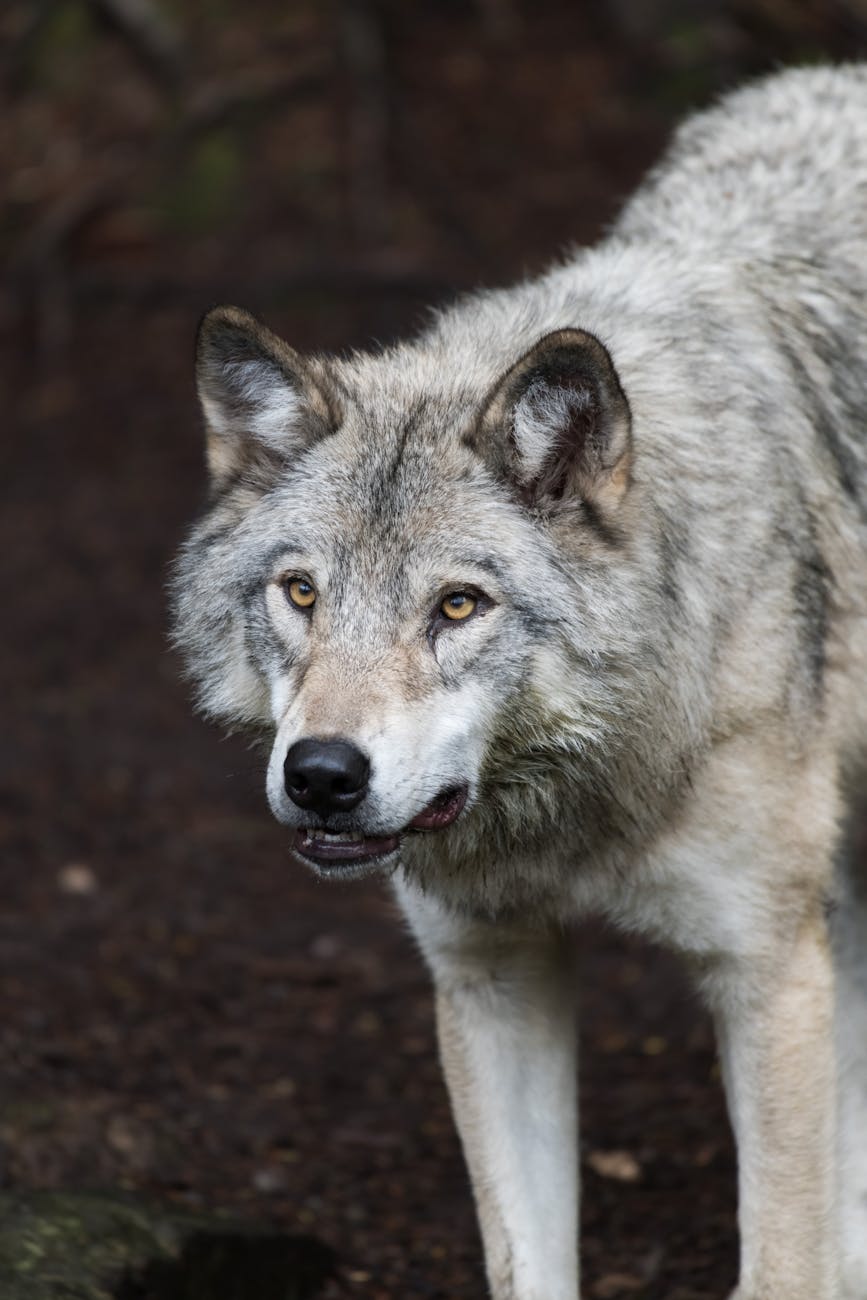
The International Union for Conservation of Nature (IUCN) has, for the first time, evaluated the Indian wolf (Canis lupus pallipes) as a separate entity from the common grey wolf, suggesting that it may merit classification as a distinct species within the Canis genus. The move marks a major shift in global taxonomy and conservation priorities, potentially positioning the Indian wolf for higher international protection status.
According to the IUCN’s global panel of canid experts, the population of the Indian wolf across India and Pakistan is estimated at around 3,093 individuals, with a range between 2,877 and 3,310. Based on this population size and the continuing trend of decline, the IUCN has classified the species as “vulnerable” on its Red List of threatened species. The assessment highlights habitat loss, human persecution, and shrinking prey availability as the principal drivers of the decline.
The Indian wolf is one of the most ancient and genetically distinct wolf lineages in the world, believed to have evolved on the Indian subcontinent long before the arrival of humans. Its range is almost entirely confined to India, with a marginal population surviving in parts of Pakistan, estimated to number fewer than two dozen individuals. Unlike the Bengal tiger, which has a wide distribution across several Asian countries, the Indian wolf’s limited range makes it uniquely vulnerable to local ecological and human pressures.
The new assessment underscores the precarious state of the species and calls for immediate and focused conservation measures. The Indian wolf occupies dry grasslands, scrub forests, and semi-arid plains—landscapes that are among the most heavily modified and least protected in South Asia. Because these areas often lie outside the boundaries of protected reserves, the species remains exposed to poaching, habitat encroachment, and retaliatory killings following livestock predation incidents.
Data compiled by IUCN experts reveal that only about 12.4% of the Indian wolf’s distribution falls within protected areas across India and Pakistan. The majority of the population resides outside formally designated sanctuaries or national parks, meaning that most individuals receive little or no state protection. As urban expansion, agricultural intensification, and infrastructure projects continue to fragment the remaining habitats, the survival prospects of the species are expected to worsen in the coming decade.
The Indian wolf’s recognition as a potential distinct species could expand the Canis genus to include eight species, instead of the current seven. Presently, the genus includes the grey wolf (Canis lupus), coyote (Canis latrans), golden jackal (Canis aureus), Ethiopian wolf (Canis simensis), domestic dog (Canis familiaris), red wolf (Canis rufus), and African wolf (Canis lupaster). Taxonomically elevating the Indian wolf to species level would not only reflect its genetic uniqueness but also strengthen the case for dedicated conservation policies at both national and international levels.
Ecologists note that unlike many other large carnivores in India, the Indian wolf survives predominantly in human-dominated landscapes rather than within dense forest ecosystems. Its dependence on open terrains, coupled with its proximity to rural settlements, has made it particularly susceptible to conflict with people. The depletion of natural prey forces the animal to hunt livestock, leading to retaliatory killings by herders. Recent incidents of human-wolf encounters and attacks in parts of northern India have further intensified this conflict, posing challenges for local administrations and wildlife managers.
The IUCN report warns that without a coordinated conservation framework, the population could continue to decline rapidly. It recommends targeted measures such as habitat restoration, community-based conflict mitigation, and stronger legal protection. Experts emphasize the importance of integrating grassland conservation into India’s broader wildlife policy, noting that open habitats—critical for species like the wolf, blackbuck, and bustard—have historically been neglected in favor of forest-centric conservation models.
The Indian wolf’s situation highlights a broader conservation paradox in India: while flagship species such as the tiger and elephant have benefitted from high-profile protection programs, lesser-known carnivores remain largely unmonitored and unprotected. Conservationists argue that the reclassification of the Indian wolf could help bridge this gap by attracting global attention and funding to safeguard the country’s rapidly disappearing grassland ecosystems.
The IUCN’s move signals both a recognition of the Indian wolf’s evolutionary importance and a warning about its precarious survival. As human pressures intensify and landscapes transform, the future of this ancient predator will depend on whether India can extend its conservation success beyond forests—to the open plains where the last few thousand Indian wolves still roam.



 PARYAWARAN
Leave a comment