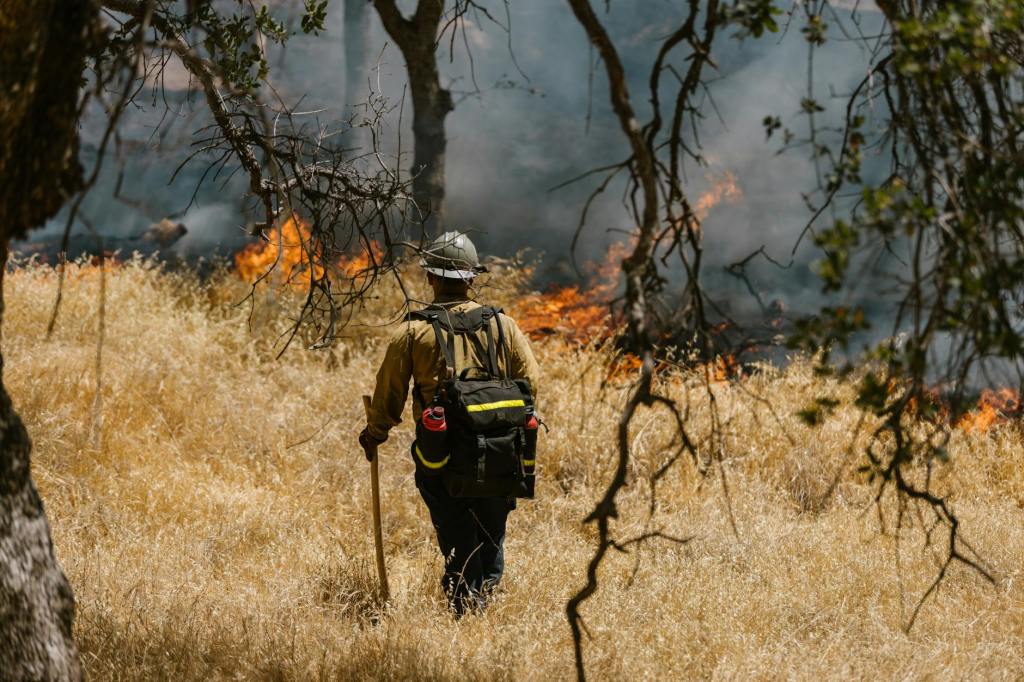
Forests across the planet are burning at an unprecedented rate, with climate change emerging as the dominant driver behind increasingly frequent and devastating wildfires. A new global assessment reveals that between March 2024 and February 2025, wildfires scorched an area larger than India, threatening lives, livelihoods, and ecosystems on every continent.
The second annual State of Wildfires report, released by researchers at the University of Melbourne, documents the scale and intensity of this growing crisis. It estimates that 3.7 million square kilometres — roughly 2.5 percent of the planet’s land surface — were affected by fires during the study period. The blazes impacted about 100 million people and placed more than €183 billion worth of homes, farms, and infrastructure at risk.
The findings underscore a disturbing global pattern: wildfires are no longer seasonal or confined to specific regions. From the Amazon to Australia, flames are spreading faster, burning longer, and leaving behind deeper scars on both landscapes and societies.
Forests Under Stress
According to the report, the world’s forests are becoming more flammable due to the interplay between rising temperatures, prolonged droughts, and changing vegetation patterns. Climate change not only creates more dangerous fire weather — characterized by heatwaves, low humidity, and erratic winds — but also alters how plants grow, dry, and decompose. This transformation provides vast amounts of tinder-dry fuel that feeds megafires.
In South America, the Pantanal-Chiquitano region witnessed fires up to 35 times larger than they would have been in a pre-industrial climate. The combination of deforestation, warmer temperatures, and drier conditions has turned once-humid landscapes into ignition zones.
Australia has also faced some of its worst fire seasons on record. Between 2024 and early 2025, more than 1,000 large fires burned an estimated 470,000 hectares in western Australia alone, while central Australia saw blazes consume over five million hectares. These fires not only destroyed habitats and property but also released enormous quantities of greenhouse gases, reinforcing the cycle of warming.
The Amazon rainforest — often referred to as the “lungs of the Earth” — endured its most destructive fire season in more than two decades. Roughly 3.3 million hectares burned, releasing as much carbon dioxide as an industrialized nation produces in a year. The Congo Basin, another key tropical ecosystem, also experienced record-breaking fires, compounding concerns over the stability of the planet’s carbon sinks.
Fire Seasons Intensify in Europe
Europe, too, has not been spared. By July 2025, heatwaves, drought, and inadequate forest management combined to burn around 232,000 hectares of land — an area roughly equivalent to Luxembourg. Southern Europe, particularly Mediterranean regions, has faced increasingly intense and unpredictable fire seasons in recent years. Experts warn that without systemic adaptation strategies, such events will become the new normal across the continent.
These fires carry significant economic and ecological costs. The destruction of forests undermines carbon storage capacity, damages biodiversity, and disrupts local economies reliant on agriculture and tourism. For communities living near forests, repeated exposure to smoke and particulate matter also poses serious health risks, from respiratory illnesses to cardiovascular problems.
Ecosystems Reaching a Tipping Point
The consequences of these climate-driven fires extend far beyond the immediate devastation. New scientific research published in Nature shows that even some of the world’s oldest and most resilient forests are starting to lose their ability to absorb carbon.
Tropical rainforests in Queensland, Australia, have now shifted from being carbon sinks — ecosystems that absorb more carbon dioxide than they emit — to becoming carbon sources. Researchers analysing nearly five decades of data found that trees in these forests are dying and decomposing faster than they can regenerate. The change has been linked to drier air, rising temperatures, and increasing stress on tree trunks and branches.
This reversal is particularly alarming because tropical forests play a critical role in regulating the planet’s climate. Their decline could accelerate global warming, setting off feedback loops that make future fires even more intense and harder to control.
A Global Call for Urgent Action
The report emphasizes that the growing scale and intensity of wildfires are among the most visible consequences of climate change. It calls for urgent action to protect and restore forests, enhance early-warning systems, and invest in adaptive management strategies that consider the new fire realities.
Protecting ecosystems is also a matter of human security. Millions of people depend on forests for food, water, and livelihoods. As fires strip away vegetation, they expose soils to erosion, reduce agricultural productivity, and increase the risk of flooding. The social and economic costs of inaction are expected to rise sharply if global temperatures continue to climb.
While the data paint a grim picture, scientists stress that it is not too late to act. Strengthening climate policies, restoring degraded lands, and curbing greenhouse gas emissions could still help reduce the frequency and severity of future firestorms. However, without rapid and coordinated global action, the world’s forests may continue their transformation from vital carbon buffers into vast, recurring sources of emissions.
The message from the report is clear: as the planet warms, fire is reshaping the natural balance of the Earth — and humanity’s window to reverse the trend is rapidly closing.




 PARYAWARAN
Leave a comment