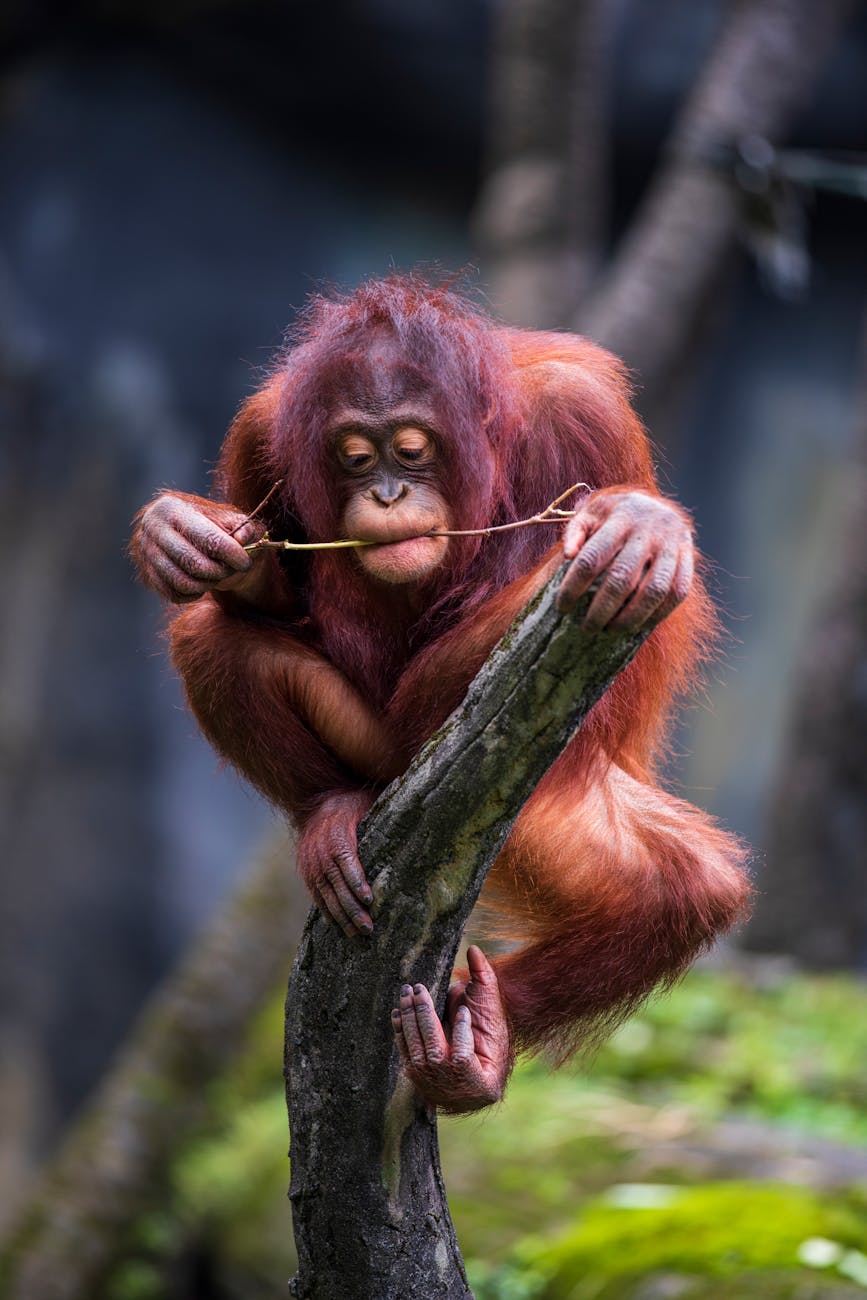
Scientists are warning that Cyclone Senyar may have pushed the critically endangered Tapanuli orangutan closer to extinction, following devastating floods and landslides in northern Sumatra that destroyed large parts of its remaining habitat. With fewer than 800 individuals believed to survive in the wild, even limited losses could have irreversible consequences for the species.
Cyclone Senyar made landfall on November 25, triggering intense rainfall across parts of Indonesia. In Sumatra’s Batang Toru region—the only place on Earth where the Tapanuli orangutan is found—flooding and landslides tore through mountainous forests that form the species’ strongest remaining refuge. Scientists fear that a significant number of orangutans may have been swept away by torrents of mud, water, and debris.
Concerns deepened after the carcass of a Tapanuli orangutan was discovered following the floods. Conservationists say sightings of orangutans have ceased in several badly affected areas, raising fears that entire local groups may have been lost. Researchers have described the disaster as an “extinction-level disturbance” for a species already teetering on the brink.
The Tapanuli orangutan was formally recognised as a distinct species only in 2017. It is considered the rarest great ape in the world, with a total population estimated at fewer than 800 individuals spread across three forest blocks in northern Sumatra. Scientists stress that such a small and isolated population leaves the species extremely vulnerable to sudden shocks such as extreme weather events.
According to scientists cited by international news agencies, the most severe damage occurred in the so-called West Block, the most densely populated of the three known Tapanuli orangutan habitats. Before the cyclone, this area was thought to support around 581 individuals. Estimates now suggest that between 6 per cent and 11 per cent of the orangutans in this block may have been killed by the floods and landslides.
Conservation experts warn that adult mortality above just 1 per cent per year could push the species into irreversible decline, regardless of how many individuals remain. Because Tapanuli orangutans reproduce slowly, population recovery from sudden losses is extremely difficult.
Satellite imagery analysed by researchers has revealed the scale of the destruction across Batang Toru. Deep scars cut through the mountains, with landslides stretching for more than a kilometre and up to 100 metres wide in some places. Entire forested slopes appear to have collapsed, sending trees, soil, and rocks cascading downhill.
Remote-sensing specialists say that more than 9 per cent of the West Block habitat may have been destroyed or severely degraded by the cyclone. The loss of forest cover not only threatens surviving orangutans directly but also reduces access to food and shelter, increasing the risk of starvation, exposure, and further mortality in the months ahead.
The disaster has highlighted the broader vulnerability of Sumatra’s wildlife. Images circulating on social media showed the carcass of a Sumatran elephant—another critically endangered species—washed away by floodwaters in Aceh, underlining the scale of the catastrophe. Sumatra is also home to critically endangered tigers and rhinos, but scientists say primates such as orangutans and gibbons are particularly at risk because they depend on intact forest canopies in steep, mountainous terrain.
Researchers note that the affected area was not historically prime habitat for Tapanuli orangutans. However, expanding development, deforestation, and infrastructure projects elsewhere in their range have pushed the animals into increasingly marginal and fragile landscapes. As a result, when extreme rainfall triggered landslides, the orangutans had few safe refuges left.
Long-time observers of Indonesia’s forests say the scale of destruction is unprecedented. Scientists who have monitored deforestation and land-use change in the region for decades report that they have never seen damage of this magnitude caused by a single weather event.
The impact of Cyclone Senyar has also renewed concerns about the role of climate change in intensifying extreme weather across Southeast Asia. Conservationists warn that rare species with small populations and restricted ranges, such as the Tapanuli orangutan, are among the most vulnerable to climate-driven disasters.
As rescue teams and researchers struggle to assess the full impact of the cyclone, scientists say urgent action is needed to protect surviving orangutans and stabilise remaining habitat. Without rapid conservation measures and stronger protection of Batang Toru’s forests, they warn, the world’s rarest great ape could be pushed beyond the point of recovery.


 PARYAWARAN
Leave a comment