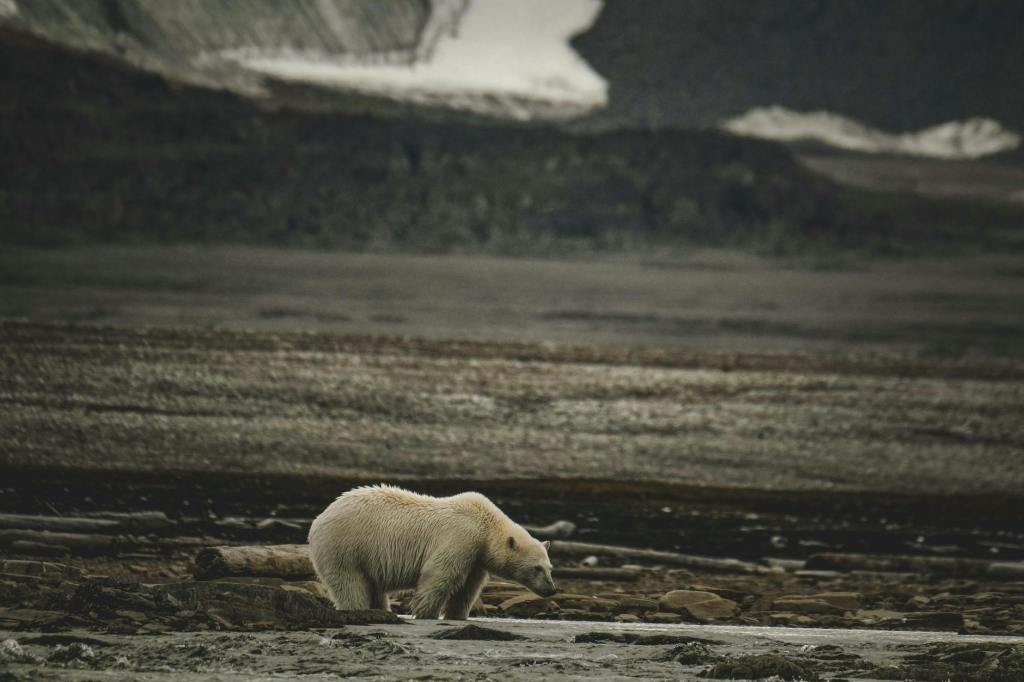
Polar bears in southeastern Greenland may be undergoing genetic changes that could help them survive in a rapidly warming Arctic, according to a new scientific study. Researchers have found evidence that this small and isolated population is showing changes in gene activity linked to metabolism, fat processing, heat stress, and aging—suggesting early biological adaptation to climate-driven habitat loss.
The polar bear is widely regarded as a symbol of the climate crisis, as rising Arctic temperatures continue to shrink sea ice that the species depends on for hunting seals. While many populations are struggling to cope with these changes, the new study suggests that bears living in southeastern Greenland may be responding at a genetic level to their increasingly harsh environment.
The research analysed blood samples from polar bears living in two regions of Greenland: the colder and more stable northeastern region and the warmer, less icy southeastern coast. Scientists compared samples from 12 bears in the northeast and five bears in the southeast, focusing on differences in gene activity rather than changes in the genetic code itself.
A key focus of the study was the behaviour of so-called “jumping genes,” also known as transposable elements. These are small, mobile segments of DNA that can move within the genome and influence how other genes function. While often inactive, jumping genes can become more active under environmental stress, potentially leading to changes in gene expression that affect survival.
The southeastern Greenland region is significantly warmer and experiences greater temperature variability than the northeast. It also has less stable sea ice, creating conditions similar to those expected across much of the Arctic in the future. Scientists found that polar bears in this region showed distinct patterns of jumping gene activity compared to their northern counterparts.
The study revealed that genes associated with metabolism, aging, and heat stress were behaving differently in the southeastern population. Particularly notable were changes in gene expression related to fat processing. Fat metabolism is crucial for polar bears, which rely heavily on high-fat seal diets to survive long periods without food.
In warmer regions with reduced sea ice, access to seals becomes limited, forcing polar bears to endure longer fasting periods or turn to alternative, lower-energy food sources. The observed genetic changes may help southeastern bears cope with food scarcity and potentially adapt to diets that are less dependent on marine prey.
To analyse these patterns, researchers used RNA sequencing, a technique that examines RNA molecules that act as messengers between DNA and proteins. This method allows scientists to see which genes are actively being used by the body at a given time. Through this approach, researchers identified several areas of the genome where jumping genes were especially active, including within protein-coding regions, indicating potentially rapid and fundamental biological changes.
These findings build on earlier research showing that polar bears in southeastern Greenland are genetically distinct from those in the northeast. Scientists believe the two populations became separated around 200 years ago, leading to limited gene flow between them. This isolation may have accelerated local adaptation but also increases vulnerability to environmental shocks.
Despite the signs of adaptation, scientists caution that genetic flexibility alone may not be enough to save polar bears from the pace of climate change. Global warming is progressing faster than many species can adapt, and the Arctic is heating at more than twice the global average rate. Sea ice extent continues to decline, reducing access to hunting grounds and increasing energy stress across polar bear populations.
Current projections suggest that more than two-thirds of the world’s polar bears could disappear by 2050 if greenhouse gas emissions continue at current levels. Some models predict near-total extinction by the end of the century. The Arctic Ocean is already experiencing record-high temperatures, further accelerating ice loss and habitat fragmentation.
The southeastern Greenland bears may represent a glimpse into how polar bears could respond biologically to future Arctic conditions. However, scientists stress that this population is small and not representative of the species as a whole. Adaptations observed in one region may not be sufficient or transferable across other populations facing different ecological pressures.
The study highlights the urgent need for broader genetic research across the roughly 20 known polar bear sub-populations worldwide. Understanding how different groups respond at a genetic level to environmental stress could help inform conservation strategies and identify populations that are particularly at risk.
At the same time, researchers emphasize that genetic adaptation should not be seen as a solution to climate change. Without rapid reductions in global emissions and stronger protection of Arctic ecosystems, even the most adaptable populations may not survive.
The findings underline both the resilience and fragility of polar bears in a warming world. While some populations may be attempting to adapt at the molecular level, the long-term survival of the species ultimately depends on the preservation of sea ice and decisive global action to slow climate change.



 PARYAWARAN
Leave a comment