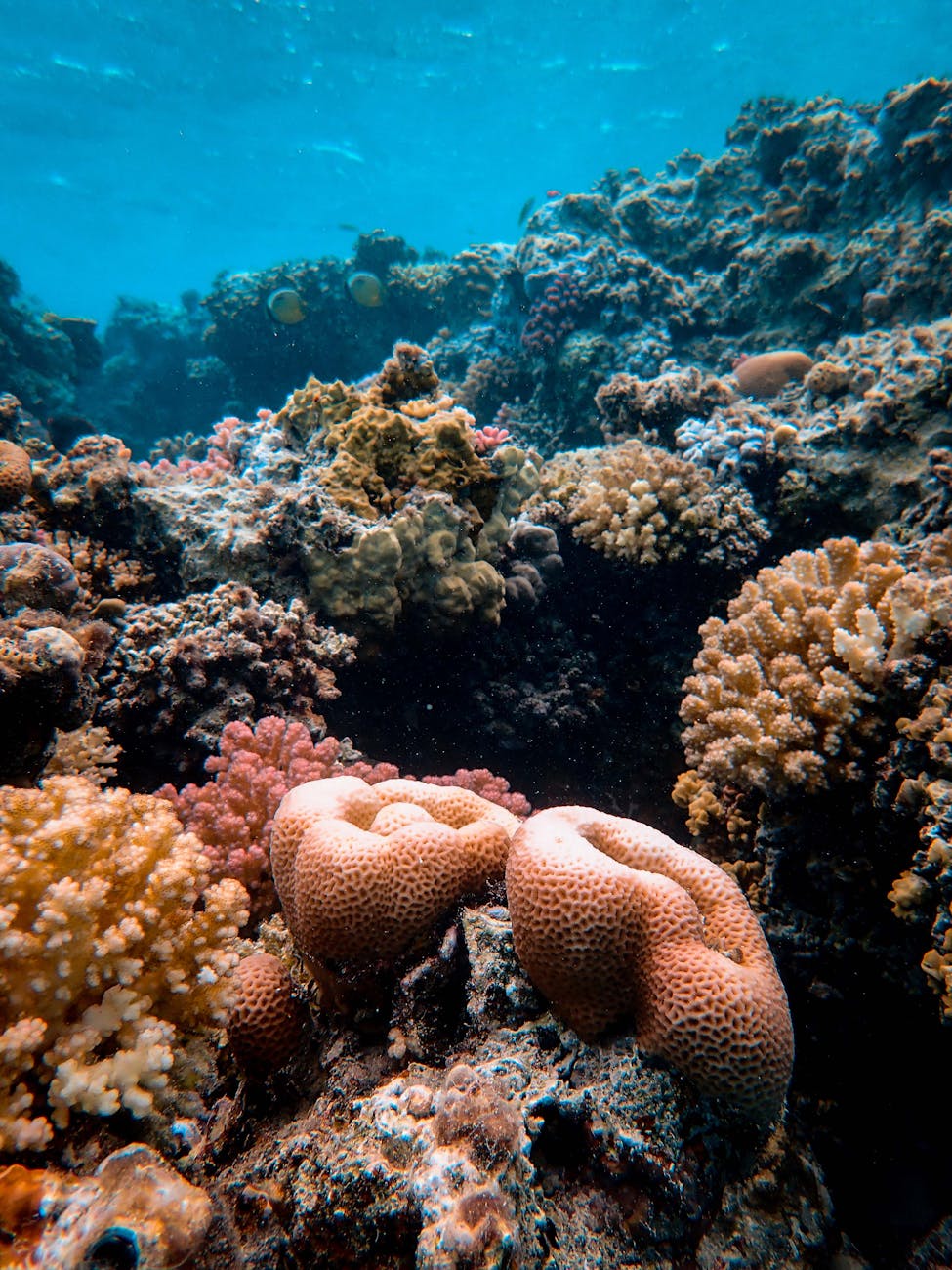
Hard coral reefs across the Caribbean have declined by nearly 50 per cent over the past four decades, according to new global monitoring data that highlight the growing impacts of ocean warming, disease outbreaks and ecological imbalance. Scientists warn that the losses are reshaping reef ecosystems and placing marine biodiversity and coastal livelihoods at increasing risk.
A major new assessment by the Global Coral Reef Monitoring Network shows that hard coral cover in the Caribbean fell by 48 per cent between 1980 and 2024. The findings come despite the fact that coral reefs support almost one-third of all marine species and play a vital role in fisheries, tourism and coastal protection. The Caribbean region contains about 24,230 square kilometres of coral reefs, accounting for nearly 10 per cent of the world’s total reef area.
Hard corals, also known as stony corals, form the backbone of reef ecosystems. Built from limestone skeletons produced by thousands of tiny polyps, these corals create complex three-dimensional structures that provide food, shelter and breeding grounds for a wide range of marine life. The decline of hard corals therefore has far-reaching consequences for entire reef systems.
According to the assessment, early monitoring data indicate that hard coral cover across the Caribbean ranged between 29 per cent and 38 per cent before the early 1980s. By the period between 2019 and 2024, average cover had dropped to just 14.6 per cent. Scientists say this steady decline reflects the combined pressure of rising sea temperatures, recurring mass bleaching events, disease outbreaks and local human impacts.
The most severe losses were closely linked to major coral bleaching events driven by extreme ocean heat. Region-wide bleaching in 1998 caused an estimated 9 per cent decline in coral cover, followed by a much sharper drop of 17.1 per cent after the 2005 event. The ongoing global bleaching episode in 2023–24 has already resulted in an estimated 16.9 per cent decline, with researchers cautioning that the true impact may be higher due to limited data from some affected areas.
Bleaching occurs when prolonged heat stress causes corals to expel the symbiotic algae that provide them with energy and colour. Without these algae, corals weaken, turn white and become more vulnerable to disease and death. Scientists warn that warming oceans are making bleaching events more frequent and more severe, leaving reefs with little time to recover between episodes.
Disease has emerged as another major driver of coral loss. Stony Coral Tissue Loss Disease, first identified in the Caribbean just over a decade ago, has now spread to at least 30 countries and territories. The disease causes rapid tissue death in multiple coral species and has led to unprecedented mortality across large reef areas. Unlike previous coral diseases, it spreads quickly and affects both common and rare species, further accelerating reef decline.
The assessment also highlights the dramatic collapse of Acropora corals, once among the most important reef builders in the Caribbean. These branching corals made up around 16 per cent of reef cover in the 1970s but declined sharply even before 1980 due to human pressures and outbreaks of white band disease. Since then, their contribution to reef cover has remained extremely low, averaging just 1.8 per cent.
Ecological changes linked to the loss of key herbivores have compounded the crisis. The die-off of species such as the long-spined sea urchin, which plays a crucial role in grazing algae, has contributed to an estimated 85 per cent increase in macroalgae cover on Caribbean reefs. As algae spread, they compete with corals for space and light, further reducing the chances of coral recovery.
Scientists say that rising coastal populations, pollution, overfishing and invasive species are intensifying stress on reefs already struggling with climate change. Together, these pressures are transforming once vibrant coral ecosystems into degraded, algae-dominated systems.
The findings underscore growing concerns that nearly 10 per cent of the world’s coral reef area is now under heightened threat. Researchers warn that without rapid reductions in greenhouse gas emissions and stronger local reef management, further large-scale losses are likely. As coral cover continues to decline, the future of Caribbean reefs — and the communities that depend on them — is becoming increasingly uncertain.


 PARYAWARAN
Leave a comment