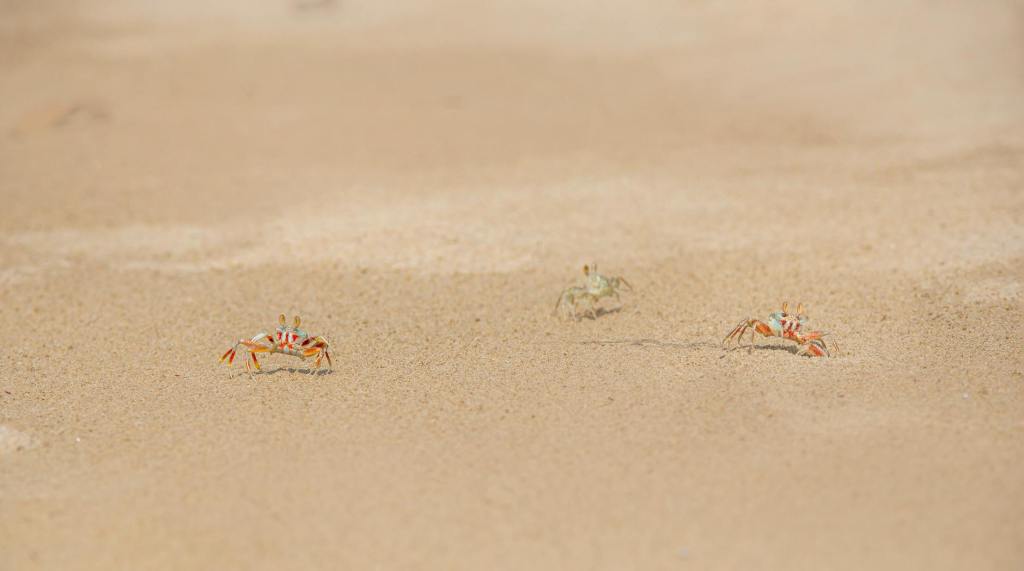
Tiny fiddler crabs, no larger than a sticky note, may be playing an unexpected role in tackling one of the planet’s most persistent pollution problems. New scientific research has found that these small crustaceans are capable of ingesting and breaking down microplastics in heavily contaminated mangrove ecosystems, potentially influencing how plastic behaves in coastal environments.
The study focused on fiddler crabs living in a severely polluted mangrove forest along Colombia’s northern coast, an area affected by years of rapid urbanisation and agricultural expansion. These pressures have degraded the mangrove ecosystem and led to some of the highest recorded concentrations of plastic pollution in the world. Despite these harsh conditions, the crabs were found to be thriving.
Researchers observed that fiddler crabs actively ingest microplastics present in mangrove sediments and can process them at a surprisingly rapid pace. Known as “ecosystem engineers” for their role in aerating soil and recycling nutrients, fiddler crabs appear to extend this function to plastic pollution. Their feeding and burrowing activities allow them to collect and grind plastic particles, breaking them down within days—much faster than natural processes such as sunlight exposure or wave action.
While earlier laboratory experiments had shown that fiddler crabs are capable of ingesting plastic, this research marks the first time scientists have studied how the animals interact with microplastics in their natural habitat. The aim was to determine whether the crabs avoid plastic when given a choice or adapt to its presence in the environment.
To investigate this, scientists established several one-metre-square plots within urban mangroves and introduced solutions containing polyethylene microspheres. These tiny plastic particles fluoresce under ultraviolet light, allowing researchers to track their movement through sediment and animal tissue. Over a period of 66 days, soil samples and nearly 100 crabs were collected and examined.
The results revealed that fiddler crabs accumulated microplastics at concentrations more than 13 times higher than those found in surrounding sediments. Within the crabs’ bodies, the particles were not evenly distributed. The highest concentrations were detected in the hindgut, suggesting that digestion plays a key role in plastic processing.
Further analysis showed that many of the ingested microplastics had been fragmented into even smaller particles. Scientists believe this may be due to the crab’s specialised grinding digestive system, combined with the action of plastic-degrading bacteria living in the gut. Interestingly, fragmented particles were more commonly found in female crabs than in males, though the reason for this difference remains unclear.
Despite these findings, researchers caution that the crabs’ ability to break down microplastics may not be entirely beneficial. Fragmentation can potentially convert microplastics into nanoplastics, which are even smaller and may pose greater risks. These particles could accumulate in crab tissues and move up the food chain, affecting predators and potentially reaching humans.
The study highlights the complexity of plastic pollution in natural ecosystems. While fiddler crabs may help reduce the size of plastic particles in sediments, this does not necessarily eliminate the threat posed by plastic. Smaller particles are more easily absorbed by living organisms and may have unknown or harmful biological effects.
Scientists emphasise the need for further research to understand how microplastic ingestion affects the long-term health of fiddler crabs and other species. There is also growing concern about how plastic fragments circulate through food webs and what this means for ecosystem health and human well-being.
Microplastics have already been detected in air, water, food and human tissues, and studies have linked plastic exposure to potential risks such as respiratory problems, cardiovascular disease and cancer. While direct cause-and-effect relationships are still being investigated, the growing body of evidence underscores the urgency of reducing plastic pollution at its source.
The discovery of fiddler crabs’ role in processing microplastics adds a new dimension to understanding how ecosystems respond to human-made pollution. It also serves as a reminder that even the smallest creatures can influence global environmental challenges—though their resilience should not be mistaken for a solution to the plastic crisis.



 PARYAWARAN
Leave a comment