As climate change and rapid urban growth intensify flooding across East Africa, Rwanda’s capital, Kigali, is turning to nature-based solutions to protect its residents, infrastructure, and economy. Once buffered by vast wetlands at the base of its hills, the city has in recent decades become increasingly vulnerable to destructive floods. Now, an ambitious effort to restore and reshape degraded wetlands is redefining how one African city adapts to a changing climate.
Kigali, home to around 1.7 million people, sits in a landscape of steep hills and valleys. During heavy rains, water rushes downhill into low-lying areas, often overwhelming roads, homes, and businesses. In flood-prone neighborhoods near rivers, workshops and shops have repeatedly been submerged, destroying tools, stock, and livelihoods. Severe storms in recent years have caused knee-deep flooding in some areas, resulting in losses worth thousands of dollars for small business owners and residents.
Historically, Kigali’s wetlands absorbed much of this runoff. Spanning tens of thousands of acres, these interconnected marshes slowed floodwaters, filtered pollutants, trapped sediment, cooled surrounding areas, and supported rich biodiversity. However, decades of pressure from informal farming, sand mining, waste dumping, and unplanned development steadily eroded their ecological function.
Urbanization has compounded the problem. Kigali’s population has been growing by about 4 percent annually since 2020, and open land has increasingly been replaced by concrete and asphalt. These impermeable surfaces accelerate runoff, sending more water downhill at greater speed. The result has been frequent flooding that damages buildings and infrastructure, erodes soil, disrupts transport, and causes economic losses estimated at tens of millions of dollars each year.
Rainfall patterns have also changed. While Kigali has long experienced substantial rainfall, rainy seasons are now becoming shorter but more intense. Across East Africa, warmer air and ocean temperatures are loading storms with more moisture, leading to extreme downpours that overwhelm drainage systems and natural waterways.
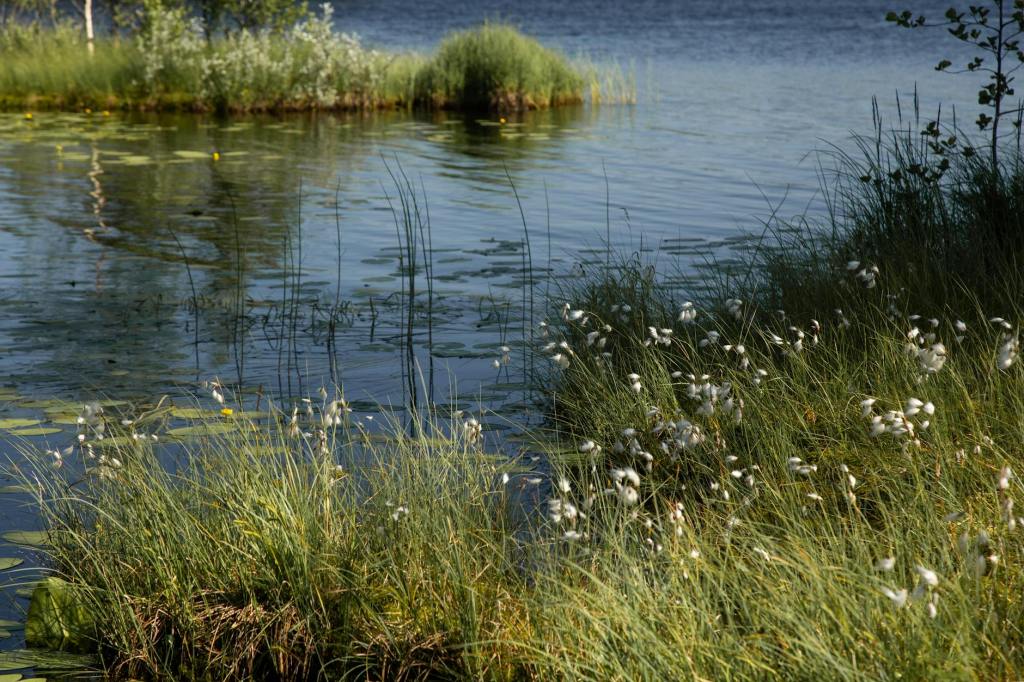
Recognizing the growing threat, city authorities and national agencies began nearly a decade ago to invest in restoring wetlands as a form of natural infrastructure. One early pilot project transformed a severely degraded swamp into a functioning wetland within just three years. The restored area now includes ponds, riverine forest, and grassland, providing flood control, water filtration, carbon storage, and habitat for wildlife.
The success of this pilot shifted thinking at both city and national levels. Rather than relying solely on engineered flood defenses, Kigali began scaling up its nature-based approach. Today, the city is working to restore an integrated wetland system that will eventually cover more than 18,000 acres, reshaping one of Africa’s fastest-growing capitals.
Currently, heavy machinery and large teams of workers are active across multiple sites. Degraded wetlands are being recontoured to create islands, ponds, and channels that guide stormwater safely downstream. Indigenous plant species are being introduced to stabilize soils and absorb water, while invasive plants are removed. Reed beds are being established to filter pollutants before runoff reaches rivers.
Several restored wetlands are designed to link together, forming continuous corridors of green space. These areas will serve not only as flood buffers but also as parks, wildlife habitats, and recreational zones, with dozens of miles of walkways and bicycle paths planned. The vision is to reconnect the city’s natural sponge system while improving quality of life for residents.
The approach is notable because few rapidly growing cities have the space, funding, or political commitment to restore nature at this scale. While wetlands alone cannot prevent all flooding or counteract climate change, Kigali’s initiative represents a rare, citywide effort to rebuild ecosystems as protective infrastructure. With wetlands under threat across the continent, the project is increasingly seen as a potential model for other African cities seeking climate resilience.
Yet the effort also brings social challenges. Many wetlands earmarked for restoration have long been used informally for farming, grazing livestock, fishing, and collecting materials. Nationwide, more than half of Rwanda’s wetlands had been converted to agriculture by the mid-2010s. Although the land is government-owned, these uses were often tolerated, and many households depend on them for food and income.
Under long-term city plans, restoring and protecting wetlands could restrict access for thousands of farming households. Some restored areas are now fenced, with agriculture prohibited and entry regulated. Authorities emphasize community engagement and education, along with enforcement measures to prevent illegal use, but concerns remain about livelihoods, exclusion, and potential gentrification as green spaces increase nearby property values.
In some cases, relocation from flood-prone wetlands has improved living conditions. Families resettled to other regions have received farmland less vulnerable to flooding, enabling more stable agriculture and livestock production. However, experts stress the importance of monitoring social impacts closely to avoid displacement or inequitable outcomes as restoration expands.
City planners also acknowledge that wetlands alone are not enough. Deforestation on surrounding hillsides worsens runoff, reducing the effectiveness of downstream wetlands. In response, Kigali has launched a large-scale tree-planting campaign aimed at restoring forest cover across slopes and linking these forests to the wetland network.
Together, reforestation and wetland restoration are expected to slow runoff, reduce flood peaks, and create a more resilient urban landscape. For residents in flood-prone areas, the combined interventions offer hope that destructive flooding will become less frequent.
As climate pressures intensify, Kigali’s experiment shows how restoring nature can become a central strategy for urban adaptation—one that blends ecology, infrastructure, and long-term planning in the face of a warming world.




 PARYAWARAN
Leave a comment