In a significant move aimed at strengthening wildlife conservation and restoring lost biodiversity, the governments of Assam and Madhya Pradesh have agreed in principle to an inter-state exchange of wild animals. The understanding was reached during a meeting between Madhya Pradesh Chief Minister Dr Mohan Yadav and Assam Chief Minister Himanta Biswa Sarma in Guwahati.
The proposed exchange seeks to enrich biodiversity in both states by reintroducing species that have either become locally extinct or are limited in number in certain regions. Officials from both states described the initiative as a long-term conservation effort rather than a symbolic gesture.
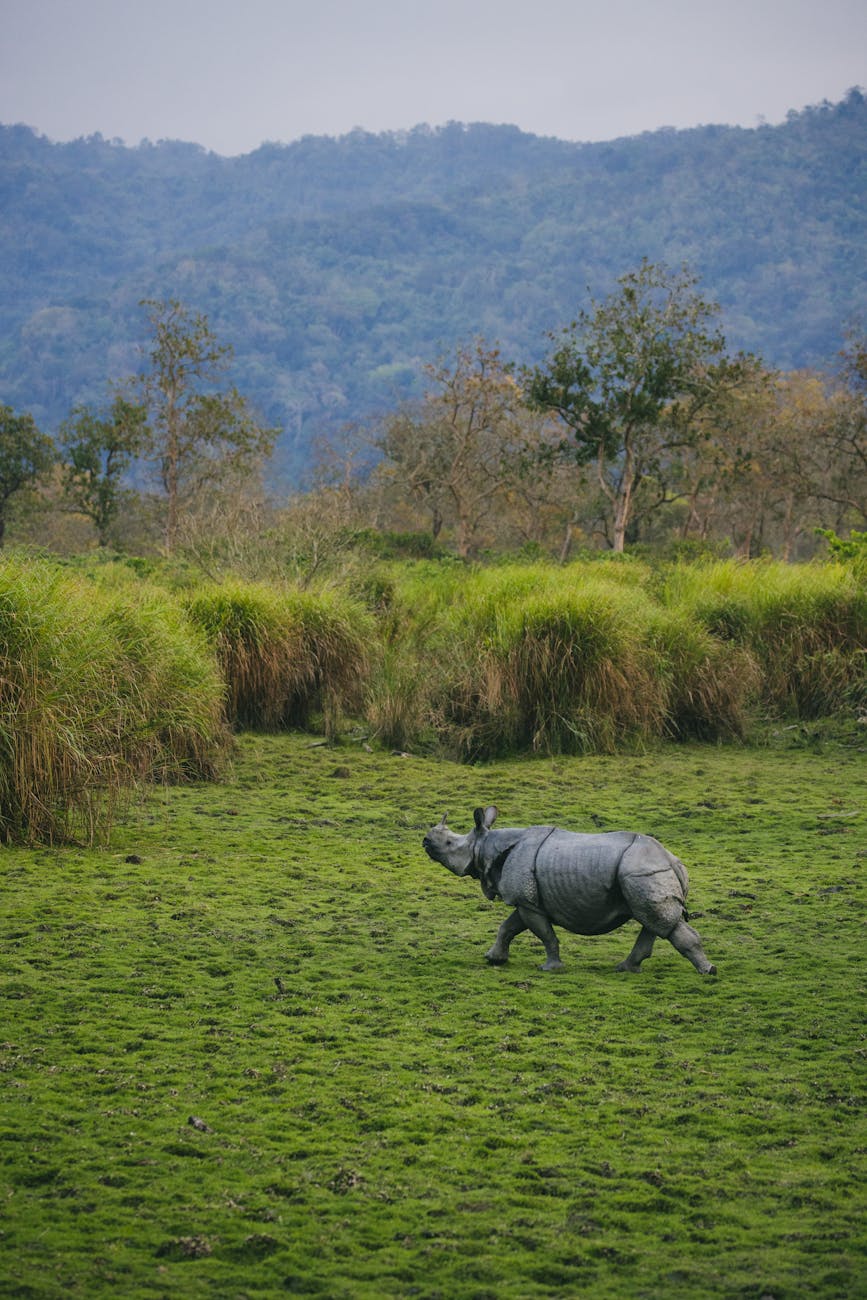
Under the agreement, Assam will translocate 50 wild water buffaloes to Madhya Pradesh over the next three years in a phased manner. In addition, Assam will send a pair of one-horned rhinoceroses and three king cobras. The rhinos and cobras will initially be housed at Van Vihar National Park in Bhopal, where they will undergo acclimatisation under expert supervision and be available for public viewing.
The wild water buffaloes, however, will be released directly into their historic habitat at the Kanha Tiger Reserve. The species, scientifically known as Bubalus arnee, became locally extinct in Madhya Pradesh more than a century ago. Once widely distributed across central India, the endangered animal now survives mainly in Assam, particularly in Kaziranga and Manas National Parks. Globally, fewer than 4,000 individuals are estimated to remain in the wild.
In exchange for Assam’s contribution, Madhya Pradesh will provide a pair of tigers and six mugger crocodiles to Assam. Officials said this would help diversify Assam’s wildlife populations and strengthen conservation breeding programmes in the state.
Announcing the decision on social media, Chief Minister Yadav said the initiative would help enrich wildlife and biodiversity in Madhya Pradesh and restore species that once roamed its forests. He noted that the reintroduction of wild buffaloes would be a major step forward, similar in spirit to the recent introduction of cheetahs at Kuno National Park.
Madhya Pradesh, often referred to as the “Tiger State” and “Leopard State” of India, has been positioning itself as a leader in large-scale species restoration. The state government views the Assam exchange as adding a new dimension to its conservation strategy, which increasingly focuses on restoring ecological balance rather than only protecting existing populations.
The decision to reintroduce wild buffaloes at Kanha Tiger Reserve is backed by scientific assessment. A comprehensive study conducted by the Wildlife Institute of India (WII), Dehradun, identified Kanha as an ideal site due to its extensive grasslands, abundant water sources, low human disturbance, and suitable prey and herbivore dynamics. Experts believe these conditions offer a strong chance for the buffalo population to establish and expand over time.
Officials from both states emphasised that the translocations will follow strict wildlife protocols, including health screening, quarantine, and long-term monitoring. If implemented successfully, the exchange could serve as a model for inter-state cooperation in wildlife conservation across India.




 PARYAWARAN
Leave a comment