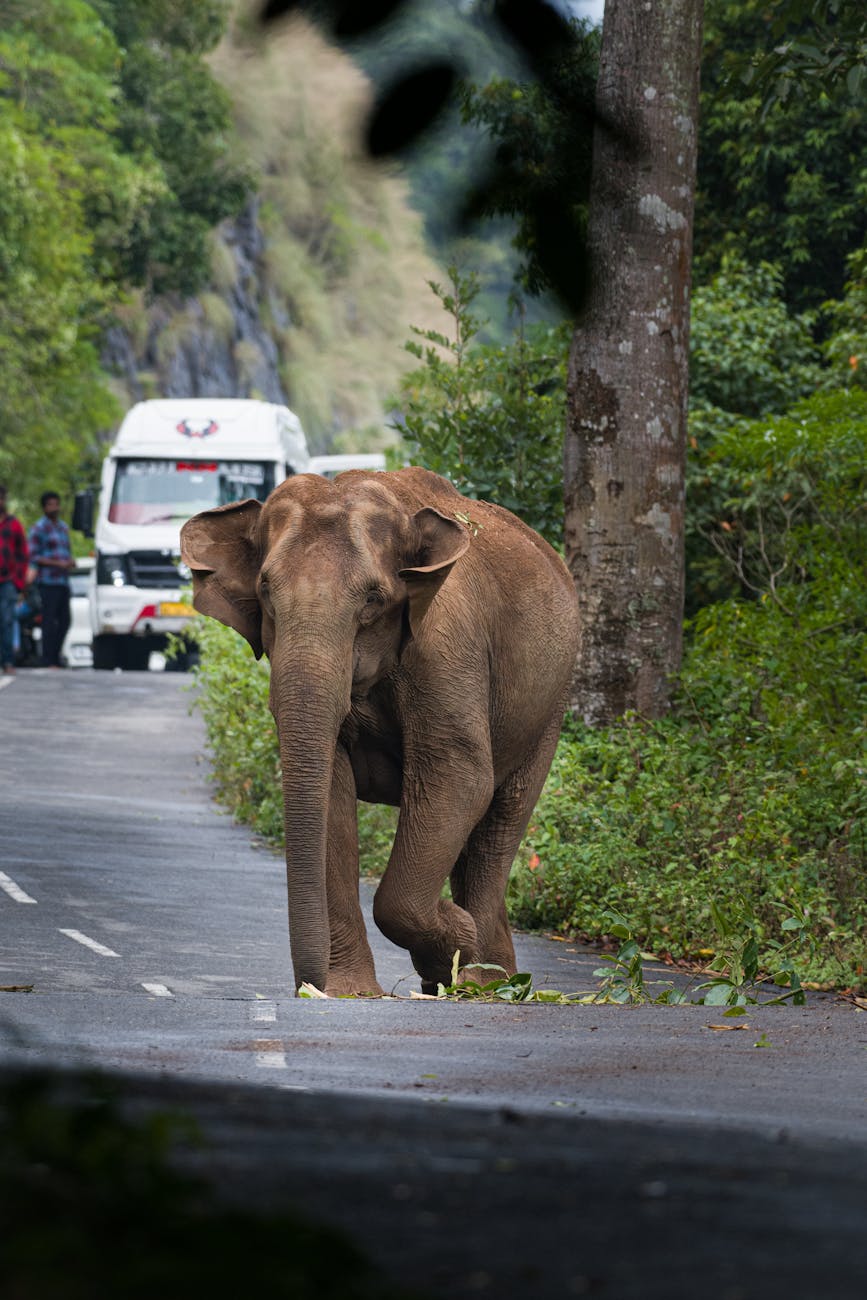
Wildlife activists in Uttarakhand have welcomed a recent High Court verdict that reinforces legal protection for elephant corridors in the state, even as large infrastructure and development projects continue to advance in ecologically sensitive areas. The ruling, delivered on January 10, 2026, has raised hopes that vital movement routes for elephants in the Shivalik landscape may now receive stronger judicial backing.
The Uttarakhand High Court closed a Public Interest Litigation seeking formal notification and protection of elephant corridors after applying a landmark 2020 Supreme Court judgment. That ruling established that the “right of passage” for elephants must take precedence over development activities, recognising wildlife corridors as essential for biodiversity conservation and for reducing human-animal conflict.
The court relied on the Supreme Court’s observations in a case related to Tamil Nadu’s Mudumalai landscape, which held that safeguarding corridors is integral to preserving ecological balance. Conservation groups viewed the verdict as timely, given the accelerating pace of development in forested tracts used by elephants.
Concerns have been growing over multiple projects that cut through or abut key corridors. Just days before the judgment, thousands of trees were felled in the Asharodi area, highlighting the gap between legal assurances and on-ground actions. Petitioners in the case argued that the ruling would help ensure greater accountability and provide clearer legal protection for corridors threatened by roads, buildings and airport expansion.
Across Uttarakhand’s Terai and Shivalik belts, road construction and widening projects have emerged as major threats to elephant movement. One prominent project aims to create a direct road link between Kotdwar, Haridwar and Lansdowne. The proposed alignment passes through a critical forest corridor connecting the Corbett and Rajaji Tiger Reserves. Construction on this road has remained stalled for years due to repeated judicial interventions, even as fresh approvals have been sought.
Another contentious project involves upgrading a national highway within the broader elephant reserve area to a double-lane road. Although preparatory work such as tree marking has been completed, construction remains under judicial scrutiny due to its ecological implications.
Equally controversial is the proposed four-laning of a highway section near Rajaji National Park, which would require the felling of around 4,000 trees within the Shivalik Elephant Reserve. This project is currently under a High Court stay. A separate highway expansion through the Chidiyapur corridor includes plans for wildlife underpasses, but conservationists warn that the overall scale of construction could still fragment habitats between key forest divisions.
The Shivalik Elephant Reserve, notified in 2002, spans over 5,400 square kilometres across southern Uttarakhand and connects with the Uttar Pradesh Elephant Reserve. It encompasses reserve forests and protected areas within Rajaji and Corbett National Parks, along with several forest divisions across the state. The reserve serves as a vital link between elephant populations in the lower Himalayas and the Terai plains.
In addition to roads, urban and institutional development is adding pressure. The proposed construction of a new legislative complex near forested areas is expected to displace parts of an existing corridor. Measures such as solar fencing have already been installed in some locations, preventing elephants from using traditional routes.
Airport expansion plans have drawn particularly strong opposition. The proposal to enlarge Dehradun’s airport involves diverting forest land within the Shivalik Elephant Reserve and could require the removal of thousands of trees. The project has faced protests, legal challenges and multiple court stays over the years. Earlier attempts to facilitate the expansion by temporarily removing reserve status from the area were reversed following public outcry and judicial intervention.
Both the Supreme Court and the Uttarakhand High Court have reiterated that once land is identified as an elephant corridor, no construction or commercial activity can be permitted. In recent months, the Supreme Court has taken suo motu cognisance of alleged systematic encroachment and construction on forest land in the state, ordering an immediate halt to such activities and warning officials against future violations.
The January 10 verdict is seen as reinforcing these principles and strengthening the legal framework protecting elephant corridors. While development pressures remain intense, conservationists believe the ruling could serve as a crucial tool to challenge projects that threaten the long-term survival of elephants in the Shivalik landscape.




 PARYAWARAN
Leave a comment