In a landmark ruling reinforcing Ecuador’s constitutional commitment to environmental protection, a provincial court has ordered the suspension of a highway project after finding that it poses a serious and irreversible threat to a critically endangered amphibian species. The decision highlights the growing role of “rights of nature” laws in shaping infrastructure development in one of the world’s most biodiverse countries.
The court ruled that construction of the planned highway in Cotopaxi province could violate the constitutional rights of the Jambato harlequin toad, a species found nowhere else on Earth. As a result, all work on the project has been halted until the government can demonstrate that the road will not drive the species to extinction or permanently damage its habitat.
Ecuador is unique in that its constitution explicitly recognizes nature as a rights-bearing entity, granting ecosystems and species the right to exist, regenerate, and be restored. While similar concepts have gained traction globally through court rulings, local laws, and nonbinding declarations, Ecuador remains the only country to enshrine such protections at the constitutional level. The latest ruling underscores how these provisions can be used to challenge development projects that threaten fragile ecosystems.
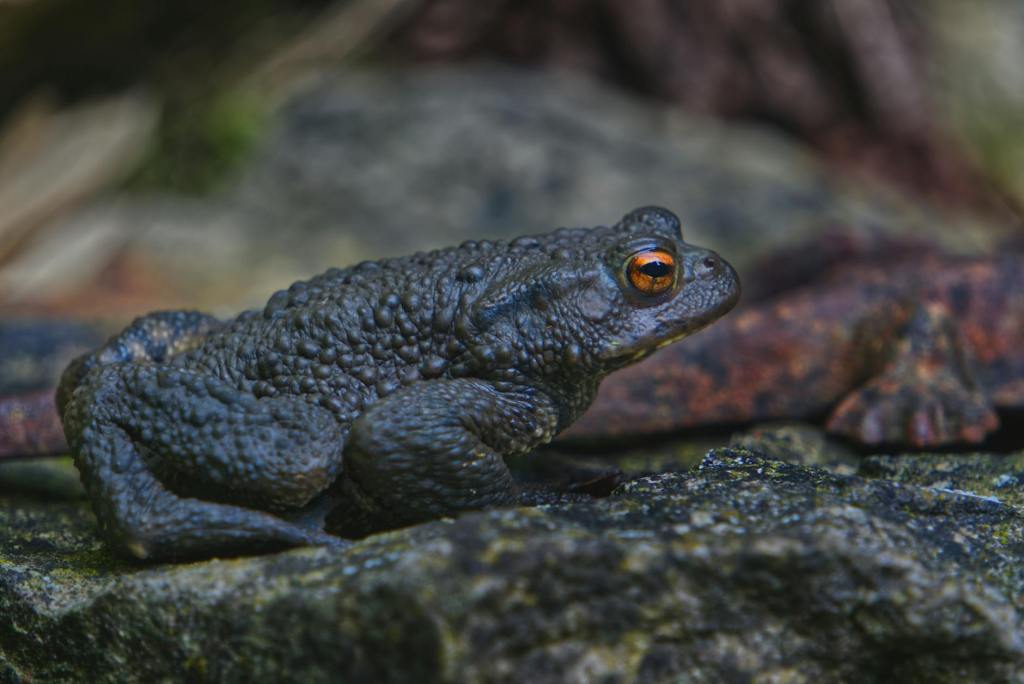
The Jambato harlequin toad is a small amphibian distinguished by its glossy black back and bright orange underside. Its survival depends on a delicate balance between land and water. During the breeding season, females lay eggs in clean, flowing streams, where tadpoles develop beneath stones on the riverbed. Any disturbance to water quality, stream flow, or surrounding vegetation can have devastating consequences for the species.
Once believed to be extinct, the toad was rediscovered in 2016 in the highland parish of Angamarca. Subsequent scientific surveys suggest that its entire known population may number fewer than 400 individuals, and possibly as few as 92. Such a small population size raises concerns about limited genetic diversity, which can reduce the species’ ability to adapt to environmental change, disease, or habitat disruption.
The court found that the highway project would involve extensive earthmoving, debris disposal, and heavy machinery use in close proximity to the streams where the toads reproduce. According to the ruling, these activities could cause sedimentation, alter watercourses, and permanently damage or destroy the species’ only known habitat. The court described the threat as imminent, noting that the project was scheduled to enter its most intensive construction phase in early January.
Under Ecuador’s constitution, the state has a duty to prevent activities that lead to species extinction, ecosystem destruction, or permanent alteration of natural cycles. The ruling emphasized that this obligation applies even when projects are framed as necessary for economic development or regional connectivity. Authorities were instructed to halt the use of heavy machinery until comprehensive environmental impact studies are completed and a specific protection plan for the Jambato harlequin toad is approved.
The court also criticized provincial and environmental authorities for relying on an environmental certificate intended for low-impact road maintenance rather than conducting a full assessment appropriate for a large-scale construction project. The area affected by the highway lies within a zone designated for special conservation, a factor the court said should have triggered stricter oversight and precautionary measures.
Environmental organizations had raised concerns about the project for more than a year, warning that proceeding without adequate studies could lead to irreversible ecological damage. The ruling noted that these warnings were only partially addressed, if at all, by the relevant authorities, despite the high conservation value of the area and the extreme vulnerability of the species involved.
The response of provincial authorities following the ruling remains uncertain. Reports from local residents suggested that heavy machinery had been moved to construction sites earlier in the week, raising questions about compliance with the court order. Legal experts note that enforcement of environmental rulings can be uneven, particularly when they conflict with infrastructure priorities.
Beyond its immediate impact, the decision is being seen as a significant test of Ecuador’s rights of nature framework. Supporters argue that the ruling demonstrates how constitutional protections can serve as a powerful tool for safeguarding species on the brink of extinction. Critics, however, caution that such decisions may complicate development planning if not accompanied by clearer guidelines and stronger coordination between environmental and infrastructure authorities.
Ecuador is among the most biologically diverse countries in the world, despite its relatively small size. Its ecosystems range from high-altitude wetlands and Andean forests to the Amazon rainforest and the Galápagos Islands. Many of these environments are home to endemic species found nowhere else, and scientists continue to discover new plants and animals each year. This richness also makes the country particularly vulnerable to biodiversity loss when development projects encroach on sensitive habitats.
For conservation advocates, the court’s ruling represents more than a legal victory for a single species. It is seen as a broader affirmation that economic development must be balanced with ecological responsibility, and that the survival of even the smallest and least visible creatures carries constitutional weight. The case has become a symbol of the ongoing struggle to ensure that nature’s rights are not merely symbolic, but actively enforced in decisions that shape the country’s future.




 PARYAWARAN
Leave a comment