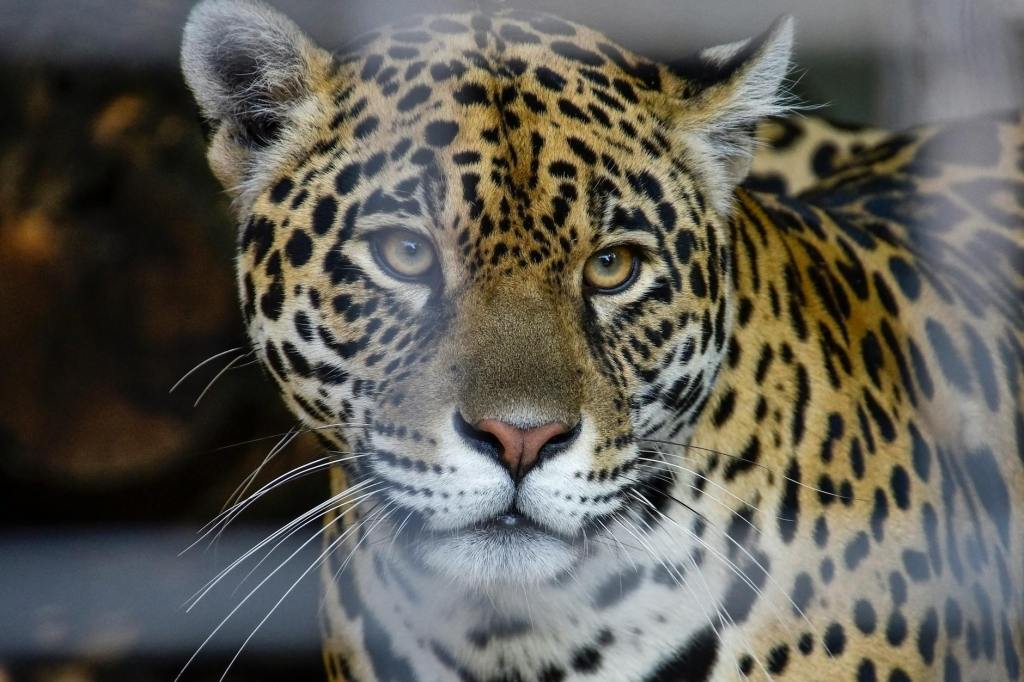
Hidden camera traps deep inside Brazil’s Atlantic rainforest have captured a behavior never before documented in the wild: jaguars meowing to their cubs. The discovery is reshaping scientific understanding of one of the world’s most iconic big cats and revealing that even well-studied species still hold surprising secrets.
The footage was recorded in Iguaçu National Park, a protected area known for its dense forest, rich biodiversity, and elusive wildlife. Researchers placed camera traps in the park to monitor jaguar activity, expecting to document movement, hunting behavior, and interactions with the environment. Instead, the cameras recorded something entirely unexpected—two female jaguars producing soft, high-pitched vocalizations resembling the meows commonly associated with domestic cats, with their cubs responding in similar sounds.
Jaguars are best known for their power and stealth. As the largest cat in the Americas, they are formidable predators, famous for their ability to hunt both on land and in water. Unlike most other big cats, jaguars frequently pursue prey such as caimans and turtles in rivers and wetlands. They are also known for their deep, resonant roars, which they use to communicate across long distances. Meowing, by contrast, has long been considered a trait limited to smaller cats.
The new recordings challenge this assumption. Big cats in the Panthera genus—lions, tigers, leopards, and snow leopards—have traditionally been thought incapable of producing true meows because of differences in their vocal anatomy. While it is widely accepted that big cats cannot purr in the same way domestic cats do, the belief that they also cannot meow has now been called into question by direct evidence from the wild.
The observed vocalizations occurred during interactions between mothers and their young. The meows appeared to be context-specific, used repeatedly during close-range communication over extended periods. This suggests a more nuanced and flexible maternal communication system than previously recognized. Jaguars are typically described as solitary and relatively silent animals, coming together only briefly for mating. The new findings indicate that mother-cub relationships may involve richer acoustic communication than scientists once assumed.
Similar behaviors have been observed in other feline species. Domestic cats frequently use meows to communicate with their kittens, and cheetahs—another exception among large cats—are known to use meow-like calls throughout their lives. Leopards have also been documented producing softer vocalizations that resemble meows in certain contexts. However, until now, no confirmed recordings existed of jaguars using such sounds in the wild.
The discovery underscores the importance of modern monitoring technology in wildlife research. Camera traps, which operate continuously and without human presence, allow scientists to observe natural behaviors that would otherwise remain hidden. Jaguars are notoriously difficult to study due to their low population density, wide-ranging movements, and preference for dense habitats. As a result, many aspects of their social and communicative behavior have remained poorly understood.
Beyond its scientific significance, the finding highlights how much remains unknown about even the most iconic species. Jaguars are among the most researched big cats in the world, yet intimate details of their daily lives are still being uncovered. The meowing behavior suggests that jaguar vocal communication is more diverse than previously documented and raises new questions about how these animals interact, especially during early life stages.
The research also has broader implications for conservation. Understanding communication and maternal behavior can help inform strategies to protect jaguar populations, particularly in fragmented habitats where human activity increases stress and disrupts family groups. Each new insight into jaguar behavior strengthens the case for preserving the forests and ecosystems they depend on.
In the shadowed depths of the Brazilian rainforest, the quiet meows captured on camera serve as a reminder that nature still holds many undiscovered stories—waiting patiently, just beyond human sight.




 PARYAWARAN
Leave a comment