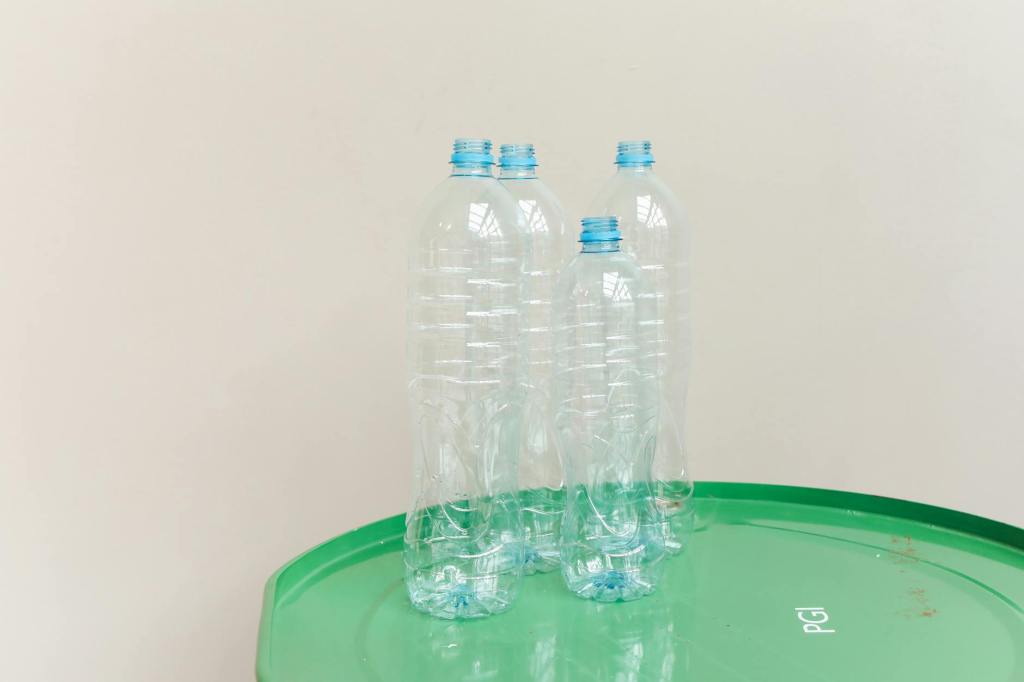
In a small village on the outskirts of Guwahati in Assam, an unconventional school is redefining both education and environmental responsibility. At the Akshar Forum, students do not pay their tuition in money. Instead, they arrive each week carrying bags of cleaned and sorted plastic waste, turning one of the region’s biggest environmental challenges into a tool for learning and social change.
Founded in 2016, the Akshar Forum serves around 100 students from economically disadvantaged families. Each child brings approximately 25 plastic bags or bottles as weekly fees. The system is designed not only to make education accessible to families with limited incomes, but also to address Assam’s mounting plastic pollution crisis. Guwahati alone generates nearly 500 metric tonnes of waste every day, much of which ends up in landfills, waterways or open fires, releasing toxins and microplastics into the environment.
By assigning value to plastic waste, the school has created a local incentive for segregation and collection. Students learn early that plastic is not disposable but a material with long-term environmental costs and potential uses. The collected waste is not stored indefinitely. Instead, it becomes part of the school’s recycling ecosystem, where students are directly involved in transforming trash into functional products.
One of the most visible outcomes of this effort is the production of “Eco Bricks,” made by tightly packing plastic waste into PET bottles. These bottle bricks are used on campus to build pathways, fencing and garden boundaries. Older students also recycle thicker plastics such as bottle caps into planters, furniture tops and utility items using low-cost machines based on open-source designs. Through this hands-on process, students gain practical skills while learning about material science, waste management and sustainability.
While similar initiatives exist globally—where plastic is exchanged for food, money or school fees—the Akshar Forum stands out for integrating recycling directly into its curriculum. Globally, plastic waste remains a daunting problem. According to estimates by the United Nations Environment Programme, about 300 million tonnes of plastic waste are generated annually, yet only a small fraction is recycled. Projects that monetize plastic often struggle with long-term sustainability if recycling systems are not robust. Akshar addresses this by using much of the collected plastic internally and continuously exploring reuse options.
The school’s innovation extends beyond environmental action. Its broader mission is to reduce school drop-out rates in a state where poverty often forces children into early wage labour. Instead of traditional grades and rigid classrooms, Akshar Forum follows a flexible learning-level system aligned with the National Institute of Open Schooling. Students progress at their own pace, reducing academic pressure and encouraging retention.
A distinctive feature of the school is its incentive-based learning model. Students earn points for participating in academic support, classroom management and vocational training. These points are credited to digital accounts and can be redeemed for essential goods, helping families offset daily expenses. Vocational training includes skills such as solar panel installation, tailoring, carpentry, electrical work, mobile repair and basic healthcare assistance. In several cases, students have applied these skills directly on campus, reinforcing confidence and self-reliance.
The Akshar model draws inspiration from work-integrated education philosophies and aligns with India’s National Education Policy, which emphasizes skill development, sustainability and experiential learning. Its success has attracted the attention of the Assam government, which is promoting Eco Bricks and has already used thousands of plastic bottles to construct model childcare centres. The Forum has partnered with the state to train teachers in government schools, helping replicate its methods across dozens of institutions.
Community engagement has been central to the school’s growth. Students now train peers in other regions, including remote Himalayan areas, on plastic recycling and Eco Brick construction. This peer-to-peer approach has turned learners into educators and environmental ambassadors.
Despite its impact, the Akshar Forum faces ongoing challenges, particularly in securing consistent funding. Measuring long-term outcomes such as reduced drop-out rates, improved livelihoods and environmental benefits takes time, often beyond the expectations of short-term funding cycles. Yet individual success stories continue to emerge, demonstrating the model’s potential.
By combining education, environmental action and livelihood skills, the Akshar Forum offers a powerful example of how schools can respond creatively to social and ecological crises. In a region grappling with plastic pollution and educational inequality, this small institution shows how waste, when reimagined, can become a pathway to opportunity.




 PARYAWARAN
Leave a comment