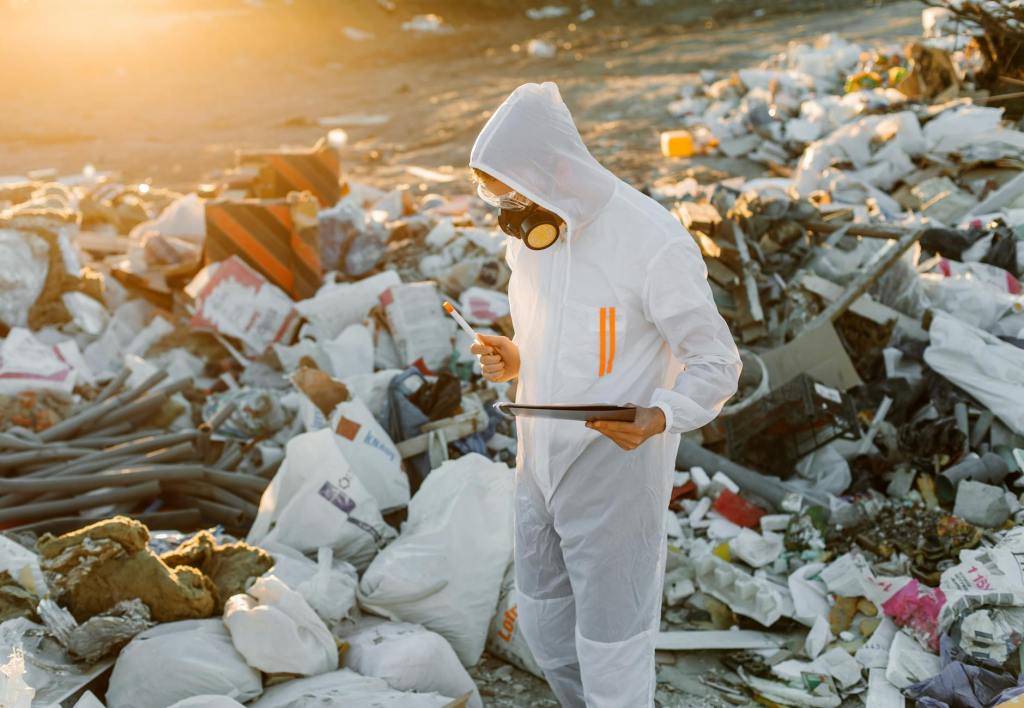
Chemical pollution is increasingly recognised as a planetary-scale threat, comparable to climate change and biodiversity loss. Thousands of synthetic chemicals circulate through air, water, soil, products, and human bodies, yet governance systems struggle to keep pace with their scale, complexity, and long-term impacts. In response to this growing crisis, the international community has begun establishing a global science–policy panel on chemical pollution, designed to strengthen the link between scientific evidence and policy decision-making.
Why a Science–Policy Panel Is Needed
Scientific research on chemical pollution has advanced rapidly over recent decades. Researchers now understand far more about toxicity, persistence, bioaccumulation, endocrine disruption, and mixture effects than when many regulatory frameworks were created. Studies show that chemical production and releases have exceeded safe planetary boundaries, threatening ecosystem stability and human health worldwide.
Despite this expanding knowledge base, policy responses remain slow, fragmented, and often reactive. Many hazardous substances remain in widespread use long after risks are identified. Regulatory systems tend to evaluate chemicals individually, even though real-world exposure involves complex mixtures. In addition, low- and middle-income countries often lack the capacity to assess, monitor, and regulate hazardous chemicals effectively.
The science–policy gap is therefore not a lack of evidence, but a lack of structured mechanisms to translate evidence into timely, coordinated action. This gap is precisely what the global science–policy panel aims to address.
Purpose and Scope of the Panel
The global science–policy panel on chemical pollution is intended to function in a role similar to the Intergovernmental Panel on Climate Change (IPCC), but focused on pollution, including hazardous chemicals and waste. Its core purpose is not to set policy, but to provide policymakers with authoritative, independent, and policy-relevant scientific assessments.
Key objectives include:
- Synthesising the latest scientific knowledge on chemical pollution and its impacts on human health and ecosystems
- Identifying emerging risks before they become widespread crises
- Highlighting knowledge gaps and research priorities
- Assessing the effectiveness of existing policies and governance frameworks
By doing so, the panel can help governments anticipate problems rather than respond after damage has occurred.
Strengths of the Science–Policy Model
One of the main strengths of a science–policy panel is credibility. Assessments are produced through transparent, peer-reviewed processes involving scientists from diverse disciplines and regions. This reduces the influence of selective evidence and supports decision-making grounded in consensus science rather than short-term political or economic interests.
Another strength is global coherence. Chemical pollution is inherently transboundary: substances are traded, transported, and dispersed across borders. A global panel provides a shared evidence base that can support international cooperation and align national policies, particularly under multilateral environmental agreements.
Importantly, such panels can also elevate equity concerns. Chemical pollution disproportionately affects vulnerable populations, including workers, children, Indigenous communities, and residents of low-income regions. By documenting these disparities, the panel can inform policies that integrate human rights, environmental justice, and public health.
Limitations and Challenges
Despite its potential, the science–policy panel faces important limitations. Like other international scientific bodies, it has no enforcement power. Governments may choose to ignore or selectively interpret its findings. The panel’s impact therefore depends heavily on political will and public pressure.
There is also the challenge of disinformation and lobbying. Industries with economic interests in hazardous chemicals have historically sought to delay regulation by questioning scientific findings or exaggerating uncertainty. Ensuring independence, transparency, and protection of scientific integrity will be critical for the panel’s credibility.
Another challenge lies in complexity. Chemical pollution encompasses tens of thousands of substances, multiple exposure pathways, and long-term effects that are difficult to quantify. Translating this complexity into clear, actionable messages for policymakers will require careful communication.
Looking Ahead
The establishment of a global science–policy panel on chemical pollution represents an important step toward more preventive and science-based governance. By systematically connecting evidence with policy, the panel can help shift global chemical management from crisis response to risk prevention.
However, science alone is not enough. The panel’s success will ultimately be measured by whether governments act on its findings—strengthening regulation, closing loopholes, holding polluters accountable, and prioritising human and environmental health over short-term economic gains. In a world increasingly shaped by synthetic chemicals, aligning science and policy is no longer optional; it is essential for safeguarding planetary and human well-being.




 PARYAWARAN
Leave a comment