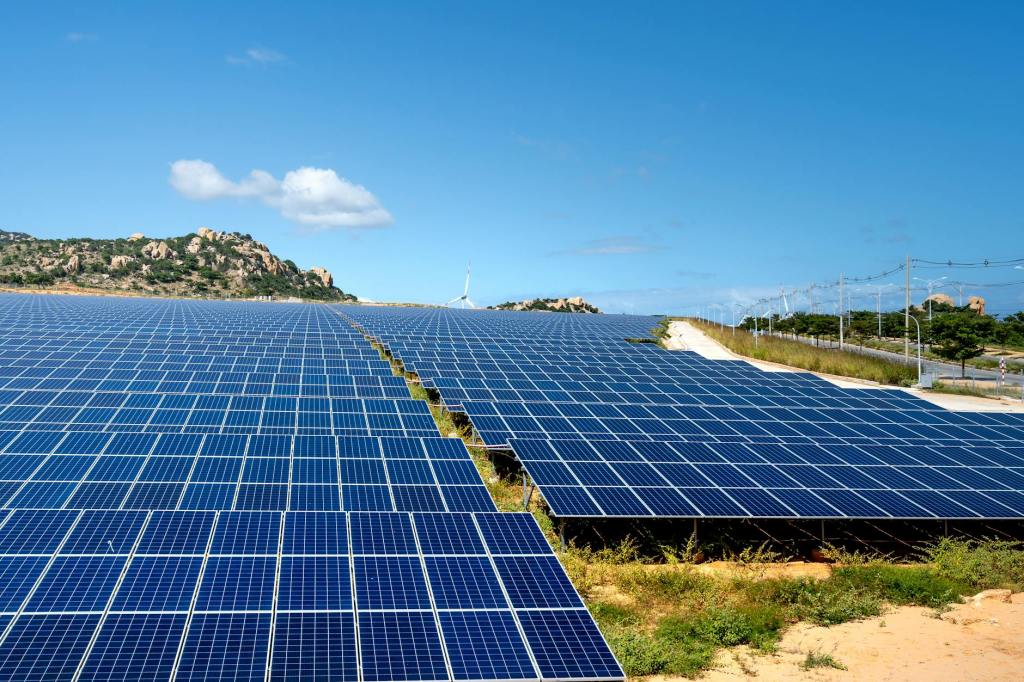
A former Superfund site in northern Illinois has been repurposed into a community solar project that is helping residents lower their energy bills while turning a long-standing environmental liability into a local asset. The 9.1-megawatt Yeoman community solar project, located in the city of Waukegan about 40 miles north of Chicago, began operations recently and is already supplying clean electricity to households and public institutions.
Built on the remediated Yeoman Creek Landfill, the solar array demonstrates how polluted land that is unsuitable for housing or commercial development can be reused for renewable energy. The site was once a dumping ground for industrial and municipal waste and was placed on the federal Superfund list in the late 1980s due to severe contamination. Cleanup was completed in the mid-2000s, but restrictions on land use meant the area remained vacant for years.
The new solar installation is designed to generate enough power to serve roughly 1,000 households, along with a local school district that owns the land and serves as the project’s anchor subscriber. Through a leasing arrangement, the district receives steady revenue while also offsetting a significant portion of its electricity costs. The savings and lease income are expected to support educational services in a district where a large share of students come from low-income families.
Residents who subscribe to the project receive credits on their electricity bills for the power produced by the solar farm. Participation requires no rooftop installation or upfront investment, making it accessible to renters, condo owners, and households unable to install solar panels themselves. Subscribers are guaranteed savings under state-supported community solar programs that prioritize low-income and environmental justice communities.
The project was made financially viable through Illinois Solar for All, a state initiative that provides incentives for solar development in underserved areas. These incentives helped offset the higher construction costs associated with building on a landfill, where special care is required to protect soil caps, prevent erosion, and avoid disturbing residual contamination. State agencies reviewed construction plans in detail to ensure environmental safeguards were maintained throughout development and operation.
Illinois has emerged as a national leader in community solar policy. Since incentives were introduced in 2017, hundreds of community solar projects have been built across the state, adding more than 1,800 megawatts of capacity. Additional support for solar on brownfields and landfills has come from state power procurement programs and low-interest financing for site redevelopment.
The Yeoman project is the largest community solar array in the service territory of the regional electric utility serving northern Illinois. By supplying locally generated renewable energy, it reduces the amount of electricity that must be provided by the utility and helps stabilize energy costs for subscribers amid rising prices.
Waukegan’s history as an industrial center has left it with multiple contaminated sites and a legacy of pollution, including a coal-fired power plant that operated until recent years. For local communities, the solar project represents a step toward a more just energy transition, one that delivers tangible economic benefits alongside environmental improvement.
Beyond cost savings, the project is also expected to play an educational role. The school district already incorporates rooftop solar installations into classroom lessons, and the community solar farm offers another real-world example of clean energy in action. It may also expose students to potential career pathways in the growing renewable energy sector.
By converting a once-toxic landfill into a source of clean power and financial relief, the Yeoman community solar project illustrates how targeted state policy and innovative land reuse can align climate goals with community needs. For residents facing high energy costs, it offers a practical model of how clean energy can deliver immediate and measurable benefits.




 PARYAWARAN
Leave a comment