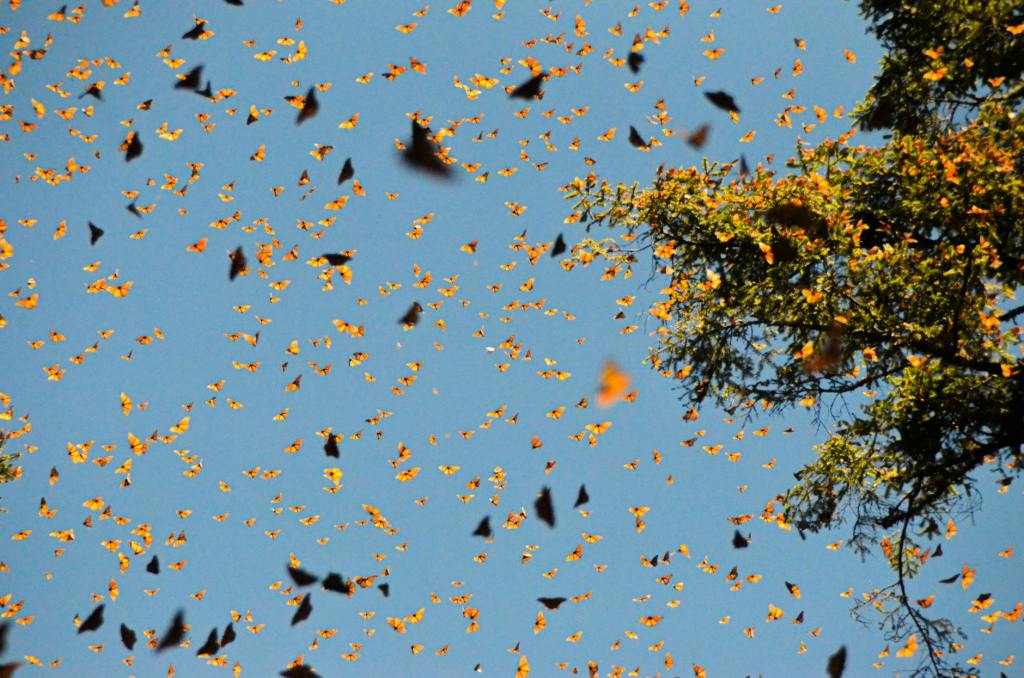
For decades, the migratory journeys of monarch butterflies were one of nature’s most captivating mysteries. Each year, millions of the delicate orange-and-black insects travel thousands of kilometers across North America, moving between breeding grounds in the United States and Canada and overwintering sites in Mexico and coastal California. Scientists long relied on tagging programs, field observations and public sightings to piece together their routes. Now, a new generation of solar-powered tracking tags and artificial intelligence is transforming what researchers know about one of the world’s most iconic migrations.
Tiny, lightweight solar tags — small enough to be carried by a butterfly without disrupting its flight — are allowing scientists to follow individual monarchs in near real time. These tags harvest energy from sunlight, transmitting location data to satellites or ground-based receivers. Combined with AI systems that analyze vast streams of movement data, weather patterns and habitat conditions, researchers can now build detailed maps of monarch migration at a scale that was previously impossible.
The result is a clearer picture of how monarchs navigate vast distances, where they stop to rest and feed, and which habitats are most critical for their survival. Early findings show that monarchs rely on a network of “stepping stone” habitats — patches of milkweed, wildflowers and forest cover — that provide nectar, shelter and breeding sites along the way. Loss of even small portions of this network can disrupt the entire migratory chain.
Scientists say the technology is revealing just how fragile the migration has become. Monarch populations have declined sharply in recent decades due to habitat loss, pesticide use and climate change. Warmer temperatures can alter wind currents and seasonal cues that butterflies use to time their journeys. Droughts reduce the availability of nectar plants, while land-use change has eliminated large areas of native milkweed, the only plant on which monarchs lay their eggs.
By overlaying tracking data with environmental information, AI models can identify high-risk zones where monarchs face food shortages or extreme weather. This allows conservationists to target restoration efforts more precisely, such as planting milkweed corridors in key regions or protecting stopover habitats from development. It also helps policymakers understand which landscapes deliver the greatest conservation value.
Researchers involved in monarch studies describe the technology as a breakthrough for insect conservation. While GPS tracking has long been used for larger animals like birds and mammals, applying similar approaches to insects was once considered unrealistic because of size and weight constraints. Advances in miniaturization and energy efficiency have begun to change that, opening the door to tracking other migratory insects as well.
Conservation groups emphasize that technology alone will not save monarchs, but it can guide smarter action. Community science still plays a major role, with volunteers reporting sightings, planting pollinator gardens and participating in tagging programs. The new data, however, adds scientific precision to these grassroots efforts.
There are also ethical and practical considerations. Researchers must ensure that tags do not harm butterflies or make them more visible to predators. So far, studies suggest properly designed tags have minimal impact, but scientists continue to refine methods. Data privacy for sensitive habitat locations is another concern, as revealing exact sites could expose them to disturbance.
Even with these challenges, the mood among scientists is cautiously hopeful. For the first time, monarch migration is being documented in fine detail, turning a once-mysterious phenomenon into a data-rich field of study. Each tagged butterfly becomes a messenger, carrying information across borders and ecosystems.
In a rapidly changing world, that knowledge may prove vital. Monarch butterflies are not only beloved symbols of nature’s beauty but also indicators of ecosystem health. Their fate is closely tied to the landscapes they traverse. As solar-powered tags and AI peel back the layers of their journey, they are also highlighting a broader truth: protecting migration means protecting the connected web of habitats that sustains life along the way.




 PARYAWARAN
Leave a comment