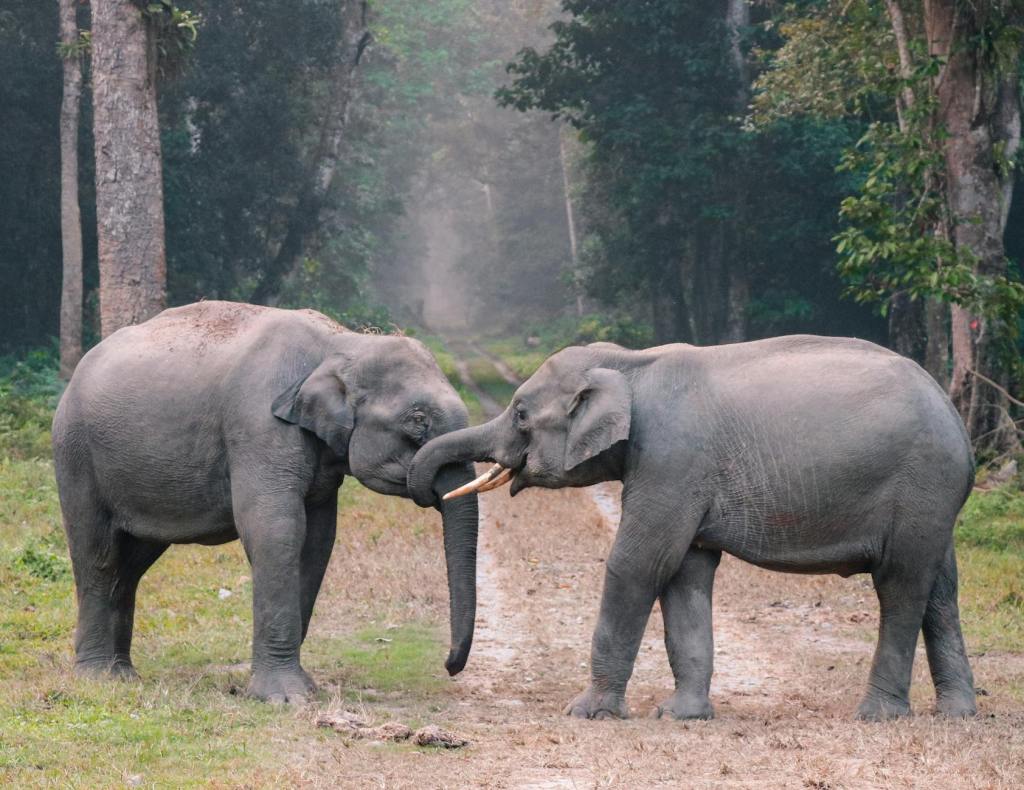
In the verdant borderlands of Assam’s Nagaon and Karbi Anglong districts, a grassroots conservation initiative known as Hati Bondhu — which translates as “Friends of Elephants” — is transforming an age-old clash between humans and wild elephants into a story of harmony and shared survival. What began as a local response to devastating human-elephant conflict has grown into a community-led movement demonstrating how empathy, scientific observation and strategic habitat interventions can mitigate one of India’s most persistent wildlife challenges.
For decades, the region’s elephant herds were both revered and feared. The sprawling forests of the Karbi Anglong Hills host a significant proportion of Assam’s Asian elephant population, but shrinking habitat and expanding agricultural frontiers pushed these gentle giants into proximity with human settlements. Elephants raided paddy fields and sugarcane plantations, causing crop destruction, economic losses and, in some cases, human fatalities. Retaliatory responses increased the peril for the endangered elephants themselves.
In 2018, environmentalist Pradip Kumar Bhuyan, then in his nineties, joined forces with local conservationist Binod Dulu Bora and concerned villagers to address this crisis. They launched Hati Bondhu under the aegis of the Osom Educational Trust with a bold mission: to nurture coexistence between rural communities and wild elephants.
One of Hati Bondhu’s first interventions tackled a surprising but deadly threat — sagging high-voltage power lines across remote villages. These poorly maintained lines frequently electrocuted elephants as they crossed the terrain. With the aid of local volunteers, the project raised 288 sagging wires, significantly reducing elephant deaths and drawing attention to infrastructure’s role in human-wildlife conflict.
But the initiative’s most transformative effort has been in habitat enrichment and strategic planting along elephant corridors. By mapping traditional migratory routes where elephants move from forested hills into the plains, Hati Bondhu identified areas where habitat loss had forced elephants to forage in village fields. To reverse this trend, the group encouraged farmers to cultivate elephant-favoured crops — including Napier grass, Jackfruit, elephant apples and specially allocated paddy zones — on specified community lands. These served as “feeding zones” that satisfied the elephants’ nutritional needs before they reached crop fields.
In Hatikhuli-Ronghang village, situated on the fringes of Karbi Anglong, the sight of wild elephants peacefully grazing in designated fields has become emblematic of the project’s success. Reports indicate that both villagers and elephants now use the same landscapes without conflict, a remarkable reversal from the fear-ridden past.
The social impact of the initiative has been profound. Local farmers, once resigned to annual crop losses, are now able to harvest without fear of elephant raids, strengthening both food security and incomes. Around 8,000 villagers have benefited from the programme’s plantations in Nagaon and Karbi Anglong districts, and the absence of fatal human-elephant incidents in the area over the past eight years is a testament to its effectiveness.
The Hati Bondhu project also underscores that conservation cannot succeed without community ownership. Villagers actively participate in planning plantation sites, monitoring elephant movements, and maintaining crops for elephants. Their involvement has shifted local attitudes — from hostility and fear to respect and stewardship. Regular workshops and outreach activities have further fostered awareness of elephant behaviour and the ecological importance of coexistence.
Experts say Hati Bondhu’s approach — rooted in understanding elephant ecology, community engagement and low-cost habitat enhancement — offers a replicable template for other regions grappling with human-wildlife conflict. While challenges remain, including sustaining long-term funding and balancing agricultural demands with wildlife needs, the initiative demonstrates that coexistence is possible when communities are empowered as agents of conservation.
As elephants continue to traverse the forests and fields of Assam, the villages of the Karbi Anglong frontier stand as living proof that mutual respect and shared responsibility can turn conflict into coexistence — an achievement that resonates far beyond the village boundaries.




 PARYAWARAN
Leave a comment