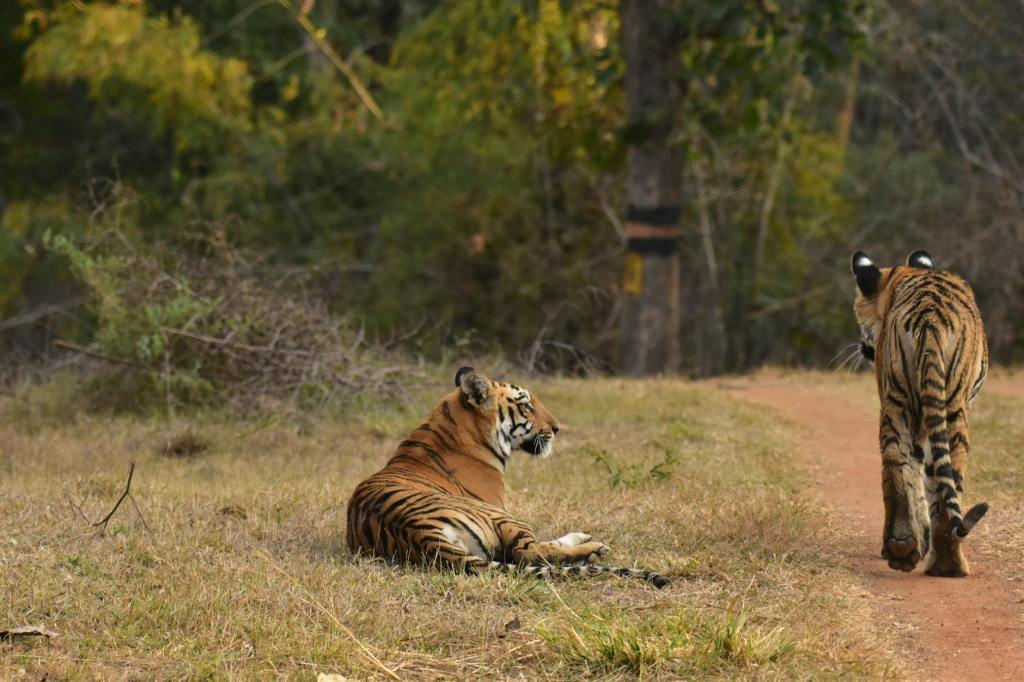
A proposed iron ore mining project in eastern Maharashtra has triggered a sharp debate over development and conservation, with environmental groups warning of serious ecological costs in a key wildlife corridor near major tiger habitats.
The project, cleared at the state level with conditions, is planned near Tadoba–Andhari Tiger Reserve and Ghodazari Wildlife Sanctuary in Chandrapur district. Conservationists say the mine could lead to the felling of more than 18,000 trees and disrupt a corridor used by dozens of tigers and other wildlife moving between forest patches.
The proposal involves diversion of about 36 hectares of reserved forest land for open-cast mining, along with additional land for roads and infrastructure. The mine is expected to reach a depth of 54 metres and produce roughly 1.1 lakh tonnes of iron ore annually over a 12-year period. Supporters point to potential local benefits, including around 120 jobs, though only a fraction are projected to be permanent.
The project was allotted to Sunflag Iron and Steel Company Ltd, a private steel producer that already operates mining and steel facilities in the region. The company’s existing operations supply steel to major automobile manufacturers and form part of a larger industrial network in central India.
Approval at the state level came from the Maharashtra State Board for Wildlife, which reviewed the proposal alongside recommendations from a technical committee. State officials have stressed that the board’s role is recommendatory and that clearance was tied to conservation conditions, including the possible creation of a much larger protected area to secure wildlife movement.
According to officials, the committee proposed declaring a new wildlife sanctuary of about 35,000 hectares to strengthen the corridor between existing protected zones. The mining proposal, they say, was considered only in conjunction with this broader conservation measure. Final approval, however, still rests with the National Board for Wildlife at the national level.
The issue has also drawn judicial attention. The Bombay High Court recently took suo motu cognisance of media reports and protests related to the project, appointing a legal representative to assist the court and directing that a petition be filed for further consideration. The court’s involvement has added another layer of scrutiny to the proposal.
Environmental groups argue that the area identified for mining is not an isolated forest patch but part of a larger, connected landscape critical for wide-ranging species. The broader Chandrapur region contains dense forests that link multiple tiger-bearing areas. Activists say this connectivity allows animals to disperse in search of territory, prey and water, reducing pressure on any single habitat.
Reports submitted to authorities have described the site as a crucial corridor connecting tiger populations across the Tadoba–Brahmapuri–Gadchiroli landscape. Besides tigers, the forests support leopards, bears, wild dogs, hyenas and a variety of herbivores and birds. The region is also known for diverse tree species and medicinal plants, as well as water bodies used by both wildlife and nearby communities.
A technical review commissioned by the state board warned that mining in the area could cause irreversible environmental damage. The assessment highlighted risks such as forest fragmentation, air and water pollution and increased human–wildlife conflict. Fragmented habitats, it noted, can push large carnivores closer to human settlements, raising safety concerns on both sides.
Human–tiger conflict is already a sensitive issue in parts of Chandrapur, where villages lie close to forest edges. Local accounts and official data have recorded fatalities and repeated interventions to capture or relocate problem animals. Conservationists fear that further habitat disturbance could intensify these patterns.
At the same time, some residents see mining as a possible source of employment and infrastructure in a region where economic opportunities are limited. This has complicated the debate, with development needs and conservation priorities pulling in different directions.
The forest division where the mine is proposed is not fully protected under the Forest Conservation Act framework in the same way as national parks or core reserve zones, making it more vulnerable to diversion. Still, its ecological role as a corridor has been widely acknowledged in official documents.
For now, the project’s future remains uncertain. National-level wildlife clearance is pending, and the High Court’s proceedings could influence the outcome. The case has become a test of how India balances mineral extraction, local livelihoods and the long-term need to preserve connected habitats for endangered species.
As the review continues, the forests of Chandrapur stand at the centre of a larger question facing many biodiversity-rich regions: how to pursue development without breaking the natural pathways that wildlife depends on to survive.




 PARYAWARAN
Leave a comment