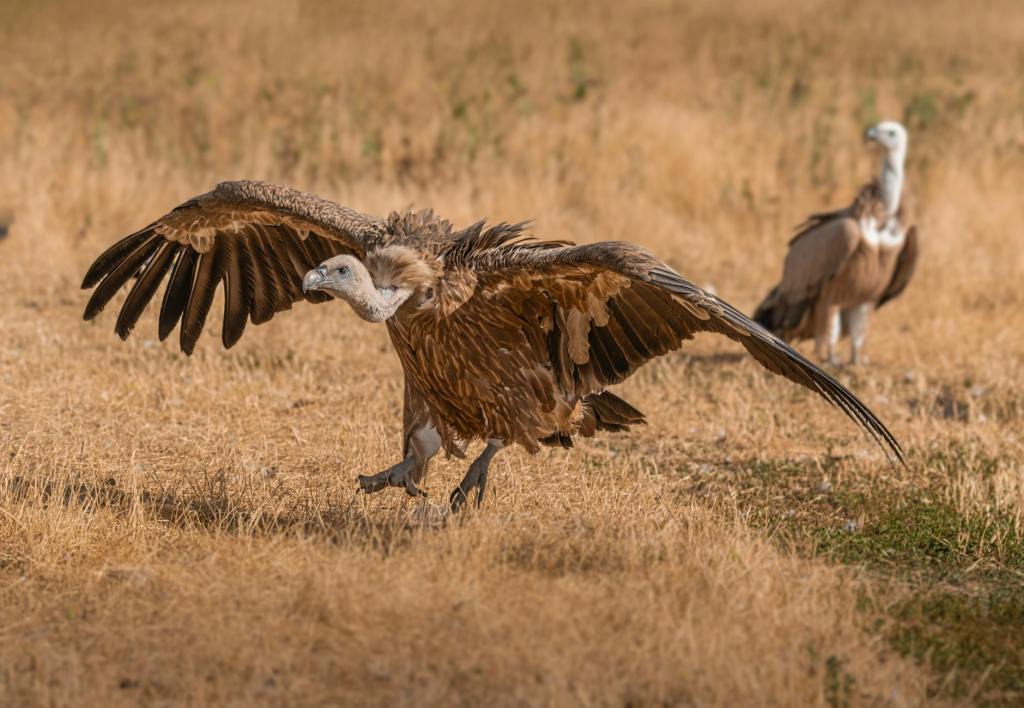
Scientists in Europe are turning scavenging wildlife into unlikely allies in the fight against illegal poaching, using GPS tracking data from vultures and wolves to uncover crimes that often go undetected in remote landscapes.
The approach emerged from fieldwork in northwestern Spain, where researchers studying vultures noticed unusual patterns around a red deer carcass. The animal’s remains showed signs of deliberate human interference rather than natural predation, revealing that the deer had been illegally killed for its antlers. The discovery alerted authorities to a form of poaching they had not previously recognized as a local problem.
That incident prompted researchers to explore whether data from scavenger species could be systematically used to detect wildlife crime. Traditionally, GPS tracking has been employed to understand the threats facing the species being monitored, such as habitat loss or poisoning. The new idea was to use animal movement and behavior as indirect evidence of crimes committed against other species.
In a study published last year, researchers from universities in Spain, Portugal and Austria examined how GPS data from vultures and wolves could help expose illegal hunting and trapping. Vultures, which soar over open landscapes searching for carrion, tend to congregate rapidly at feeding sites. By identifying clusters of tagged vultures gathering repeatedly in specific locations, scientists were able to pinpoint potential carcass sites.
Several days after detecting these “feeding points,” field teams visited the locations to inspect remains on the ground. They looked for signs such as missing body parts, wire snares or gunshot wounds—indicators that an animal may have been poached rather than killed naturally. In multiple cases, the method led to the discovery of illegally killed deer and prohibited hunting devices.
To complement the aerial perspective provided by vultures, the researchers also tracked wolves. Wolves scavenge as well as hunt, but they tend to feed in forested areas where vultures are less effective sentinels. By combining data from both species, scientists were able to cover a wider range of ecosystems and detect different types of poaching activity.
The results provided what researchers described as a view “through the eyes of the animals,” offering insights into wildlife crime in areas where human surveillance is sparse. Since the initial discovery in Spain, the method has been applied across several European countries, including Portugal, Bulgaria and the Czech Republic. In total, the teams identified and reported at least seven additional cases of deer poaching and helped authorities locate and remove illegal snares, which are banned across much of the European Union.
The findings challenge the assumption that poaching is largely a problem of distant tropical regions or iconic species such as elephants and rhinos. Instead, the data shows that illegal hunting persists across Europe, often hidden in rural landscapes and forests where enforcement is difficult.
Conservation experts say the approach could help address a longstanding gap in data on wildlife crime. Poaching incidents are notoriously underreported, making it hard for authorities to assess their scale or deploy resources effectively. While GPS-based surveillance is unlikely to stop poaching on its own, it adds a valuable layer of information that can guide targeted investigations.
At the same time, researchers and conservationists have raised concerns about unintended consequences. If poachers become aware that certain species effectively act as sentinels, those animals could be targeted in retaliation. Such risks are not theoretical. In parts of Africa, vultures have been killed in large numbers through poisoning, sometimes after feeding on animals killed by poachers and sometimes deliberately, to prevent their circling from alerting authorities.
This raises ethical and practical questions about how openly such research should be shared and how to protect sentinel species from harm. Some experts caution that publicizing specific methods could prompt criminals to adapt their behavior, potentially increasing threats to already vulnerable animals.
Despite these concerns, proponents argue that the benefits outweigh the risks if the approach is applied carefully and in coordination with law enforcement. Beyond detecting poaching, the research also deepens understanding of ecological interactions, highlighting how scavengers respond to changes in their environment.
For the scientists involved, the work has transformed the nature of field research. What once focused purely on animal behavior now carries the weight of criminal investigation. Each carcass, movement pattern or unusual gathering of animals could represent evidence of an illegal act.
As technology becomes more integrated into wildlife research, scavenger species may play an increasingly important role in conservation efforts. By revealing crimes that would otherwise remain hidden, vultures and wolves are helping expose the realities of wildlife exploitation—and, in doing so, offering new tools to protect biodiversity in human-dominated landscapes.


 PARYAWARAN
Leave a comment