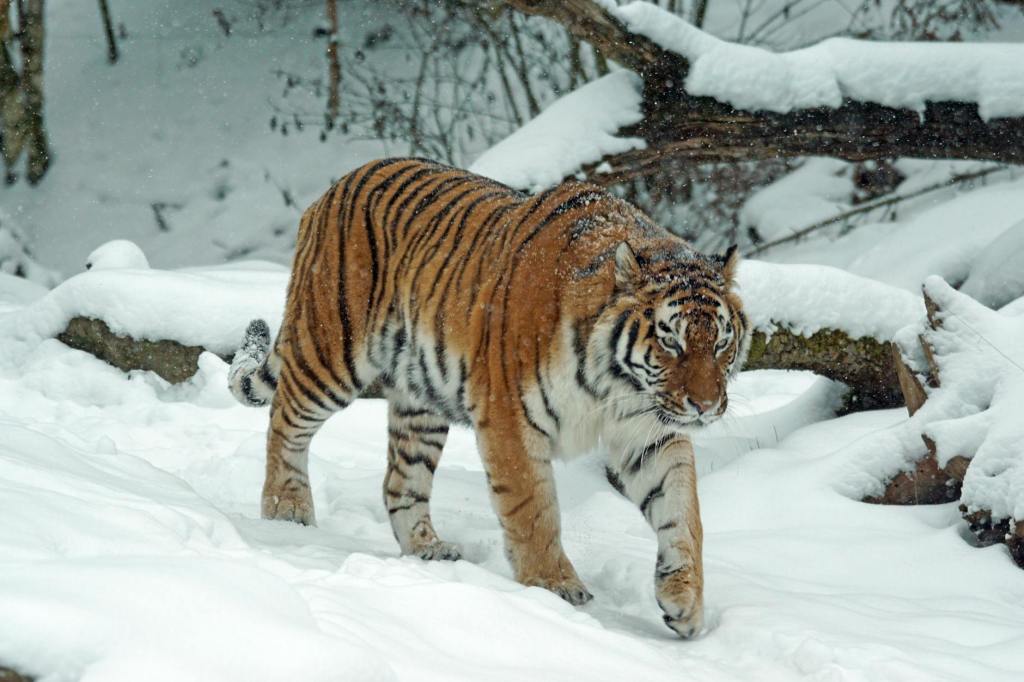
Kazakhstan is moving forward with an ambitious plan to bring tigers back to the country after decades of local extinction, combining wildlife reintroduction with large-scale ecosystem restoration in the south of the country.
As part of the effort, nearly 37,000 tree seedlings were planted in 2025 in the riparian forests surrounding the Ili River and the delta region near Lake Balkhash. The planting is part of a broader habitat restoration campaign designed to rebuild the ecosystems necessary to support the return of wild tigers.
The initiative is being led by the government of Kazakhstan with support from the conservation organization World Wide Fund for Nature and the United Nations Development Programme. Conservationists say restoring forests, prey populations and natural habitats is essential before the predators can be successfully reintroduced.
Over the past several years, the Ile-Balkhash Nature Reserve has become the focal point of this restoration effort. Between 2021 and 2024, around 50,000 trees were planted in the reserve as part of long-term work to rebuild the region’s tugai forests—unique riparian woodlands that once supported abundant wildlife along Central Asia’s river systems.
These ecosystems historically provided ideal habitat for large predators such as the Amur tiger. However, habitat degradation, hunting and human expansion caused the disappearance of the region’s native tiger population decades ago.
Conservation groups now hope to reverse that loss through careful ecological restoration and reintroduction. Newly planted trees include species that are vital to rebuilding a functioning riverbank ecosystem. In the most recent planting campaign, workers introduced around 30,000 long-leaved oleaster saplings, 5,000 willow seedlings and 2,000 turanga poplars—native trees that are culturally significant in Kazakhstan.
The saplings were planted along a roughly 2.4-mile stretch of shoreline near Lake Balkhash, the largest lake in Central Asia after the disappearance of the Aral Sea. Conservationists report that earlier plantings are already thriving, with some trees reaching heights of about 2.5 meters and establishing deep root systems that tap into groundwater.
Restoring these forests is considered a crucial step toward rebuilding the entire ecosystem. Tugai forests provide shelter and food for herbivores and stabilize riverbanks, improve water retention and create the habitat structure needed for a diverse wildlife community.
Early signs suggest that the restoration is already beginning to work. According to conservation groups involved in the project, wild ungulates have been observed feeding in the restored areas, indicating that the recovering landscape is starting to function as a natural ecosystem again.
Alongside habitat restoration, Kazakhstan has also spent years rebuilding populations of animals that would serve as prey for tigers. One of the most remarkable recoveries has been that of the Saiga antelope. Once pushed to the brink of collapse, the population has rebounded dramatically—from about 48,000 animals in 2005 to more than 1.9 million today following decades of conservation work.
Another key species being restored is the Bukhara deer. In 2019, several individuals were released into the Ile-Balkhash reserve, with roughly 200 more introduced over subsequent years to help establish a sustainable population capable of supporting large predators.
With habitat recovery underway and prey numbers increasing, Kazakhstan is now preparing for the final phase of the project—the reintroduction of tigers themselves.
Genetic studies conducted on preserved specimens have shown that the tigers that once inhabited Central Asia were closely related to the Siberian tiger population found in eastern Russia. Because of this close genetic relationship, conservationists plan to use Amur tigers as the founding population for the reintroduction effort.
As part of the preparation, a breeding pair of Amur tigers was transferred from a sanctuary in the Netherlands to a semi-natural holding facility within the Ile-Balkhash Nature Reserve. The animals are being acclimatized to local environmental conditions, and conservationists hope they may eventually produce offspring.
If breeding occurs, their cubs could form part of a second group of animals released into the wild in the future.
Meanwhile, the first wild tigers are expected to arrive soon from Russia. Kazakh authorities anticipate that three to four Amur tigers could be introduced into the reserve in the coming months as part of the next stage of the reintroduction program.
Officials are also working to prepare local communities for the return of large predators. Plans are underway to establish a specialized working group focused on preventing and managing human-wildlife conflicts, a crucial component for ensuring the long-term success of the project.
Experts from Russia are expected to assist in training Kazakh wildlife specialists in monitoring tigers and responding to potential conflicts between people and predators.
If successful, the initiative would mark the first time tigers have been reintroduced to a country where the species had completely disappeared. Conservation organizations say the project could become one of the world’s most significant wildlife restoration efforts—demonstrating how long-term ecosystem recovery can pave the way for the return of iconic predators.
By combining forest restoration, prey recovery and international conservation cooperation, Kazakhstan is attempting to rebuild an ecosystem capable of supporting one of the planet’s most powerful and endangered animals once again.


 PARYAWARAN
Leave a comment