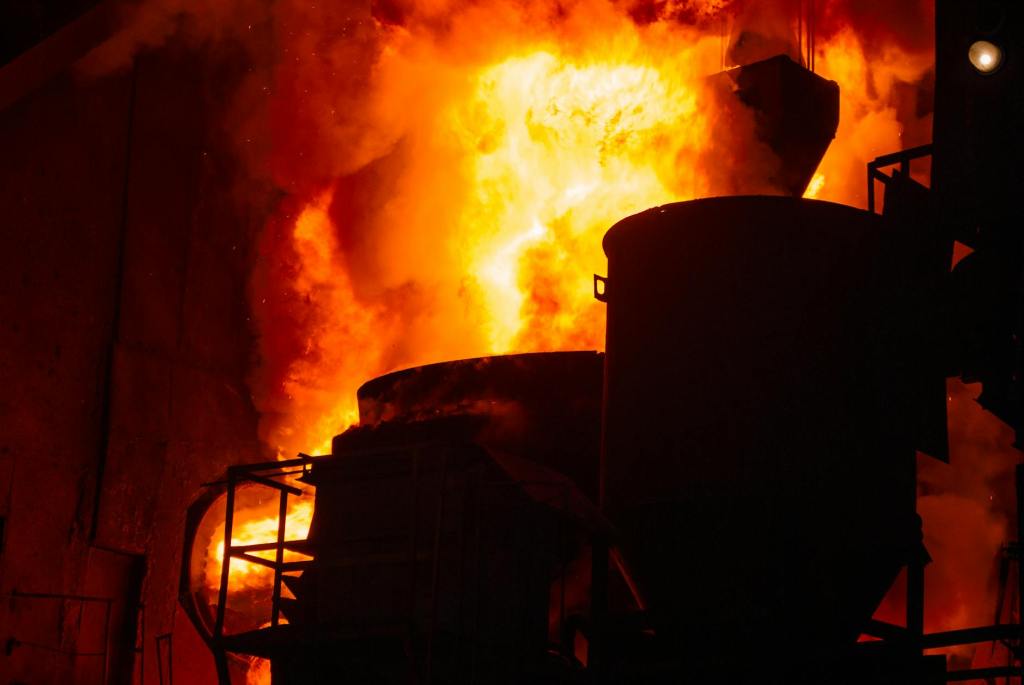
Air pollution from burning oil refineries can be far more hazardous than ordinary urban smog, raising growing environmental and health concerns after recent attacks on energy infrastructure in Iran.
Thick black smoke rising above industrial sites in Iran has circulated widely on social media after strikes linked to the escalating conflict involving United States, Israel and Iran damaged several oil refineries and fuel depots. The incidents have triggered debates not only about economic and geopolitical consequences but also about the environmental and public health risks created when major fuel-processing facilities catch fire.
Iran’s oil industry forms the backbone of its economy. The country holds some of the world’s largest proven oil reserves and relies heavily on refining infrastructure to meet domestic fuel demand and generate export revenue. Damage to refineries can disrupt energy supply chains, reduce fuel production and deepen economic pressure on the country.
Beyond the economic impact, refinery fires raise serious environmental concerns because of the complex mixture of pollutants released when crude oil and industrial chemicals burn uncontrollably.
Unlike ordinary smoke from vehicles or routine industrial activity, refinery fires release a wide array of toxic substances into the atmosphere. Visible plumes often contain thick black soot composed of particulate matter of different sizes, including extremely fine particles capable of penetrating deep into the lungs.
However, the visible smoke represents only part of the pollution. Burning petroleum products can also release nitrogen oxides and sulphur oxides—gases known to contribute to acid rain—as well as volatile organic compounds, heavy metals and other toxic chemicals that are often invisible to the naked eye.
The chemical complexity of these emissions makes refinery smoke fundamentally different from the pollution typically found in cities.
Urban smog usually develops from vehicle exhaust, industrial emissions and dust. While harmful, those pollutants are generally emitted gradually and spread over large areas, allowing some degree of dilution in the atmosphere.
Refinery fires, by contrast, release massive quantities of pollutants in a short period of time and in highly concentrated forms. This sudden surge of chemicals and fine particles can produce pollution levels that differ significantly from normal urban conditions, both in composition and intensity.
Even when air-quality measurements appear similar on monitoring systems, the types of chemicals present in refinery smoke can make the exposure more dangerous. Uncontrolled combustion in large industrial facilities allows substances that are normally regulated or filtered during standard operations to escape directly into the air.
As a result, the pollution created by refinery fires can include higher concentrations of unburned hydrocarbons, heavy metals and toxic compounds than those typically produced by vehicles or regulated industrial activities.
The health risks depend largely on proximity to the fires and the duration of exposure. People living near burning refineries may inhale large quantities of pollutants over short periods of time, increasing the risk of respiratory distress and other immediate health effects.
Petroleum fires can generate black carbon particles that act as carriers for toxic chemicals. These microscopic particles can travel deep into the respiratory system, where they may trigger asthma attacks, breathing difficulties and inflammation of the lungs.
According to World Health Organization, exposure to smoke and chemicals released from petroleum fires can cause breathing problems, eye irritation, skin irritation and other health effects. The organization has also highlighted the potential for contamination of surfaces, water sources and food supplies when such fires occur.
Certain groups face higher risks from sudden spikes in air pollution. Children, older adults and people with pre-existing respiratory or cardiovascular conditions are particularly vulnerable to the health impacts of toxic smoke.
The geographic reach of refinery smoke can also vary widely depending on environmental conditions. Wind direction, rainfall, temperature and atmospheric behaviour can determine whether pollutants disperse quickly or linger near the ground.
In some cases, atmospheric inversion—when a layer of warm air traps cooler air below—can prevent pollution from rising and dispersing, causing toxic smoke to accumulate near the surface where people live and breathe.
These factors make it difficult to predict how long the pollution from refinery fires will remain hazardous. In favourable weather conditions, smoke may disperse relatively quickly. In other situations, pollutants can persist for days or even travel long distances beyond the immediate blast zone.
The growing concerns surrounding refinery fires highlight the environmental consequences of attacks on energy infrastructure during armed conflicts. While the economic and strategic impacts are often immediate, the environmental and health effects can linger long after the flames are extinguished.




 PARYAWARAN
Leave a comment