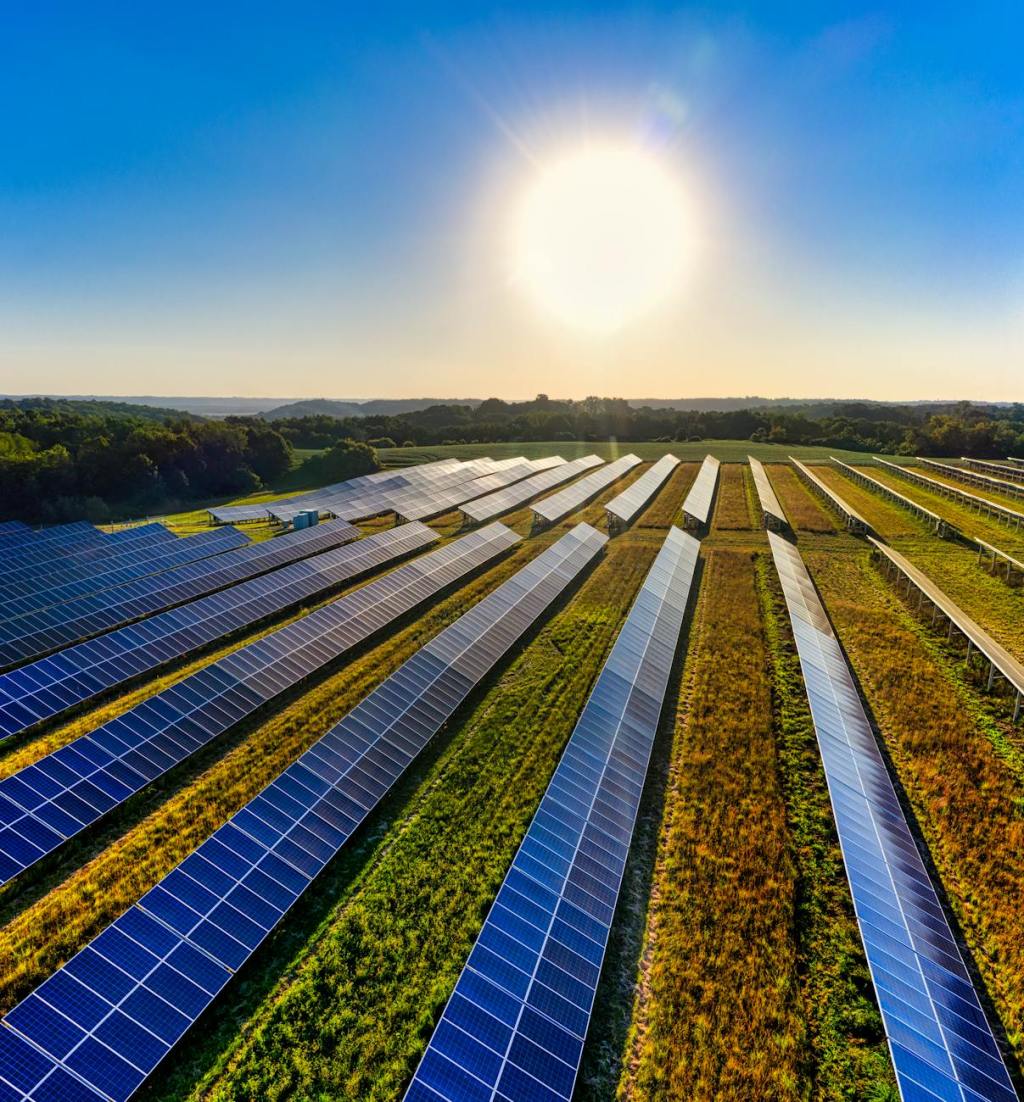
The growing practice of placing solar panels above farmland—known as agrivoltaics—is gaining attention as a way to generate renewable energy while continuing agricultural production. However, new research from University of Illinois Urbana-Champaign suggests the impact of agrivoltaics on crop yields and farmer profits varies significantly depending on climate conditions and crop type.
Agrivoltaics involves installing elevated solar panels over crops so the land can produce both food and electricity. Supporters say the system can improve land-use efficiency, provide farmers with additional income through solar leasing agreements and contribute to clean energy production. Yet the technology also creates trade-offs because solar panels cast shade over crops, potentially altering plant growth and productivity.
To better understand these effects, researchers examined 14 years of agricultural data from the Midwestern region of the United States. The analysis focused on two major crops widely grown across the region—maize and soybeans—and compared traditional cropland with farms where approximately one-third of the productive area was covered by solar panels.
The dataset included detailed records of crop yields and water use across both systems. Researchers also used climate simulations to assess how agrivoltaic impacts could change under future climate conditions, including low-, high- and extreme-emissions scenarios.
The results revealed stark regional differences, particularly between the humid eastern Midwest and the drier semiarid western parts of the region.
In the more humid eastern areas, shading from solar panels reduced the amount of sunlight reaching crops. This drop in light lowered photosynthesis levels and led to substantial yield declines. According to the study, maize yields fell by about 24 percent in fields with solar panels compared with conventional farmland, while soybean yields dropped by roughly 16 percent.
These losses highlight a key challenge for agrivoltaic systems in wetter climates where crops already receive sufficient water and sunlight. In such environments, additional shade from solar infrastructure can interfere with plant growth, limiting productivity and reducing agricultural output.
Conditions were different in the semiarid western Midwest, where hotter and drier climates create greater stress for crops. In these areas, the shading effect from solar panels helped reduce water loss from plants and soil, providing some protection against heat and drought.
While maize yields in these drier areas still declined under solar panels, the reduction was smaller—around 12 percent compared with conventional fields. Soybeans, however, showed a different response. The study found soybean yields increased by about 6 percent under solar panels in the semiarid west.
The difference between the two crops is linked to how plants respond to environmental stress. Soybeans are particularly sensitive to water loss in hot and dry conditions. In these climates, the cooling and shading effects of solar panels can reduce evaporation and protect plants from heat stress. This benefit can outweigh the disadvantage of reduced sunlight, leading to improved yields.
Maize, on the other hand, relies more heavily on strong sunlight for optimal growth, meaning the shading effect generally has a more negative impact.
Beyond crop yields, the study also examined the economic implications for farmers considering agrivoltaic systems. Solar developers often lease farmland to install panels, providing farmers with a new source of income. However, the study found that these payments do not always compensate for the potential loss in crop production.
Across the Midwest, maize farmers experienced reduced profits when using agrivoltaic systems. In humid eastern regions, overall farm income fell by about 6 percent compared with traditional farming. In the semiarid west, where maize yield reductions were smaller, profits still declined by as much as 16 percent due to lower harvest output.
Soybean farmers faced a more mixed financial outcome. In humid regions, the decline in yields meant profits dropped slightly—by about 2 percent. But in the semiarid western Midwest, the improved soybean yields combined with solar leasing income produced a net profit increase of around 9 percent.
These findings suggest agrivoltaics may be economically viable only in certain regions and for specific crops. Rather than offering a universal solution for farmland, the technology appears to work best in climates where shade can help crops cope with heat and water stress.
Climate change could also reshape where agrivoltaic systems provide the greatest benefits. The study’s climate models indicate that dry and semiarid conditions are likely to expand across parts of the Midwest in the coming decades.
Under low-emissions scenarios, dry regions could grow by about 5.3 percent. Under higher-emissions scenarios, the expansion could reach more than 21 percent. In the most extreme projections, dry conditions could increase dramatically, expanding by as much as 174 percent.
As these drier climates spread, agrivoltaic systems may become more advantageous across larger areas of farmland. The combination of renewable electricity generation, reduced water stress for crops and diversified income streams could create stronger synergies between energy production and agriculture.
For now, the research suggests agrivoltaics should be applied selectively rather than broadly. The system may offer clear advantages in some landscapes, particularly soybean-growing areas in dry regions, while creating significant trade-offs in others.
Instead of a uniform solution, agrivoltaics may ultimately form a patchwork across agricultural regions—thriving in areas where environmental conditions align with the benefits of shade and water conservation, while remaining less suitable in wetter climates where crops rely on abundant sunlight for maximum yields.




 PARYAWARAN
Leave a comment