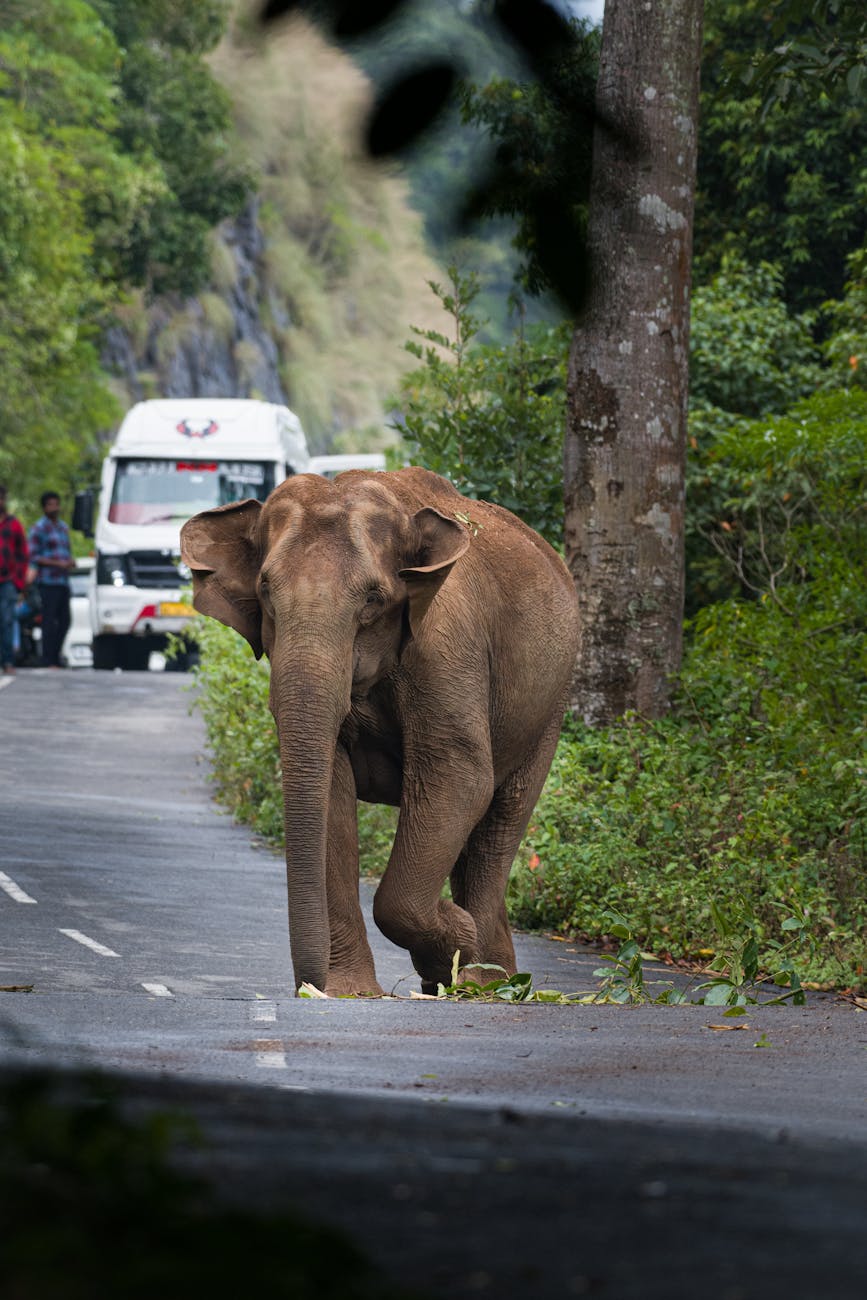
In a significant step for wildlife conservation in southern India, elephants have been recorded using Karnataka’s first wildlife overpass near Bengaluru, confirming the effectiveness of a major infrastructure effort designed to reduce human–wildlife conflict and ensure safe animal movement across highways.
The overpass, built across National Highway 209 near Tataguni on the outskirts of Bengaluru, was constructed to reconnect fragmented forest habitats and allow elephants to move safely between Bannerghatta National Park and the forests near Savandurga. The structure represents one of the most ambitious attempts in the region to integrate wildlife conservation with expanding road infrastructure.
The crossing was recently confirmed when a camera trap captured a tusker walking across the overpass in the early hours of the morning. The footage provided the first clear evidence that elephants had begun using the specially designed structure.
A critical wildlife corridor
The overpass was built by the National Highways Authority of India as part of efforts to maintain ecological connectivity between forested landscapes separated by the busy highway.
The forests surrounding Bannerghatta National Park form part of a broader elephant movement landscape that extends across southern Karnataka. Elephants regularly travel between feeding grounds, water sources and breeding areas, often crossing roads and human-dominated landscapes in the process.
With increasing traffic on highways near Bengaluru, such crossings have become dangerous for both wildlife and motorists. Wildlife experts have long warned that highways cutting through natural habitats can fragment ecosystems and disrupt traditional animal migration routes.
The new overpass aims to address this problem by providing animals with a safe, uninterrupted pathway above the highway.
The mystery of the highway crossings
Forest officials monitoring elephant activity in nearby areas had noticed signs that animals were present in forests on both sides of the highway, particularly near the villages of Anepalya and BM Kaval. However, the absence of elephant dung or footprints along the road puzzled officials.
Normally, elephant crossings leave clear signs on roads and roadside areas. The lack of such evidence suggested that the animals were avoiding the highway itself.
This raised the possibility that elephants might already be using the newly constructed overpass.
To confirm this theory, the forest department installed camera traps along the structure and surrounding forest areas to monitor wildlife activity.
Camera traps confirm elephant movement
The cameras soon delivered the answer.
In the early hours of a recent morning, a tusker was captured on camera calmly walking across the overpass. The footage confirmed that elephants had successfully located and begun using the structure designed specifically for their movement.
The discovery is being viewed as a major validation of wildlife-friendly infrastructure planning.
Wildlife overpasses are increasingly being used around the world to reduce road-related wildlife deaths and maintain ecological connectivity. However, their success depends on whether animals actually adopt the structures.
The footage suggests that the design and location of the Tataguni overpass have made it effective for elephants moving through the landscape.
Designed to resemble natural habitat
One of the key features of the overpass is its effort to mimic a natural forest environment.
Rather than leaving the structure as a bare concrete bridge, the overpass has been carefully landscaped with vegetation. Slopes were developed on both sides to help animals access the structure easily, while bamboo and fruit-bearing trees were planted to make the environment appear more natural and inviting to wildlife.
Such ecological design elements are critical because many animals avoid unfamiliar or exposed structures.
By recreating forest-like conditions, planners hoped elephants, leopards and other wildlife species would feel comfortable using the crossing instead of attempting to navigate the highway.
A major conservation investment
The wildlife overpass was completed in 2024 at a cost exceeding ₹20 crore. The investment reflects growing recognition in India that infrastructure development must incorporate wildlife conservation measures, particularly in biodiversity-rich landscapes.
India’s expanding network of highways has often intersected with wildlife corridors, leading to accidents, habitat fragmentation and increased human–wildlife conflict.
Structures like overpasses and underpasses are increasingly seen as essential solutions for balancing development with ecological protection.
A model for future projects
The successful use of the overpass by elephants could serve as a model for similar projects across India.
Conservationists say that maintaining connectivity between protected areas is crucial for wide-ranging species such as elephants, which require large landscapes to survive.
By allowing animals to move safely between forests without encountering traffic, wildlife crossings can significantly reduce the risk of road accidents and help maintain healthy wildlife populations.
As urban expansion continues around Bengaluru, projects like the Tataguni wildlife overpass highlight how thoughtful infrastructure design can help safeguard wildlife while supporting human development.
For conservationists, the sight of an elephant calmly crossing the bridge is more than just a rare camera-trap moment—it is a sign that coexistence between infrastructure and wildlife is possible when ecological considerations are built into planning from the start.


 PARYAWARAN
Leave a comment