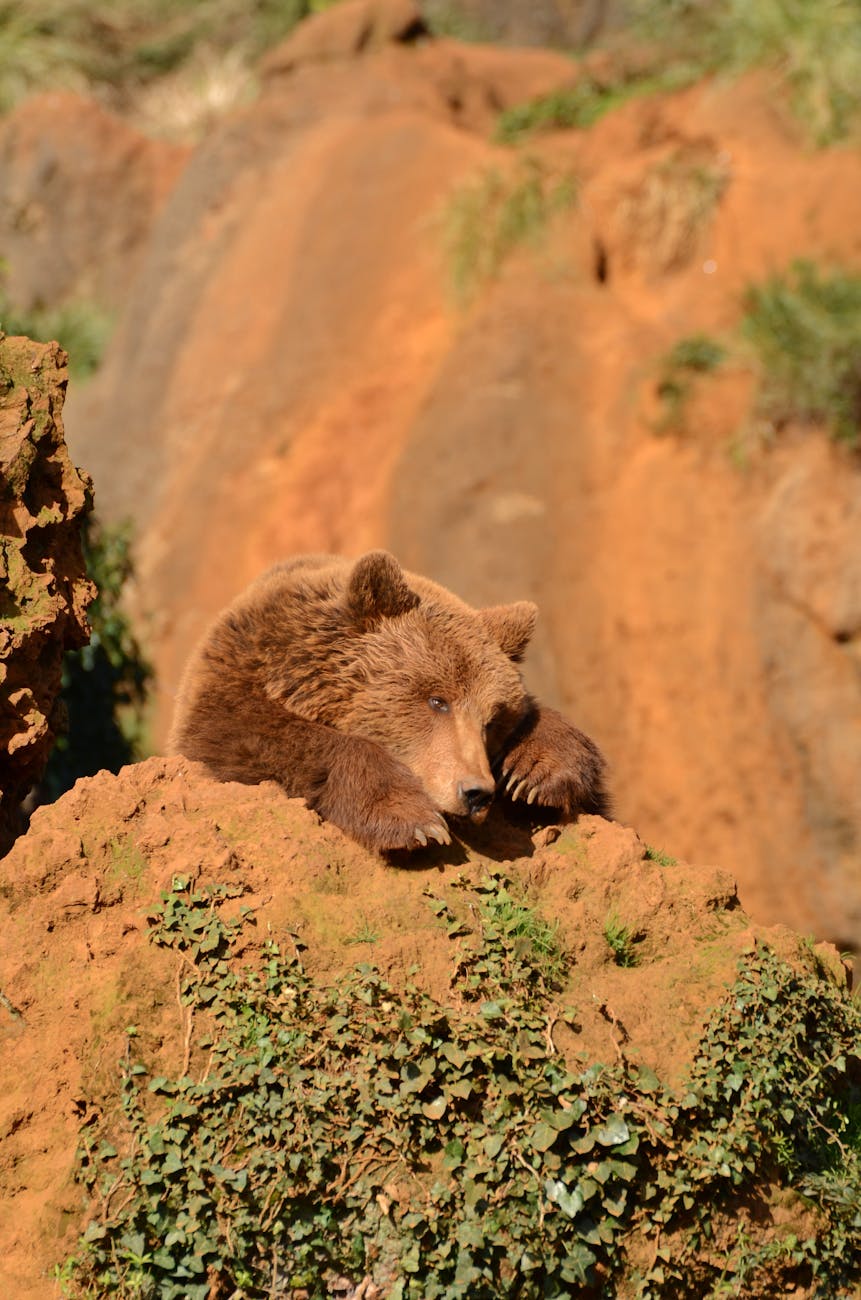
In the remote high-altitude landscape of Kargil, a quiet transformation is underway. Local youth, working alongside conservationists, are helping communities live more safely with one of the region’s most formidable wild animals—the Himalayan Brown Bear. Through a blend of simple technology, scientific research and community participation, the initiative is reducing human–wildlife conflict while protecting one of the Himalayas’ most threatened species.
The programme, supported by WWF-India, focuses on empowering local residents to take the lead in managing encounters with bears. Once viewed mainly with fear and suspicion, the species is increasingly seen as part of a shared landscape that communities are learning to protect.
Living with bears in a harsh landscape
Kargil, located in the rugged terrain of Ladakh, is a region of extreme conditions. Winters can plunge temperatures to nearly minus 40 degrees Celsius, while summers are short and intense. For centuries, the Himalayan brown bear has inhabited these mountains and valleys.
In recent years, however, encounters between humans and bears have increased. Expanding roads, growing settlements and the accumulation of food waste have brought wildlife closer to human habitation.
Before winter, bears enter a biological phase known as hyperphagia, an intense feeding period during which they consume large amounts of food to build fat reserves for hibernation. During this time, unsecured livestock sheds, poultry coops and household food stores become attractive sources of nutrition.
The result has been a rise in conflict incidents. In 2021 alone, more than 80 bear-related encounters were recorded across parts of Kargil. Livestock losses, damaged property and widespread fear among residents highlighted the urgent need for solutions.
Community volunteers step forward
To address the growing tension between people and wildlife, a community-led initiative began taking shape in 2022. Volunteers from different professions—daily wage workers, shopkeepers and local professionals—came together to form a group now known as the “Bear Brothers.”
The volunteers were trained by WWF-India to monitor bear movement, patrol villages and respond to emergency calls when wildlife enters human settlements. Their role is not only to manage encounters but also to calm frightened residents and prevent panic-driven reactions that could harm both people and animals.
The initiative has helped transform community attitudes. Many residents who once reacted to bear sightings with fear or aggression are now learning to respond calmly and safely.
The volunteers’ presence ensures that villagers know whom to contact during encounters, reducing confusion and helping prevent dangerous confrontations.
Technology helping prevent conflict
One of the most effective tools introduced through the programme is a system known as the Animal Intrusion Detection and Repellent System (ANIDERS). Installed along village edges and near livestock enclosures, the system uses motion sensors to detect large animals approaching human settlements.
When triggered, ANIDERS activates bright lights and loud sounds that safely deter animals without causing harm. The system also sends alerts to nearby residents, giving them time to secure livestock or avoid the area.
Camera traps have also been installed across the landscape to monitor bear movement and understand how the animals use different parts of the habitat. These insights allow conservation teams to identify conflict hotspots and implement preventive measures.
In some cases, the systems have even been placed in unusual locations such as village graveyards, where bears were occasionally detected searching for food.
Strengthening protection for livestock
Livestock losses have historically been one of the biggest drivers of conflict in the region. To reduce these incidents, the programme has introduced improved predator-proof corrals.
Earlier versions of these protective enclosures were designed mainly to keep out animals such as snow leopards and wolves. However, the strength and persistence of brown bears meant the structures were often insufficient.
The redesigned corrals now include reinforced iron frames, cemented walls and greater height, making it far more difficult for bears to break in or climb over. For families whose livelihoods depend on a small number of animals, such protection can be crucial.
A rare and vulnerable species
Despite their powerful appearance, Himalayan brown bears are among the rarest bear populations in the world. The subspecies, scientifically known as Ursus arctos isabellinus, can grow up to 2.2 metres tall and weigh as much as 400 kilograms.
The species is protected under Schedule I of the Wildlife (Protection) Act, 1972, which offers the highest level of legal protection in India. Killing or capturing one is punishable by law.
Yet the population remains extremely small. Scientists estimate that only about 130 to 220 individuals survive across the Himalayan and Trans-Himalayan ranges of India and Pakistan.
Their slow reproductive rate and shrinking habitat make conservation efforts particularly urgent.
Science and traditional knowledge
WWF-India’s work in Kargil combines scientific research with traditional ecological knowledge held by local communities. Camera trapping, habitat mapping and movement monitoring help researchers understand bear behaviour and migration patterns.
At the same time, local residents contribute valuable knowledge about the landscape and seasonal wildlife activity.
Training programmes have also equipped local youth to act as first responders and wildlife monitors. Their involvement ensures that conservation measures remain rooted in community needs and realities.
Turning conflict into opportunity
In some villages, coexistence efforts are also opening new economic opportunities.
Areas known for frequent bear sightings are attracting wildlife enthusiasts and tourists eager to observe the animals in their natural habitat. Community-run homestays are beginning to benefit from this interest, offering visitors a chance to experience the region’s unique biodiversity.
The development provides an additional incentive for residents to protect wildlife and maintain healthy ecosystems.
Changing attitudes toward coexistence
Perhaps the most significant change is the shift in community mindset. In the past, the sudden sound of utensils clattering in the kitchen might have triggered panic about a bear entering the house.
Today, such incidents often prompt a more prepared and coordinated response.
Children who once grew up hearing warnings about dangerous wildlife are now seeing their elders participate in conservation patrols. Villages that previously relied on fire and noise to drive animals away are learning to use technology and organised response teams.
Homes are being reinforced, waste management is improving and residents are becoming more aware of safety practices.
In Kargil’s stark mountain valleys, the relationship between people and wildlife is slowly evolving. Rather than attempting to drive bears away from the landscape, communities are learning how to share it—creating a future where both people and the Himalayan brown bear can survive on the same mountains.


 PARYAWARAN
Leave a comment